

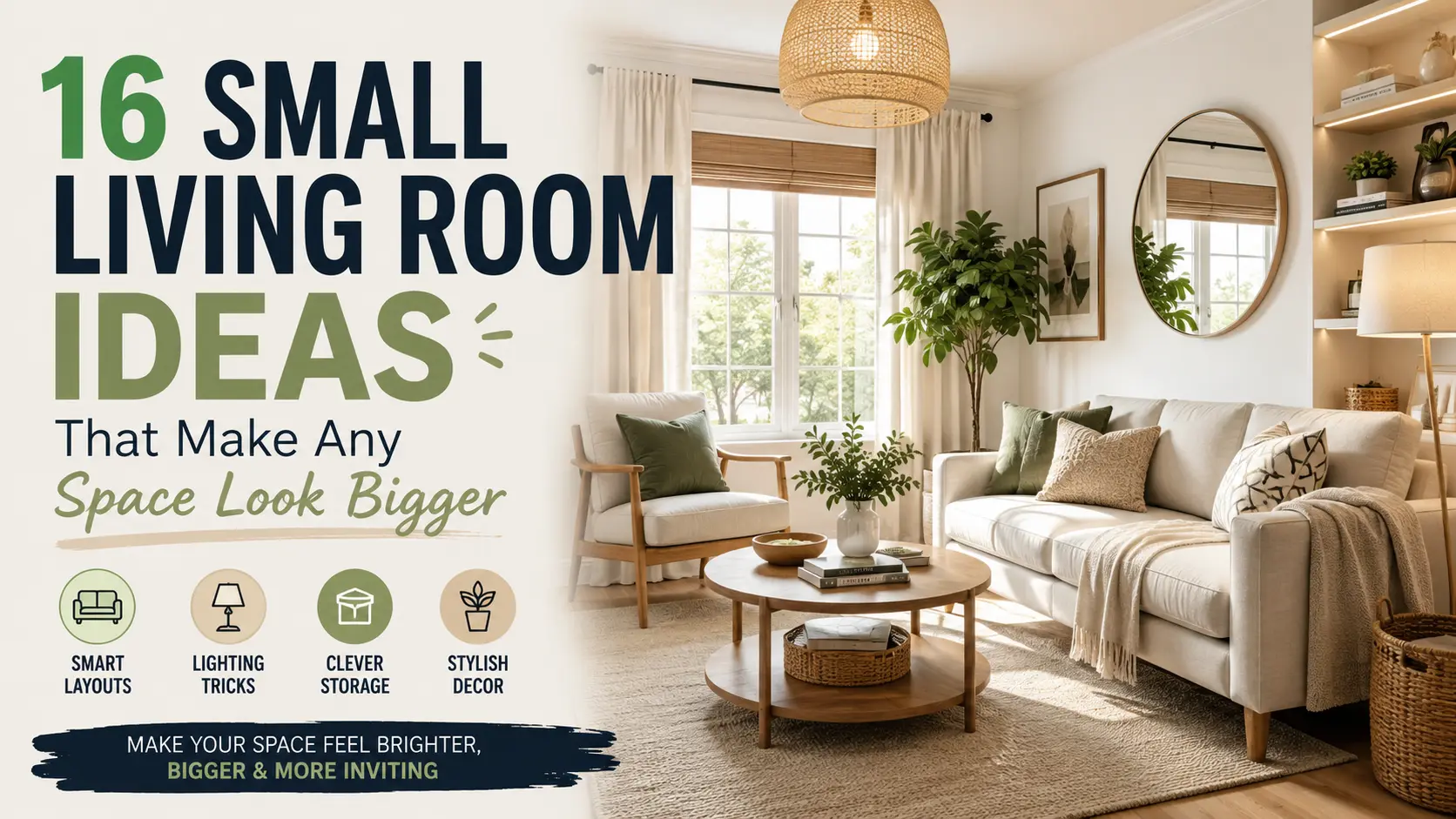
16 Small Living Room Ideas That Make Any Space Look Bigger
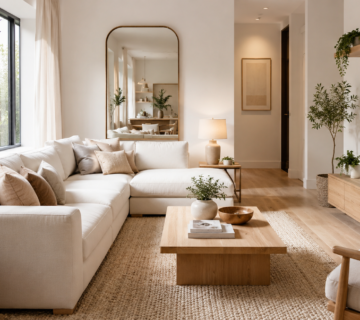
A small living room doesn’t have to feel cramped or limiting. In fact, many compact spaces can feel brighter, more open, and even more inviting than larger rooms when they’re designed thoughtfully.
The secret isn’t knocking down walls or buying expensive furniture. Instead, it’s about making smart design choices that improve how the room looks and functions. From choosing the right furniture size to maximizing natural light and reducing visual clutter, a few simple changes can completely transform the way your living room feels.
Whether you’re decorating a small apartment, a cozy condo, or a compact family home, these practical ideas will help you create a space that feels stylish, comfortable, and surprisingly spacious.
Let’s explore 16 designer-inspired small living room ideas that make any space look bigger.
Quick Summary
If you’re short on time, these are the biggest changes that make the greatest impact:
- Choose furniture with visible legs.
- Use one large area rug instead of several small rugs.
- Hang curtains higher and wider than the window frame.
- Place mirrors to reflect natural light.
- Stick to light, neutral colors.
- Keep walkways clear.
- Reduce unnecessary decorations.
- Add storage that keeps clutter out of sight.
Now let’s look at each idea in detail.
Why Do Small Living Rooms Feel Smaller Than They Really Are?
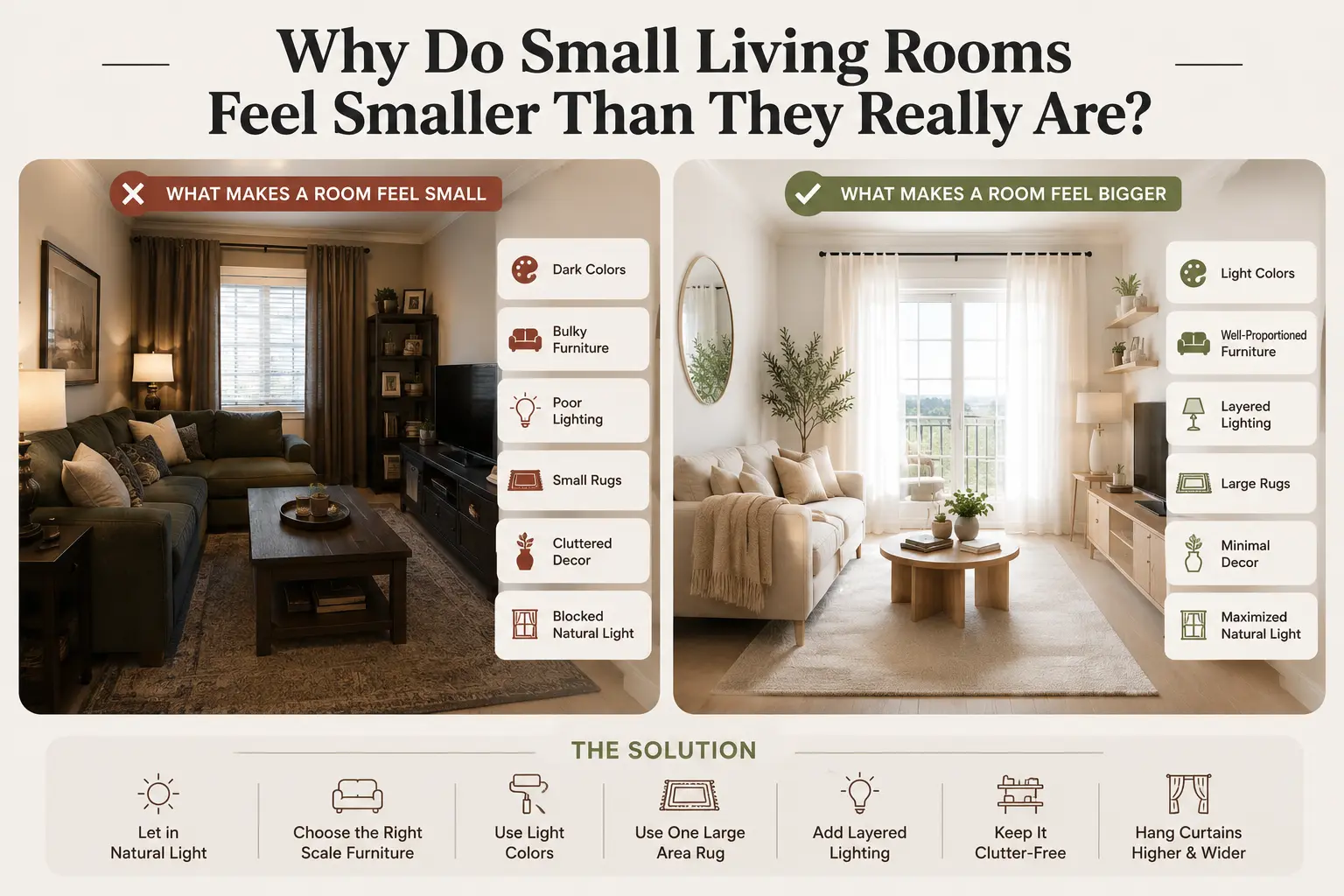
Many homeowners assume their living room feels cramped because of its size. In reality, poor decorating decisions often make a room appear much smaller than it actually is.
Some of the most common reasons include:
- Oversized furniture that overwhelms the room.
- Too many decorative accessories competing for attention.
- Heavy curtains that block natural light.
- Dark color palettes that absorb light.
- Small rugs that visually break up the floor.
- Poor furniture placement that interrupts movement.
The good news is that most of these issues can be fixed without a major renovation. The following ideas focus on creating better visual flow, improving light, and making every square foot work harder.
1. Choose Furniture with Visible Legs
One of the simplest ways to make a small living room appear larger is to choose furniture with exposed legs.
When you can see the floor beneath a sofa, armchair, or coffee table, your eyes naturally perceive more open space. This small visual trick creates a lighter appearance and prevents the room from feeling heavy or crowded.
Mid-century modern furniture is especially effective because its slim legs and clean lines help maintain an airy look. Even if you prefer a contemporary or traditional style, many furniture collections now feature raised designs that offer the same benefit.
Why It Works
Visible floor space creates the illusion of depth. Instead of stopping at the edge of bulky furniture, your eyes continue underneath it, making the room feel more expansive.
Designer Tip
Pair a raised sofa with a light-colored area rug to maximize the feeling of openness.
Avoid This Mistake
Large sofas that sit directly on the floor can make compact rooms feel visually heavier. If you need a larger sofa, look for one with slim arms and elevated legs instead of oversized, boxy designs.
2. Use One Large Area Rug Instead of Several Small Ones
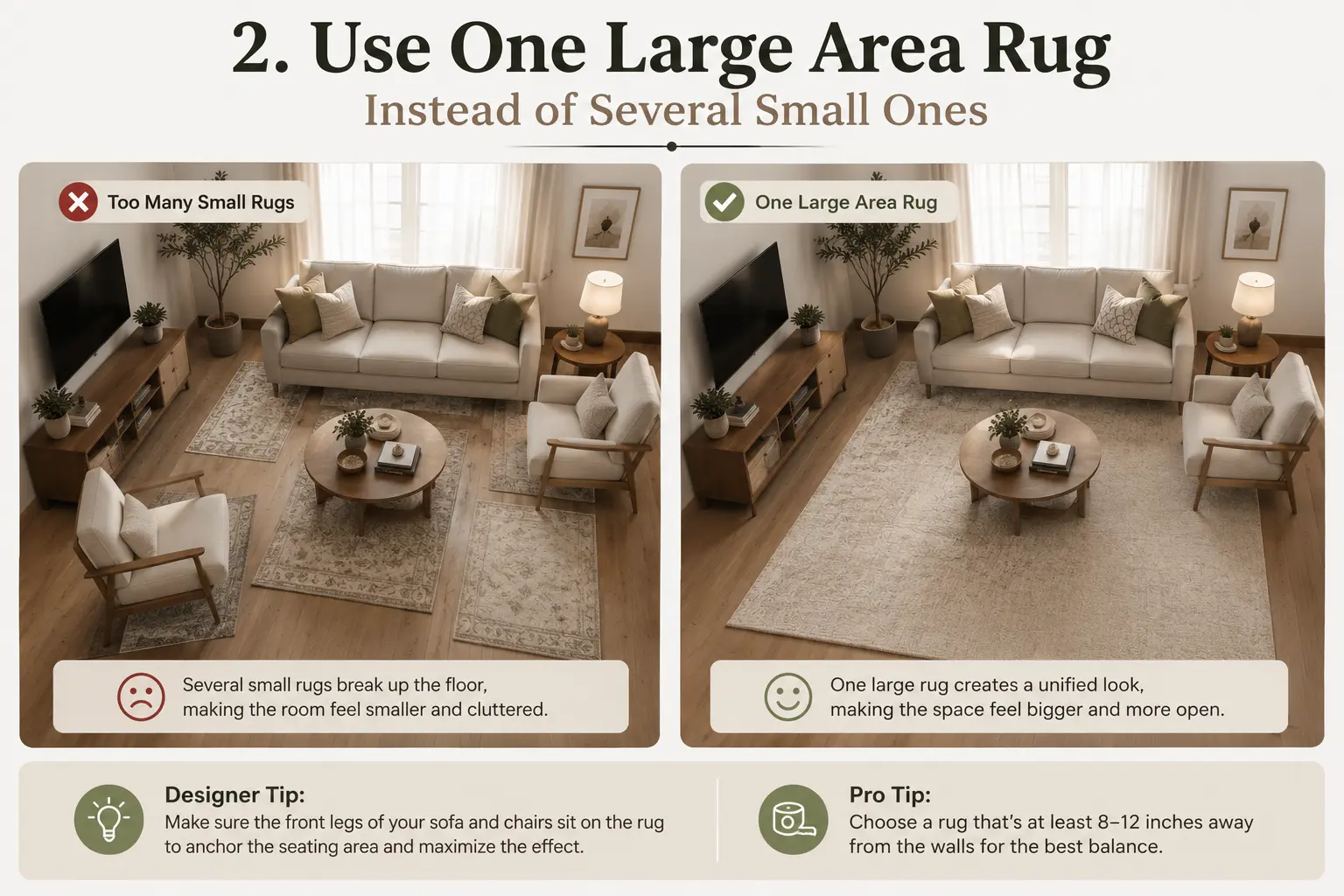
Many people believe a small room needs a small rug. In reality, the opposite is often true.
A large area rug helps unify the seating area and creates a continuous visual surface, making the room appear more spacious. Multiple small rugs divide the floor into separate sections, which can make the space feel cluttered and disconnected.
Ideally, the front legs of your sofa and chairs should rest on the rug. This anchors the furniture arrangement and gives the room a more intentional, designer-inspired appearance.
Why It Works
Large rugs reduce visual interruptions and make the floor seem wider.
Designer Tip
Choose neutral rugs with subtle patterns rather than bold, busy designs. Soft textures add warmth without overwhelming the room.
Avoid This Mistake
Avoid placing a tiny rug in the center of the room with all the furniture sitting around it. This often makes the room look smaller instead of larger.
3. Hang Curtains Higher and Wider Than the Window
Curtains do far more than provide privacy—they can completely change how large a room feels.
Instead of mounting the curtain rod directly above the window frame, install it several inches closer to the ceiling. Extend the rod beyond both sides of the window as well.
This simple adjustment creates the illusion of taller ceilings and larger windows, allowing more natural light to enter when the curtains are open.
Floor-length curtains in lightweight fabrics such as linen or cotton also help create a softer, more elegant look.
Why It Works
Drawing the eye upward emphasizes the room’s height, while wider curtain placement makes the windows appear larger than they actually are.
Designer Tip
Choose curtains in a color similar to your wall paint for a seamless appearance that visually expands the room.
Avoid This Mistake
Short curtains that stop below the window sill can make walls feel shorter and interrupt the vertical flow of the space.
4. Reflect Natural Light with Mirrors
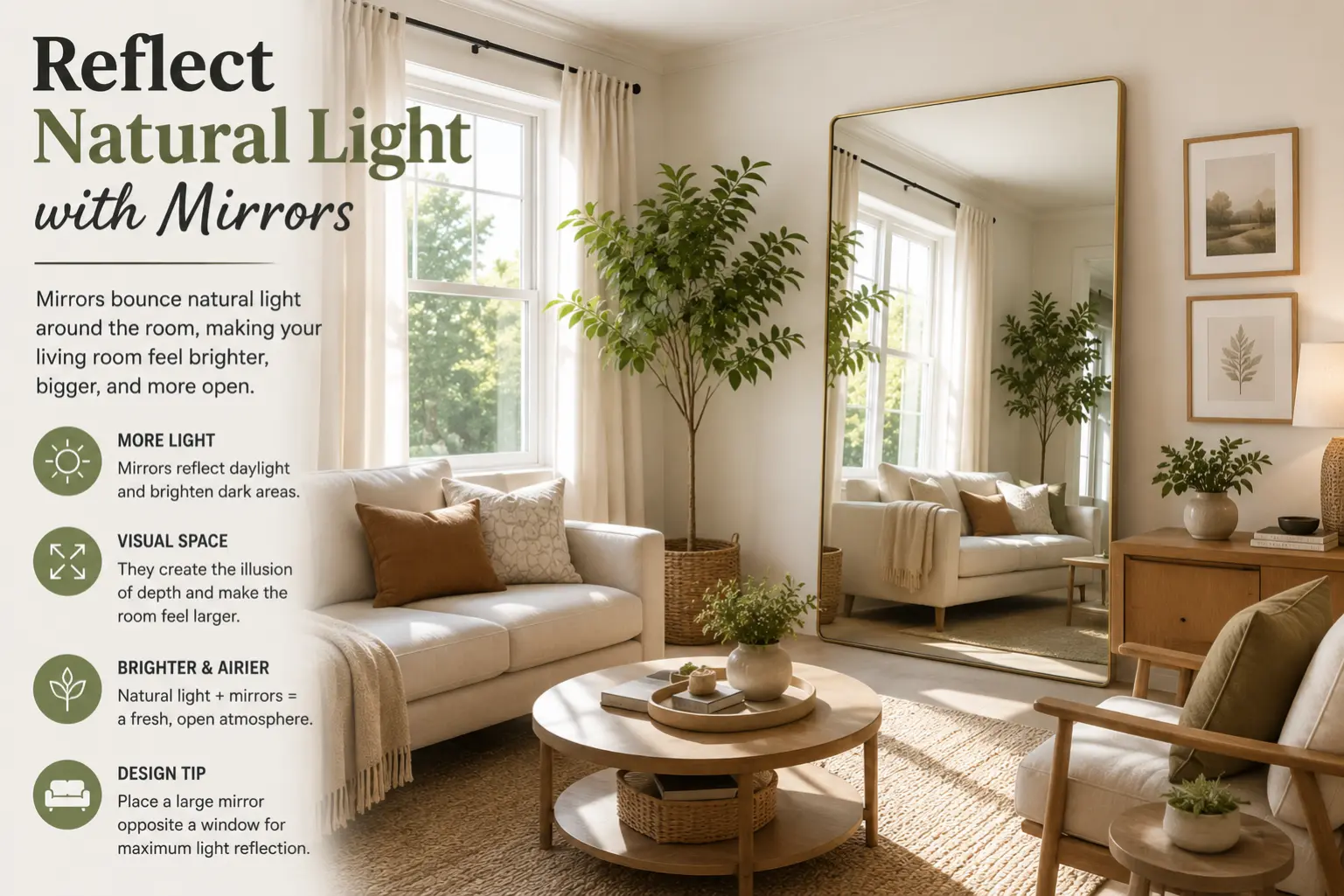
Mirrors are one of the oldest interior design tricks for making small spaces feel bigger—and for good reason.
A well-placed mirror reflects both natural and artificial light, instantly making a room feel brighter and more open. It also creates the impression of added depth, especially in narrow or compact living rooms.
The most effective placement is opposite or adjacent to a window, where the mirror can bounce daylight throughout the room.
Large mirrors typically create a stronger visual impact than several smaller ones, especially when paired with simple, elegant frames.
Why It Works
Light is one of the biggest factors in how spacious a room feels. By reflecting light across the room, mirrors reduce dark corners and create a brighter, airier atmosphere.
Designer Tip
Lean an oversized floor mirror against a wall for a relaxed, modern look, or hang a large statement mirror above the sofa to create a striking focal point.
Avoid This Mistake
Don’t position mirrors where they reflect cluttered shelves or messy areas. A mirror doubles whatever it reflects, so make sure the view enhances the space rather than distracting from it.
5. Stick to a Light Neutral Color Palette
Color has a powerful effect on how large a room feels. Light shades reflect more natural light, soften the edges of a room, and create a seamless look that makes the space appear more open.
That doesn’t mean your living room has to feel plain or sterile. Warm neutrals like ivory, cream, greige, beige, soft taupe, and warm white add depth while maintaining an airy atmosphere. These timeless colors also work well with almost any decorating style, making future updates much easier.
Instead of introducing several bold colors, choose one neutral base and layer different textures to add visual interest.
Why It Works
Light colors reflect both natural and artificial light, reducing harsh shadows that can make walls feel closer together.
Designer Tip
Paint the walls, trim, and ceiling in similar light tones. A continuous color palette minimizes visual breaks and helps the room feel larger.
Best For
- Small apartments
- Open-concept homes
- Minimalist interiors
- Scandinavian-inspired spaces
Avoid This Mistake
Using too many contrasting colors can visually divide the room into smaller sections. Save bold colors for artwork, cushions, or decorative accents.
6. Choose Multi-Functional Furniture
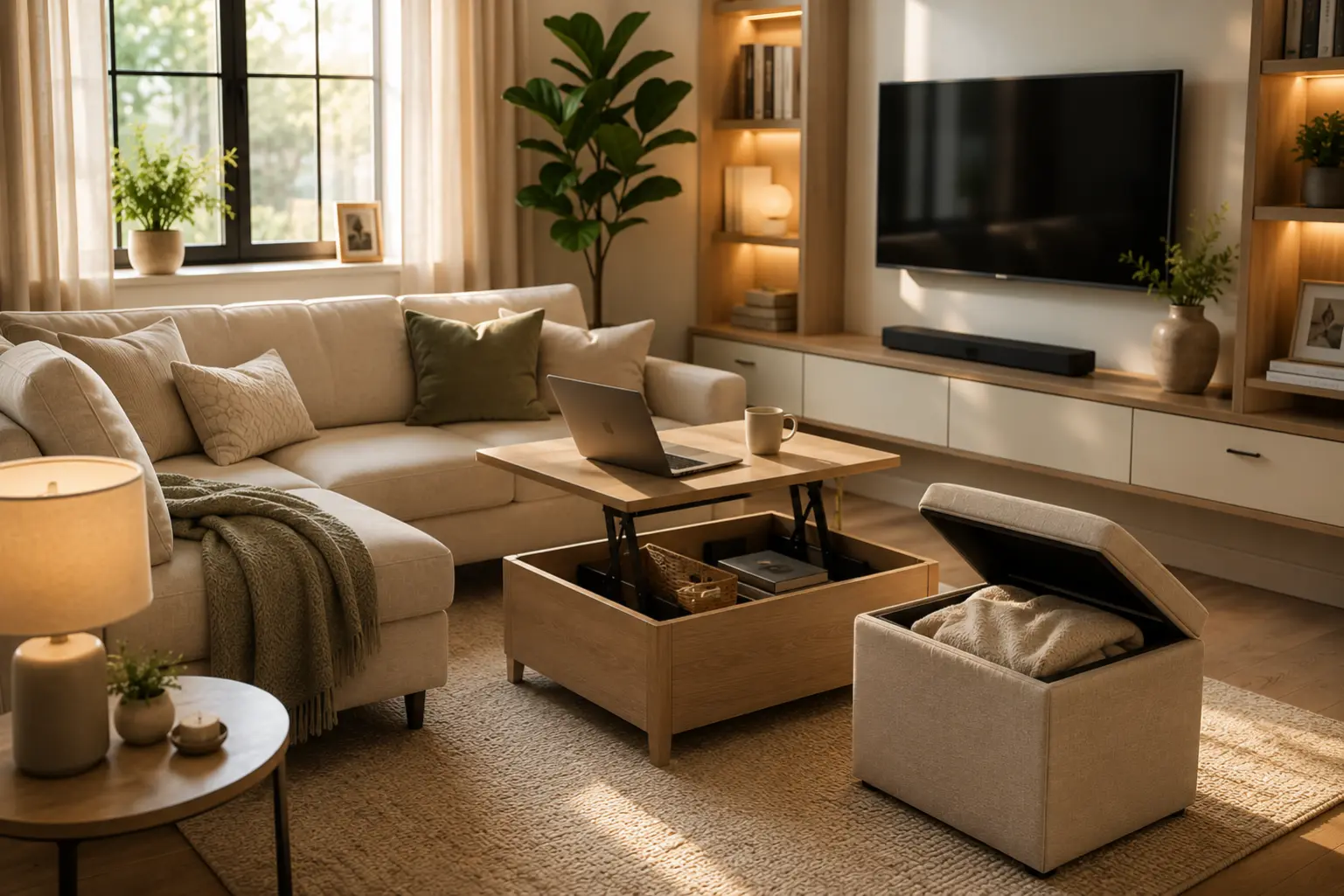
Every piece of furniture should earn its place in a small living room.
Instead of filling the space with separate storage units, look for furniture that serves more than one purpose. An ottoman with hidden storage can hold blankets, books, or board games while doubling as extra seating. A lift-top coffee table provides a convenient workspace and keeps everyday items tucked away. Storage benches, nesting tables, and slim console tables are also excellent choices.
The goal is to reduce clutter without sacrificing functionality.
Why It Works
Multi-functional furniture minimizes the number of pieces needed in the room, leaving more open floor space and improving circulation.
Designer Tip
Choose furniture with concealed storage whenever possible. Hidden storage creates a cleaner look than open baskets filled with miscellaneous items.
Best For
- Apartments
- Studio homes
- Family living rooms
- Homes with limited storage
Avoid This Mistake
Avoid buying furniture simply because it offers storage. Oversized pieces can quickly overwhelm a compact room, so always measure before purchasing.
7. Keep Walkways Open
A beautiful living room should also be easy to move through.
When furniture blocks natural pathways, the room immediately feels more crowded. Even if the square footage doesn’t change, difficult movement creates the impression of limited space.
Aim to leave comfortable walking paths between seating areas and around larger furniture pieces. Coffee tables should be positioned close enough to reach comfortably without restricting movement.
Sometimes removing one unnecessary side table creates a greater improvement than buying new furniture.
Why It Works
Clear pathways improve the room’s flow, making it feel more spacious and comfortable.
Designer Tip
Stand at the room’s entrance and look across the space. Your eyes should move naturally from one side of the room to the other without large obstacles interrupting the view.
Best For
- Narrow living rooms
- Family homes
- High-traffic spaces
Avoid This Mistake
Don’t fill every empty corner simply because space is available. Empty space is an important design element that allows the room to breathe.
8. Use Glass or Acrylic Furniture
Bulky furniture can dominate a small living room, even when it’s appropriately sized.
Glass and acrylic furniture provide the function you need while remaining visually light. Because you can see through these materials, they don’t interrupt sightlines, making the room feel less crowded.
A glass coffee table, acrylic side table, or transparent console can create a modern, sophisticated look while preserving the sense of openness.
Pair these pieces with warm textures such as wood, linen, or woven baskets to keep the room feeling inviting rather than cold.
Why It Works
Transparent materials occupy physical space without creating visual weight, helping the room appear larger.
Designer Tip
Combine a glass coffee table with a textured area rug to balance warmth and openness.
Best For
- Modern interiors
- Minimalist living rooms
- Small apartments
- Contemporary homes
Avoid This Mistake
Using too many glass pieces can make the room feel impersonal. Mix transparent furniture with natural materials to create balance.
9. Add Vertical Storage Instead of More Floor Furniture
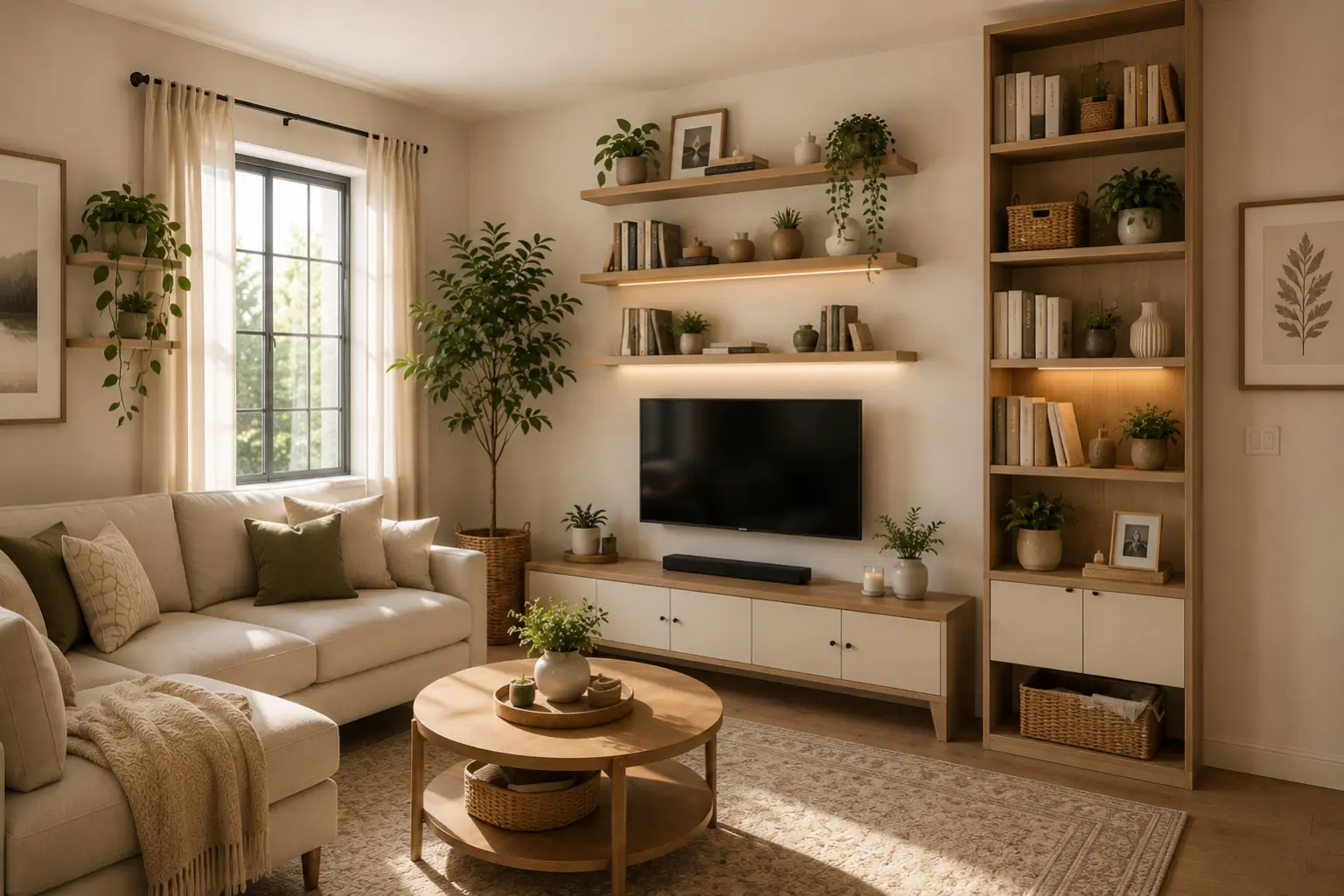
When floor space is limited, the walls become your greatest design opportunity.
Installing floating shelves, tall bookcases, or wall-mounted cabinets allows you to increase storage without making the room feel crowded. Drawing the eye upward also emphasizes the room’s height, creating the illusion of a larger space.
Floating shelves are especially useful because they provide display space while maintaining a clean, modern appearance. Use them to showcase books, artwork, plants, or decorative objects—but avoid overcrowding every shelf.
A few thoughtfully arranged items create much more impact than shelves packed from edge to edge.
Why It Works
Vertical storage uses unused wall space, freeing valuable floor area and making the room feel taller.
Designer Tip
Decorate shelves with a mix of books, greenery, ceramics, and empty space. Designers often leave around one-third of each shelf intentionally open to prevent visual clutter.
Best For
- Small apartments
- Compact family rooms
- Rental homes
- Living rooms with limited storage
Avoid This Mistake
Don’t install shelves on every available wall. Too much shelving can make a small room feel busy rather than organized.
Quick Recap
By now, you’ve learned nine practical ways to make a small living room feel noticeably larger:
- Use light, neutral colors to reflect more light.
- Invest in furniture that serves multiple purposes.
- Keep pathways open for better flow.
- Choose glass or acrylic furniture to reduce visual weight.
- Add storage vertically instead of taking up valuable floor space.
These ideas don’t require major renovations or expensive redesigns. In most cases, thoughtful furniture choices and a few strategic updates can completely change how your living room looks and feels.
10. Float Your Furniture Instead of Pushing Everything Against the Wall
It might seem logical to push every piece of furniture against the walls in a small living room, but this common habit can actually make the space feel less inviting.
Instead, try floating your main seating a few inches away from the wall. Even a small gap creates depth and gives the room a more intentional layout. This approach is especially effective in square living rooms where furniture can define a comfortable conversation area.
If space allows, center your coffee table with the sofa and chairs rather than arranging everything around the perimeter.
Why It Works
Creating a little breathing room behind furniture adds visual depth and helps the layout feel balanced instead of cramped.
Designer Tip
A gap of 4–8 inches between the sofa and the wall is often enough to make the room feel more open without wasting valuable space.
Best For
- Square living rooms
- Open-plan layouts
- Apartments with flexible furniture arrangements
Avoid This Mistake
Don’t pull furniture too far away from the walls in a very narrow room. The goal is to create depth—not reduce usable walking space.
11. Layer Different Light Sources
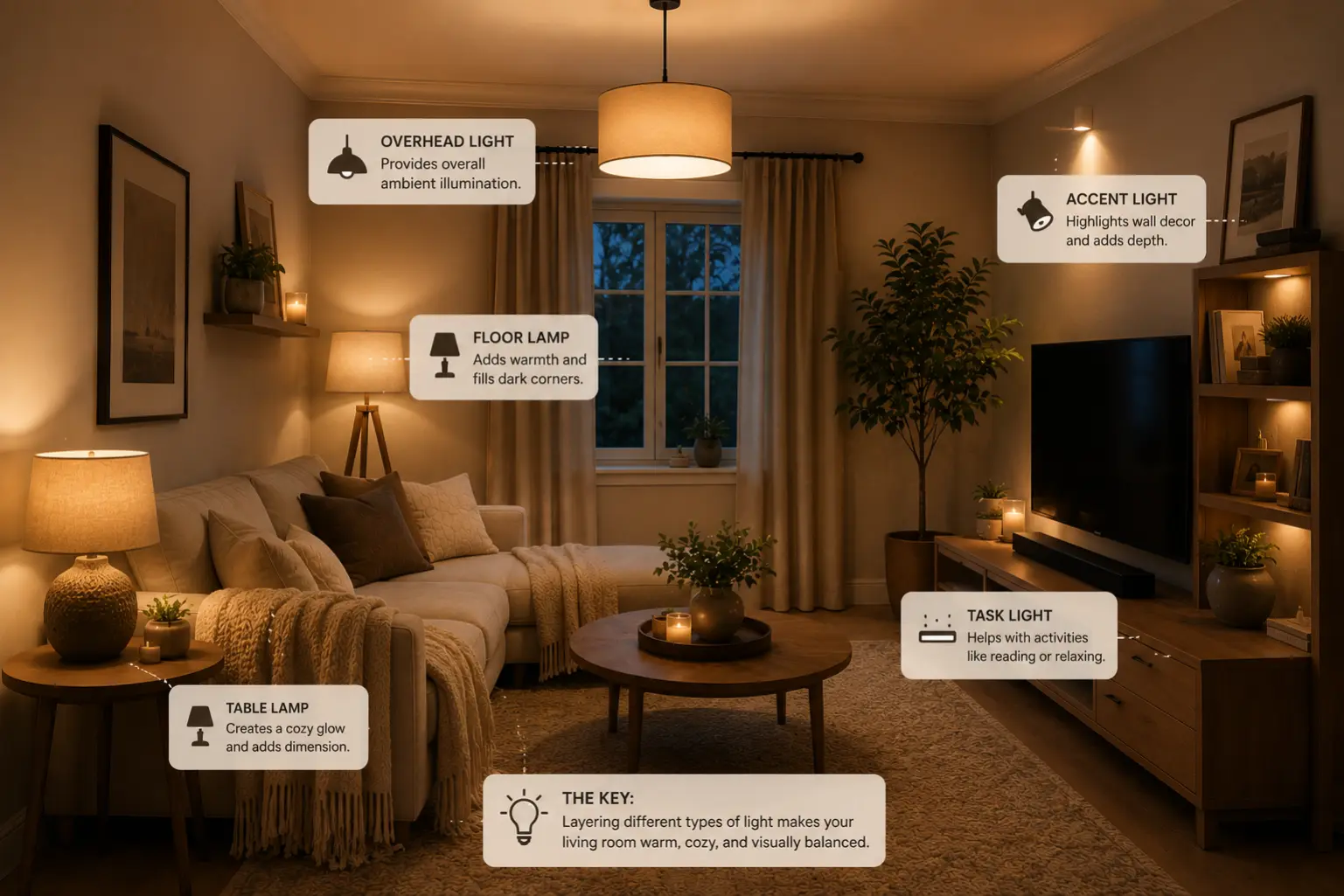
Lighting has a bigger impact on a room’s appearance than many people realize.
A single ceiling light often creates harsh shadows that make a room feel smaller. Instead, combine different types of lighting to brighten every corner and create a more balanced atmosphere.
A well-designed lighting plan typically includes:
- Ambient lighting for overall brightness.
- Task lighting for reading or activities.
- Accent lighting to highlight artwork, shelves, or architectural features.
Table lamps, floor lamps, and wall sconces work together to create a warm, welcoming environment while making the room feel more spacious.
Why It Works
Multiple light sources eliminate dark corners and add depth, making the room appear larger and more comfortable.
Designer Tip
Choose bulbs with a warm white color temperature (around 2700K–3000K) for a cozy yet natural look.
Best For
- Living rooms with limited natural light
- Evening entertaining
- Cozy interiors
Avoid This Mistake
Relying on one bright overhead fixture can flatten the room and create uncomfortable glare.
12. Choose One Large Statement Piece
Many homeowners decorate with several small accessories, believing they’ll add personality to the room. Unfortunately, too many small items often create visual clutter.
Instead, choose one large focal point that immediately draws attention. This could be:
- A large piece of artwork.
- An oversized mirror.
- A striking floor lamp.
- A beautiful media console.
- A statement coffee table.
A single focal point creates structure and makes the entire room feel more organized.
Why It Works
Large statement pieces simplify the visual experience and encourage the eye to focus on one intentional feature instead of dozens of small objects.
Designer Tip
Hang artwork so its center sits roughly at eye level for the most balanced appearance.
Best For
- Modern interiors
- Minimalist homes
- Small living rooms that lack architectural detail
Avoid This Mistake
Avoid creating multiple competing focal points. Too many bold pieces can overwhelm a compact space.
13. Reduce Visual Clutter
Clutter is one of the fastest ways to make any room feel smaller.
Even beautifully designed furniture loses its impact when every surface is covered with decorations, books, cables, or everyday items.
Instead of displaying everything at once, edit your décor carefully. Keep only the pieces you genuinely love and store the rest out of sight.
When styling shelves or coffee tables, leave some empty space between decorative objects. Negative space is just as important as the items themselves.
Why It Works
A cleaner room allows your eyes to move freely, creating the impression of a larger and calmer environment.
Designer Tip
Before adding a new decorative item, remove something else. This simple habit helps maintain balance over time.
Best For
- Busy family homes
- Small apartments
- Minimalist interiors
Avoid This Mistake
Don’t confuse minimalism with emptiness. A room should feel curated and comfortable—not bare.
14. Use Wall-Mounted Storage
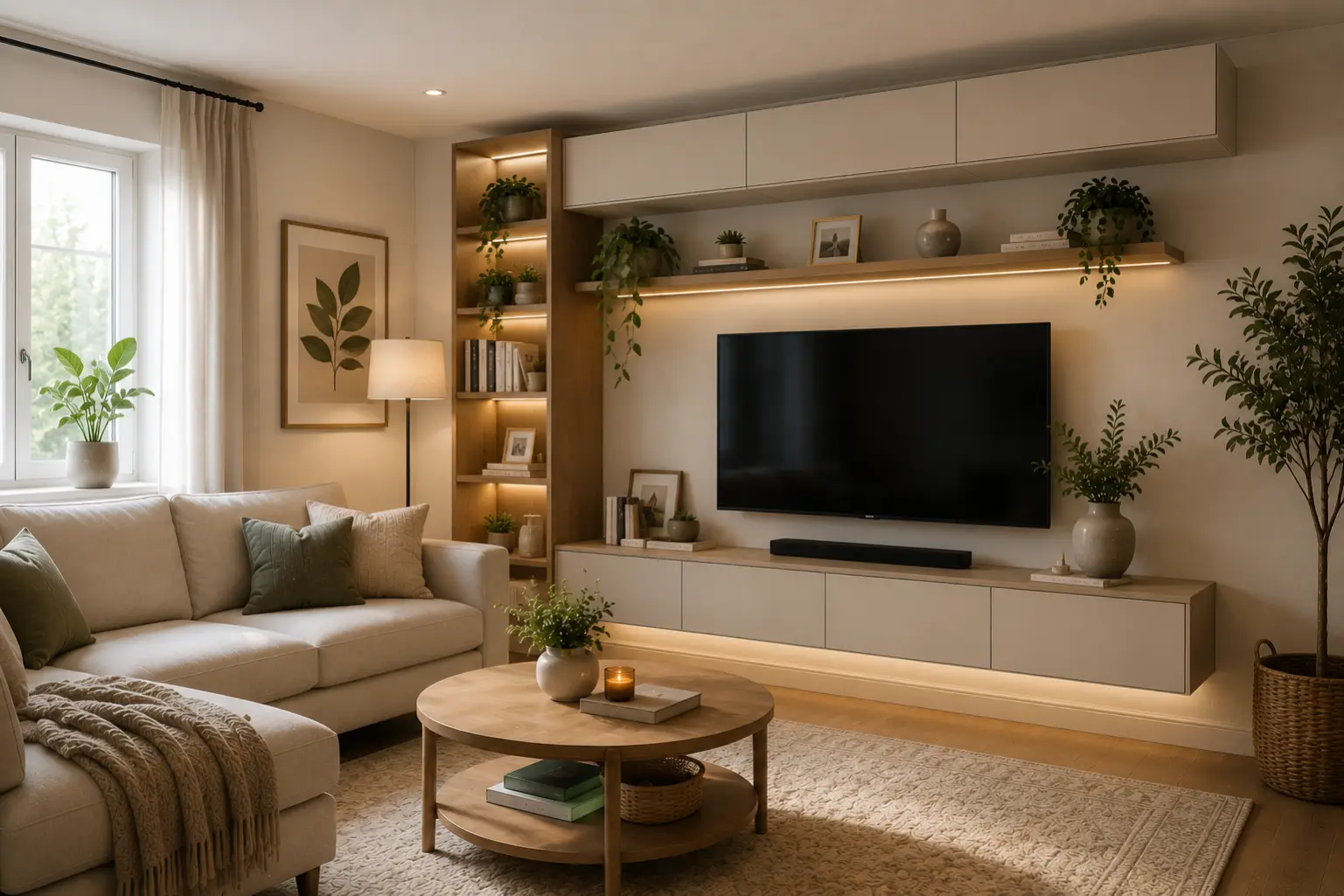
Floor space is limited in small living rooms, but wall space often goes unused.
Wall-mounted cabinets, floating media units, and slim shelves provide practical storage while keeping the floor visible. The more floor you can see, the larger the room appears.
Floating TV units are especially effective because they create a streamlined look and make cleaning underneath much easier.
You can also mount small shelves near seating areas instead of using bulky side tables.
Why It Works
Keeping furniture off the floor creates uninterrupted sightlines and increases the perception of available space.
Designer Tip
Choose wall-mounted storage in a finish that closely matches your wall color for a cleaner, more seamless appearance.
Best For
- Tiny apartments
- Modern homes
- Scandinavian-inspired interiors
Avoid This Mistake
Avoid overloading wall shelves with too many decorative items. Organized storage always looks more spacious than crowded displays.
Design Insight
Many of these ideas share one common principle: they improve visual flow rather than increasing actual square footage.
Interior designers often focus on three questions when working with small spaces:
- Can you see more of the floor?
- Can natural light travel freely through the room?
- Can your eyes move across the space without interruption?
If the answer to all three is yes, the room will almost always feel larger—regardless of its actual size.
15. Let Natural Light Take Center Stage
Natural light is one of the most effective ways to make a small living room feel larger. A bright room appears more open, while a dim room often feels enclosed—even if the square footage is exactly the same.
If your living room has large windows, avoid blocking them with bulky furniture or heavy curtains. Instead, arrange seating to take advantage of daylight and choose lightweight window treatments that allow sunlight to filter through.
You can also enhance natural light by using reflective surfaces, such as glass tables, mirrors, and metallic accents. Even a few carefully placed accessories can help bounce light around the room.
Why It Works
Natural light softens shadows, increases visual depth, and makes wall colors appear brighter and more expansive.
Designer Tip
If privacy isn’t a major concern, choose sheer linen or voile curtains instead of thick blackout panels during the day. They provide softness while still allowing plenty of daylight into the room.
Best For
- Living rooms with large windows
- Apartments with limited square footage
- Homes featuring neutral color palettes
Avoid This Mistake
Avoid placing tall bookcases, cabinets, or oversized plants directly in front of windows. Blocking your main light source instantly makes the room feel smaller.
16. Decorate with Fewer, Larger Accessories
One of the biggest decorating mistakes in small living rooms is filling every shelf, table, and corner with small decorative items.
While each object may look attractive on its own, too many accessories create visual noise. Instead, choose fewer pieces with greater impact.
For example, rather than displaying ten small vases, use one sculptural ceramic vase with a few natural branches. Instead of several tiny framed prints, hang one oversized artwork that anchors the space.
This approach creates a cleaner, more sophisticated look while making the room feel more spacious.
Why It Works
Larger statement accessories simplify the room’s visual composition, allowing your eyes to focus naturally without becoming overwhelmed.
Designer Tip
A good rule is to leave some empty space on shelves, side tables, and consoles. Empty space isn’t wasted—it helps highlight the pieces you choose to display.
Best For
- Modern interiors
- Minimalist homes
- Cozy living rooms
- Scandinavian-inspired spaces
Avoid This Mistake
Don’t feel obligated to decorate every available surface. Carefully chosen pieces often make a stronger impression than an abundance of décor.
Small Living Room Mistakes to Avoid
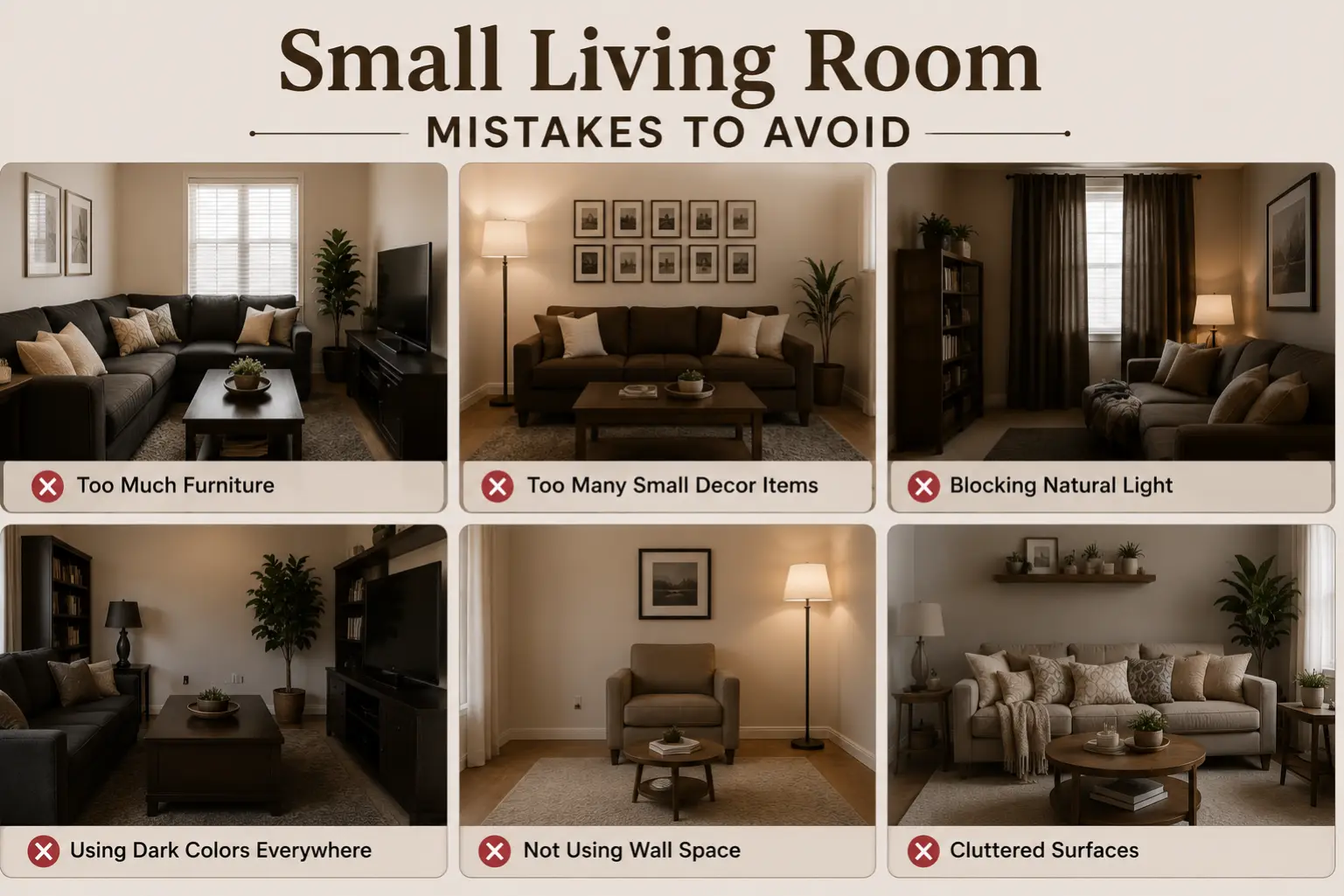
Even beautiful furniture and stylish décor can’t compensate for a layout that works against the room. Avoiding a few common mistakes can make just as much difference as adding new furniture.
1. Buying Furniture Before Measuring
It’s easy to fall in love with a sofa or coffee table online, only to discover it’s too large once it arrives.
Before purchasing any major piece, measure:
- The room dimensions.
- Doorways and hallways.
- Existing furniture.
- Walking space around each piece.
Designer-approved layouts always begin with accurate measurements—not guesswork.
2. Choosing Furniture That’s Too Bulky
Large rolled arms, deep cushions, and oversized recliners may be comfortable, but they often consume far more visual space than necessary.
Look for furniture with:
- Slim arms
- Raised legs
- Simple silhouettes
- Clean lines
These features create a lighter appearance without sacrificing comfort.
3. Using Too Many Small Decorative Items
Collections of candles, figurines, photo frames, and souvenirs can quickly make a compact room feel crowded.
Instead of displaying everything at once, group similar objects together and rotate seasonal décor throughout the year. A carefully edited display always looks more intentional than an overloaded shelf.
4. Ignoring Vertical Space
Many people focus only on floor space while leaving their walls completely empty.
Adding floating shelves, tall bookcases, or vertical artwork helps draw the eye upward and makes ceilings appear higher.
Remember to keep displays balanced rather than filling every inch of available wall space.
5. Blocking Natural Light
Natural light is one of your greatest assets in a small living room. Blocking it with oversized furniture, dark curtains, or heavy décor can instantly make the room feel darker and more confined.
Instead, keep the area around windows as open as possible. If privacy is important, choose light-filtering curtains or adjustable blinds that let daylight enter while maintaining comfort.
6. Using Too Many Dark Colors
Dark paint colors can look dramatic and sophisticated, but when they’re used throughout a small living room, they often absorb light and reduce the sense of openness.
If you love deeper shades, use them as accents rather than the dominant color. Pair them with light walls, natural wood, and plenty of lighting to create balance.
7. Forgetting About Storage
Everyday clutter is one of the quickest ways to make a room feel smaller.
If remote controls, magazines, blankets, toys, or charging cables are always visible, the space can look crowded even when it’s clean.
Look for hidden storage solutions such as:
- Storage ottomans
- Lift-top coffee tables
- Decorative baskets
- Floating cabinets
- Built-in shelving
Keeping everyday items out of sight helps maintain a calm, organized appearance.
8. Following Every Trend
Trends come and go, but a thoughtfully designed living room should remain functional and inviting for years.
Instead of replacing furniture every season, build your room around timeless elements such as:
- Neutral colors
- Quality seating
- Warm lighting
- Natural materials
- Simple decorative accents
Then refresh the space with smaller accessories like cushions, artwork, or throws whenever you want a new look.
Best Color Schemes for Small Living Rooms
Choosing the right color palette can dramatically influence how spacious your living room feels. These timeless combinations create brightness, warmth, and visual continuity.
| Style | Color Palette | Overall Feel |
|---|---|---|
| Cozy | Cream, Beige, Warm Brown | Warm and inviting |
| Modern | Soft White, Greige, Charcoal Accents | Clean and contemporary |
| Scandinavian | White, Oak, Light Gray | Bright and airy |
| Minimalist | Warm White, Sand, Stone | Calm and uncluttered |
| Coastal | Soft White, Beige, Muted Blue | Fresh and relaxing |
| Organic Modern | Ivory, Taupe, Natural Wood, Olive Green | Elegant and grounded |
No matter which palette you choose, keeping the number of dominant colors limited creates a more cohesive look that naturally makes the room feel larger.
Frequently Asked Questions
How can I make a small living room look bigger?
Focus on improving visual space rather than adding more furniture. Light wall colors, mirrors, layered lighting, multifunctional furniture, and reducing clutter can all make a noticeable difference.
What colors make a small living room feel larger?
Soft neutrals such as warm white, cream, beige, greige, and light gray reflect more light and help walls appear farther apart, creating a brighter and more spacious atmosphere.
Should all furniture be placed against the wall?
Not always. While this is a common approach, leaving a small gap behind the sofa or floating key furniture pieces can create greater visual depth and improve the room’s overall layout.
Are mirrors really effective in small spaces?
Yes. Mirrors reflect both light and surrounding views, helping the room feel brighter and more open. Positioning a large mirror opposite a window often provides the greatest effect.
What’s the best sofa for a small living room?
Choose a sofa with clean lines, slim arms, and exposed legs. These designs feel lighter visually while still offering comfortable seating.
How do I reduce clutter without removing everything?
Invest in furniture with hidden storage, keep only your favorite decorative items on display, and organize everyday essentials inside baskets or cabinets. The goal is to simplify the room, not make it feel empty.
Is a large rug better than a small one?
In most cases, yes. A larger rug visually connects the furniture and creates a unified seating area, making the room appear more expansive than several smaller rugs.
What is the biggest mistake when decorating a small living room?
Trying to fit too much into the space. Oversized furniture, excessive decorations, blocked walkways, and poor lighting often make a room feel much smaller than it actually is.
More Home Decor Inspiration
Looking for more ways to transform your home? Explore our favorite decorating guides for every room. Discover 19 Cozy Living Room Ideas That Make Your Home Feel Warm and Inviting for warm textures, layered lighting, and inviting décor. If you’re refreshing your bedroom, don’t miss 25 Cozy Bedroom Ideas That Make Your Room Feel Like a Luxury Retreat, 12 Small Bedroom Ideas That Instantly Maximize Space, and 15 Modern Bedroom Ideas That Never Go Out of Style. Whether you’re decorating a compact apartment or updating your entire home, these guides are packed with practical ideas to help you create beautiful, comfortable spaces you’ll love every day.
Final Thoughts
A small living room doesn’t have to feel limiting. With thoughtful planning, the right furniture, and a few designer-inspired techniques, you can create a space that feels brighter, more functional, and surprisingly spacious.
Start by making one or two meaningful changes rather than trying to redesign the entire room at once. Replacing bulky furniture, improving your lighting, choosing a cohesive color palette, or reducing clutter can each have a noticeable impact. Over time, these small improvements work together to create a living room that feels open, comfortable, and uniquely yours.
Remember, great design isn’t about the size of the room—it’s about making every square foot work beautifully.


No comment