






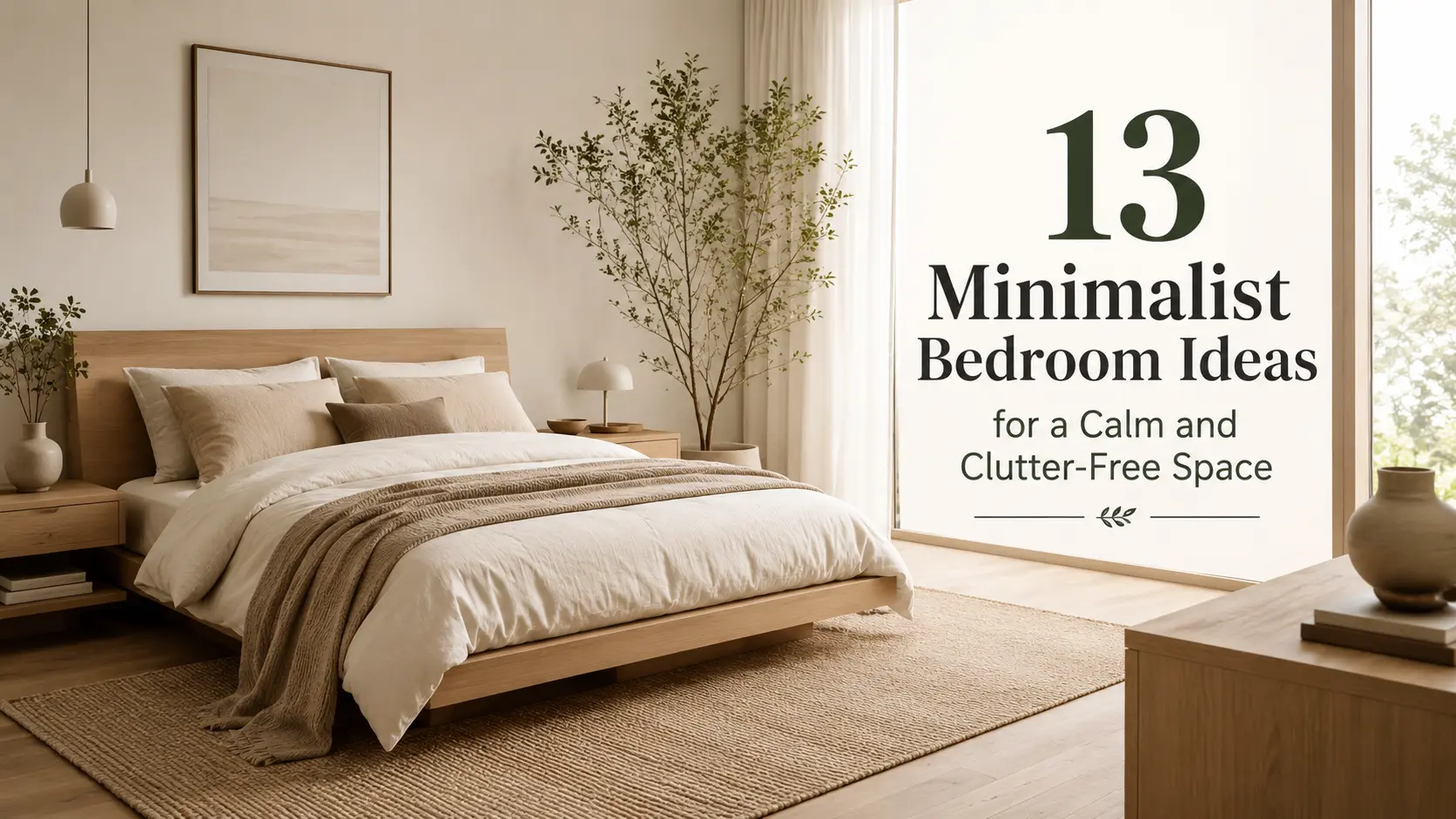
13 Minimalist Bedroom Ideas for a Calm and Clutter-Free Space
Minimalism isn’t about owning less just for the sake of it—it’s about creating a bedroom that feels peaceful, functional, and intentionally designed. A well-designed minimalist bedroom removes visual noise, making it easier to relax, sleep better, and enjoy a space that truly feels like a retreat.
The best part? You don’t need an expensive renovation or designer furniture to achieve the look. A few thoughtful changes—like simplifying your color palette, choosing furniture with clean lines, and reducing unnecessary decor—can completely transform your bedroom.
In this guide, you’ll discover 13 minimalist bedroom ideas that combine timeless style with everyday comfort. Whether you’re decorating a spacious master bedroom or looking for inspiration for a smaller room, these ideas will help you create a calm, clutter-free space that feels warm rather than empty.
If you enjoy clean, timeless interiors, you may also love our guide to 15 Modern Bedroom Ideas That Never Go Out of Style, where you’ll find elegant design inspiration that pairs beautifully with minimalist spaces.
Table of Contents
- What Makes a Bedroom Truly Minimalist?
- 13 Minimalist Bedroom Ideas
- Minimalist Bedroom Color Palettes
- Common Mistakes to Avoid
- Minimalist Bedroom Checklist
- Frequently Asked Questions
What Makes a Bedroom Truly Minimalist?
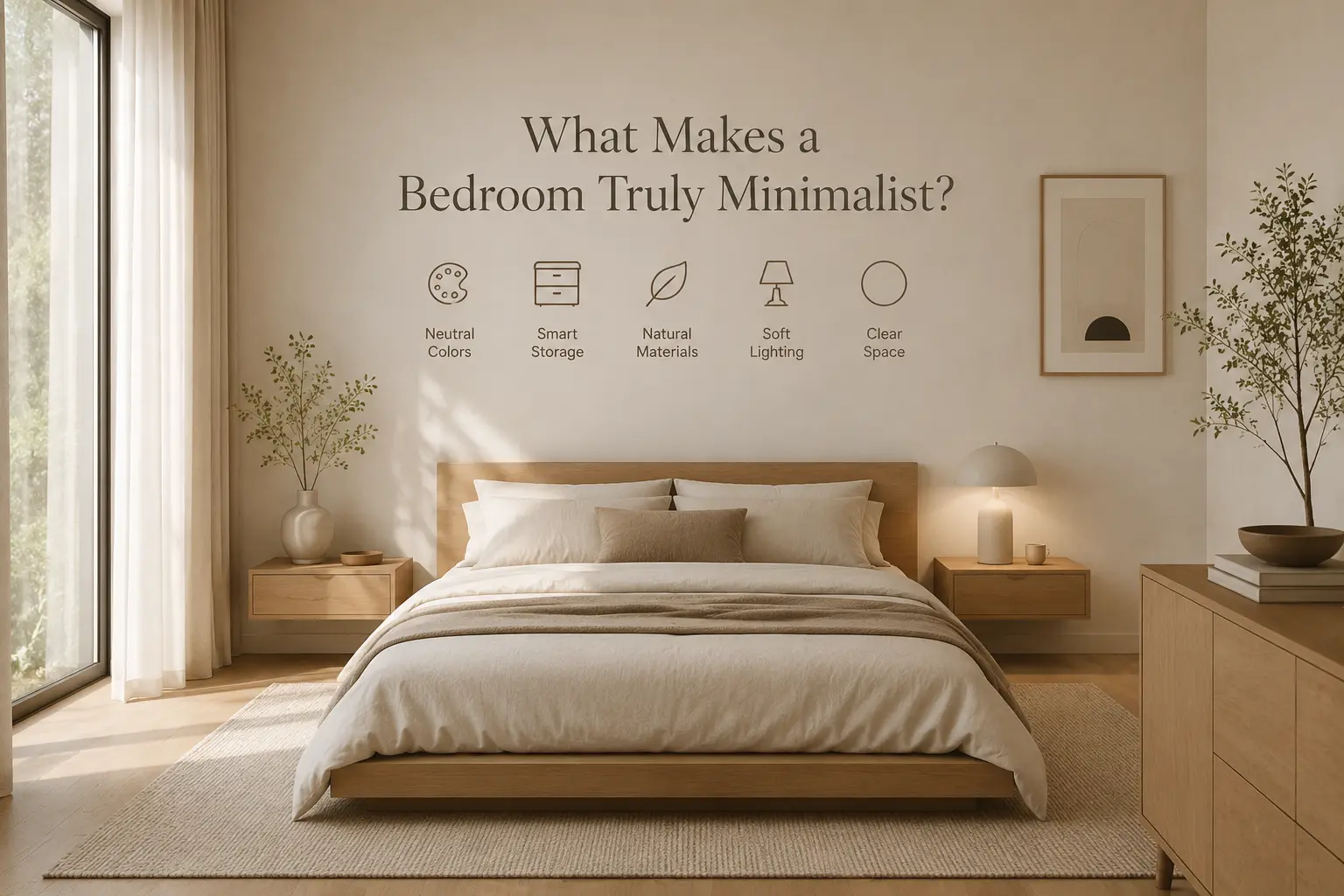
A minimalist bedroom isn’t simply a room with fewer decorations. Instead, it’s a space where every element serves a purpose while contributing to a calm and balanced atmosphere.
Unlike rooms filled with trendy accessories or oversized furniture, minimalist bedrooms focus on quality over quantity. Every piece is chosen intentionally, allowing the room to feel open, functional, and visually relaxing.
A successful minimalist bedroom usually includes:
- Neutral, calming colors
- Clean-lined furniture
- Plenty of natural light
- Hidden storage
- Soft textures
- Limited decorative accessories
- Thoughtful use of empty space
One common misconception is that minimalist interiors must feel cold or sterile. In reality, the most inviting minimalist bedrooms use warm woods, layered textiles, soft lighting, and natural materials to create comfort without visual clutter.
13 Minimalist Bedroom Ideas
1. Choose a Warm Neutral Color Palette
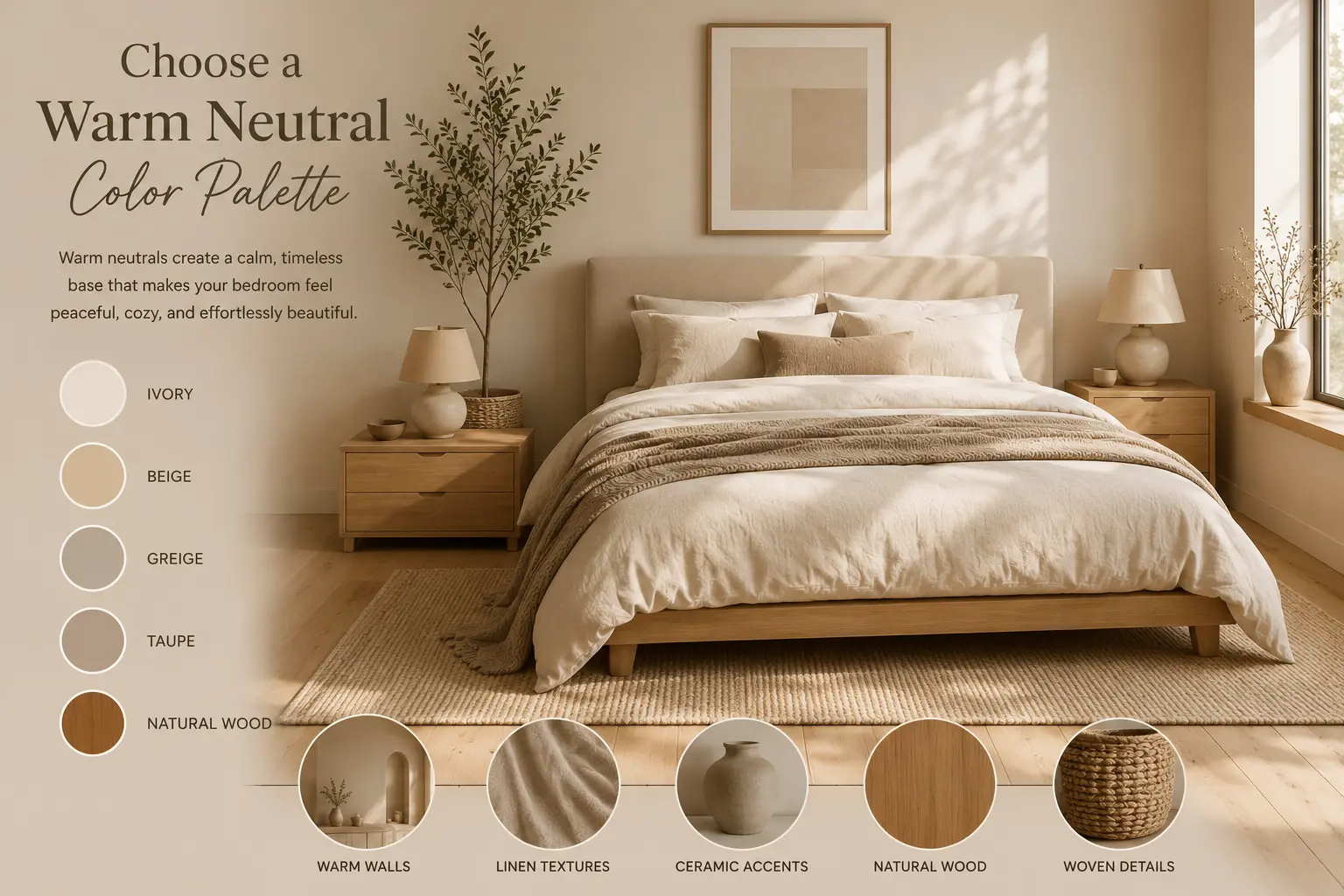
Color sets the emotional tone of your bedroom before furniture or decor ever comes into play. That’s why one of the simplest ways to achieve a minimalist look is by starting with a palette of warm, understated neutrals.
Instead of relying on stark white walls alone, consider softer shades like ivory, warm beige, greige, sand, oatmeal, or light taupe. These colors create a gentle backdrop that feels calm, inviting, and timeless while allowing natural light to bounce beautifully around the room.
To keep the space from feeling flat, layer similar tones rather than introducing bold contrasts. For example, pair cream bedding with a beige upholstered headboard, oak wood furniture, and textured linen curtains. The subtle variations in tone add depth without creating visual noise.
If you’d like your bedroom to feel even more relaxing, incorporate natural materials such as wood, cotton, linen, or woven baskets. These textures enhance the warmth of neutral colors and make the room feel lived in rather than overly styled.
Designer Tip
Stick to three or four main colors throughout the room. Repeating the same tones across bedding, furniture, and accessories creates a cohesive, designer-inspired look.
Common Mistake
Using bright white everywhere can make a bedroom feel clinical rather than peaceful. Mixing warm neutrals with natural textures creates a much softer atmosphere.
If you’re drawn to bedrooms that feel both minimalist and inviting, you’ll also find inspiration in our guide to 25 Cozy Bedroom Ideas That Make Your Room Feel Like a Luxury Retreat, where warm lighting and layered textures take center stage.
2. Keep Furniture Simple and Functional
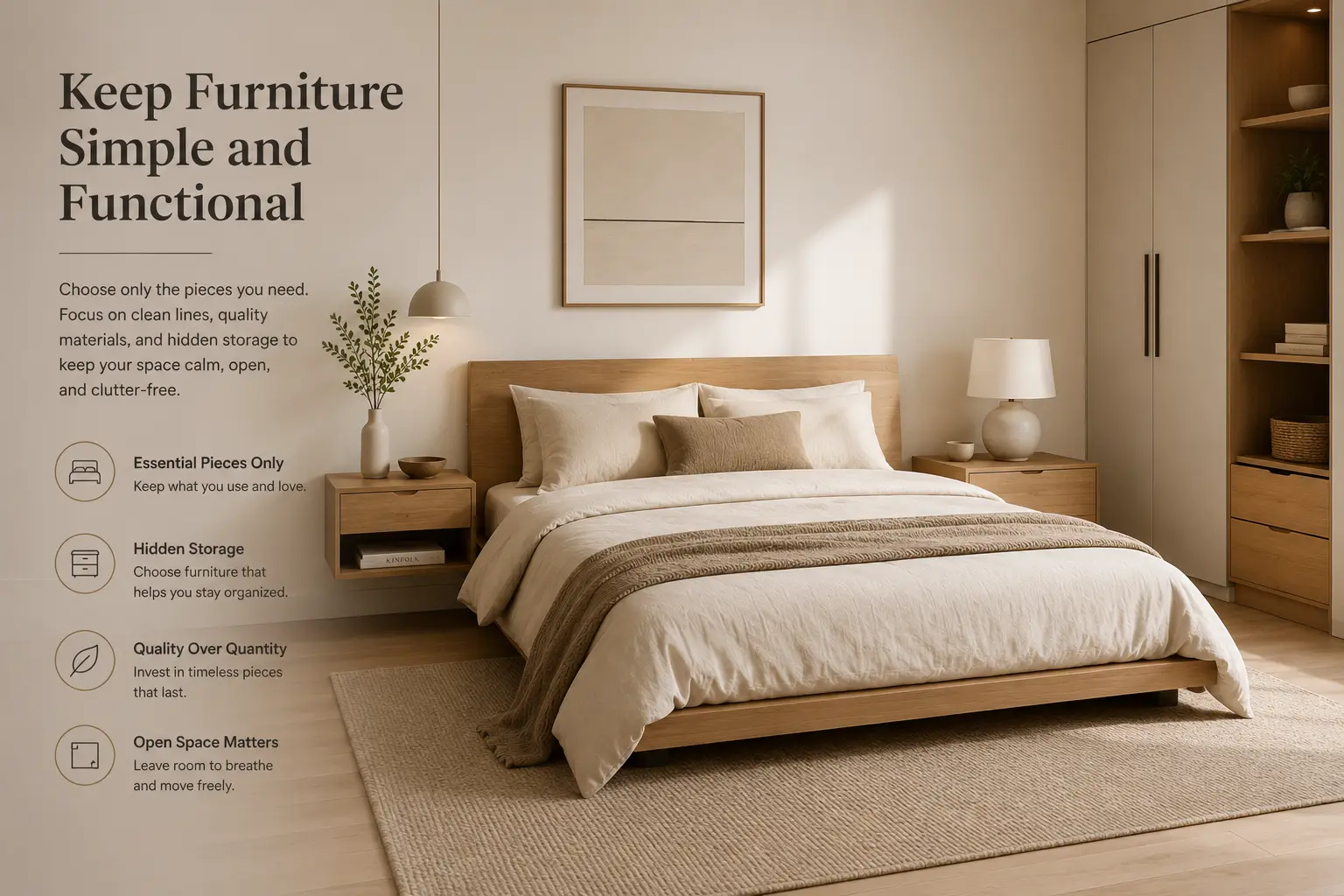
Minimalist bedrooms aren’t defined by how little furniture they contain—they’re defined by choosing furniture that truly deserves its place.
Before adding a new piece, ask yourself a simple question: Does this improve the room, or does it simply fill empty space?
Start with the essentials: a comfortable bed, practical nightstands, and a dresser if you need one. Beyond that, every additional item should have a clear purpose. This approach naturally reduces clutter while making the room feel more spacious and easier to maintain.
Furniture with clean lines works especially well because it creates a sense of order without drawing unnecessary attention. Low-profile bed frames, simple upholstered headboards, floating nightstands, and streamlined dressers all contribute to a balanced, uncluttered look.
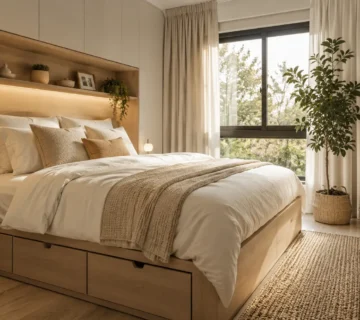
Whenever possible, choose furniture that offers hidden storage. Beds with built-in drawers or storage benches at the foot of the bed help keep everyday items out of sight while maintaining the calm appearance that defines minimalist interiors.
Quality also matters more than quantity. A few well-made pieces often have a greater visual impact than a room filled with inexpensive furniture. Investing in timeless designs means your bedroom will continue to look stylish even as trends change.
Designer Tip
Leave enough space between furniture pieces for comfortable movement. Open floor space is an important part of minimalist design—it helps the room feel lighter and more relaxing.
Common Mistake
Pushing every piece of furniture against the walls doesn’t necessarily make a room feel larger. Instead, focus on creating balanced spacing and clear pathways.
3. Invest in Quality Bedding Instead of More Decor
When designing a minimalist bedroom, your bed should naturally become the focal point of the room. Instead of filling the space with decorative accessories, invest in high-quality bedding that makes the entire bedroom feel luxurious.
Choose breathable natural fabrics like linen, organic cotton, or bamboo for a relaxed, effortless look. These materials not only improve comfort but also add subtle texture that keeps the room from feeling flat.
Layer your bedding thoughtfully rather than excessively. A crisp duvet, two comfortable pillows, a textured throw blanket, and one decorative lumbar pillow are usually enough to create visual interest without overwhelming the space.
Sticking to a consistent color palette also helps. Shades like ivory, oatmeal, soft beige, warm gray, and muted taupe blend beautifully together while maintaining a calm atmosphere.
Remember, minimalist design isn’t about removing comfort—it’s about letting quality speak louder than quantity.
Designer Tip
Hotel-inspired bedrooms often feel luxurious because they prioritize premium bedding over excessive decoration. Focus your budget there first.
Common Mistake
Using too many decorative pillows. While they may look appealing in photos, they often create unnecessary clutter and require constant rearranging.
4. Hide Everyday Clutter with Smart Storage
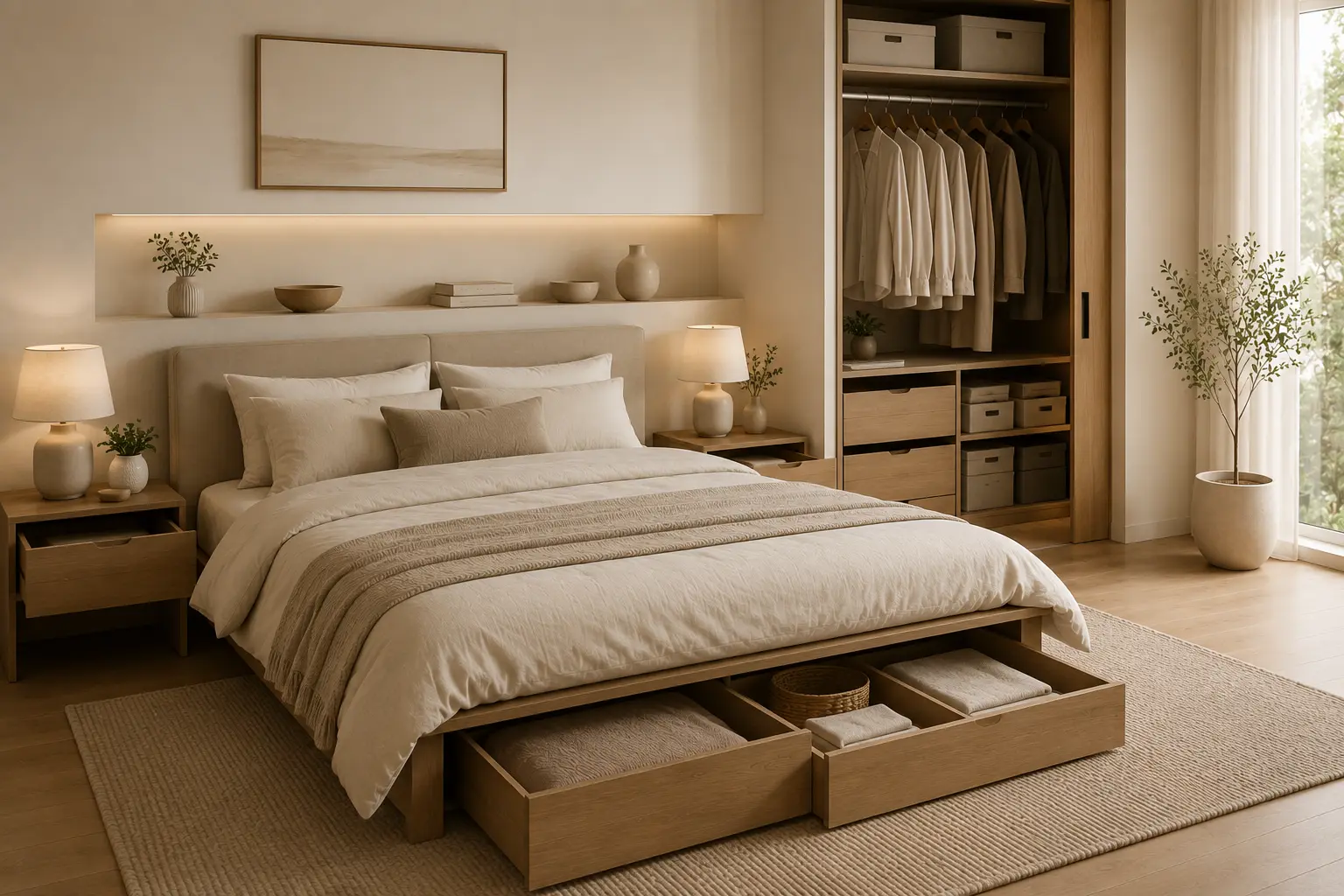
Nothing disrupts a minimalist bedroom faster than visible clutter. Even beautiful furniture can lose its impact when everyday items are left on nightstands, chairs, or open shelves.
The goal isn’t to own fewer things overnight—it’s to give everything a designated place.
Look for furniture that doubles as storage, such as beds with built-in drawers, storage benches, or nightstands with closed cabinets. These solutions help keep books, electronics, chargers, seasonal blankets, and personal items out of sight while maintaining a clean appearance.
Closets also play an important role. Using matching storage boxes, drawer organizers, and slim hangers can instantly make your wardrobe feel more organized and easier to maintain.
Small habits matter just as much as smart furniture. Spending five minutes each evening returning items to their proper place can keep your bedroom looking effortlessly tidy every day.
If you’re working with limited square footage, storage becomes even more important. Our guide to 12 Small Bedroom Ideas That Instantly Maximize Space shares additional solutions for making compact bedrooms feel larger without sacrificing style.
Designer Tip
Whenever possible, choose closed storage instead of open shelving. Hidden storage reduces visual distractions and instantly creates a calmer atmosphere.
Common Mistake
Leaving chargers, cables, books, and miscellaneous items permanently on the nightstand. Even small amounts of clutter can make a room feel busy.
5. Let Natural Light Become the Main Decoration
One of the most overlooked elements of minimalist design isn’t furniture or color—it’s natural light.
Sunlight instantly makes a room feel larger, cleaner, and more peaceful. Rather than blocking windows with heavy curtains or oversized furniture, allow natural light to become one of the room’s defining features.
Choose light-filtering linen curtains that soften the sunlight while maintaining privacy. If privacy isn’t a concern, sheer curtains can create an even brighter and more open atmosphere.
Mirrors can also help amplify natural light by reflecting it throughout the room. Positioning a large mirror opposite or adjacent to a window can dramatically brighten the entire space.
During the evening, switch to warm ambient lighting instead of harsh ceiling lights. Soft bedside lamps, wall sconces, or warm LED bulbs help maintain the relaxing mood long after the sun goes down.
Designer Tip
Use warm bulbs between 2700K and 3000K to create a soft, cozy glow that complements neutral interiors.
Common Mistake
Using cool white lighting throughout the bedroom. It often makes the room feel more like an office than a relaxing retreat.
If you’re looking for inspiration on creating a bedroom that feels both minimalist and inviting, explore our collection of 25 Cozy Bedroom Ideas That Make Your Room Feel Like a Luxury Retreat.
6. Decorate with Natural Materials Instead of More Accessories
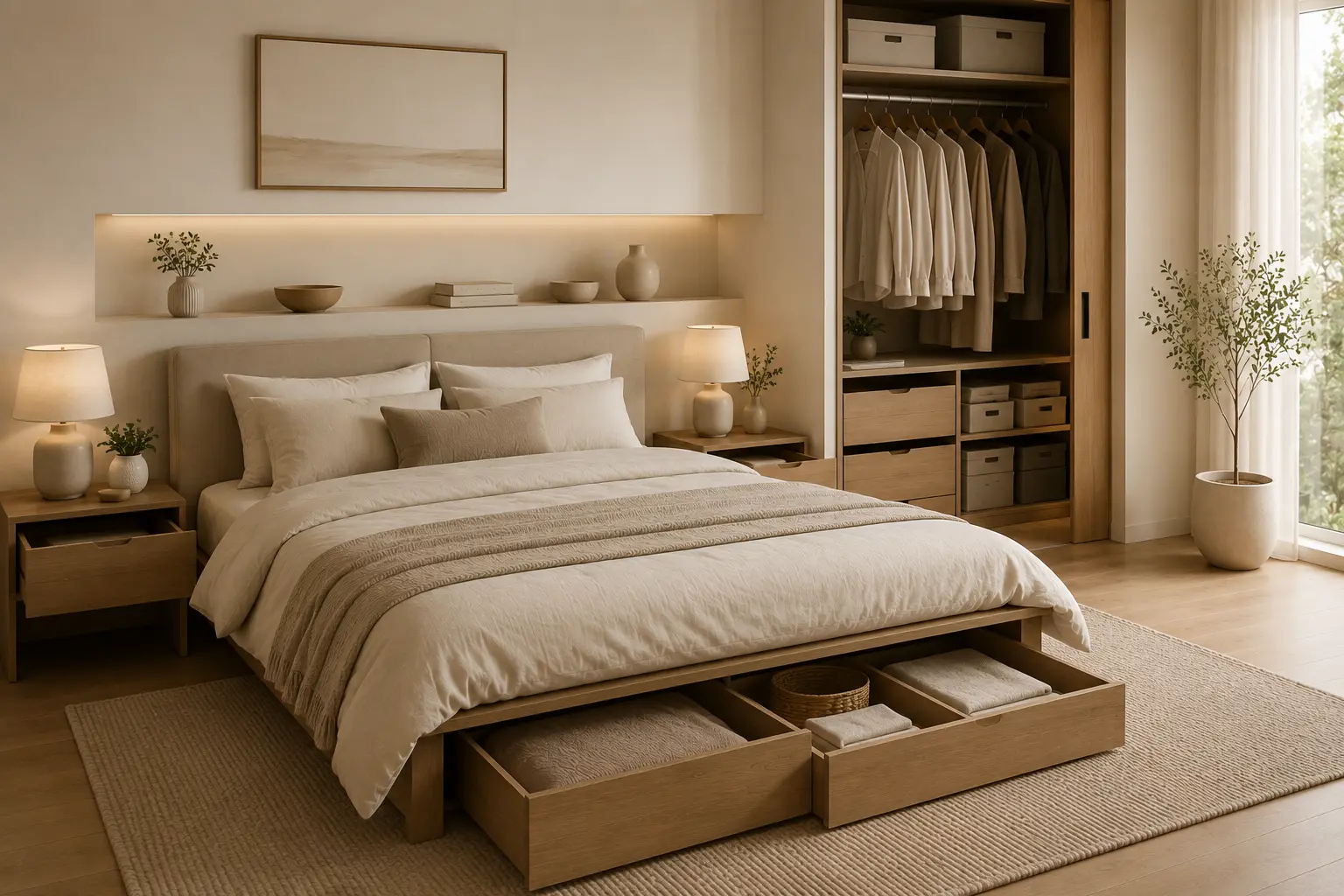
Minimalist bedrooms don’t need dozens of decorative objects to feel complete. In fact, the most elegant spaces often rely on the beauty of natural materials rather than excessive decoration.
Wood, linen, cotton, wool, stone, woven baskets, and ceramic accents all introduce warmth through texture instead of color. These materials create depth while preserving the clean aesthetic that minimalist interiors are known for.
For example, an oak nightstand, linen bedding, a handwoven rug, and a ceramic table lamp can provide enough visual interest without the need for multiple decorative items.
Mixing textures also prevents the room from feeling sterile. A soft knit throw, woven basket, and matte ceramic vase each contribute subtle contrast while staying within the same neutral palette.
The result is a bedroom that feels balanced, sophisticated, and effortlessly calming.
Designer Tip
Limit yourself to three or four primary materials throughout the room. Repeating the same finishes creates a cohesive designer look.
Common Mistake
Mixing too many different wood tones and finishes. Consistency helps minimalist spaces feel intentional rather than random.
7. Create Visual Breathing Room
One of the defining characteristics of beautiful minimalist bedrooms isn’t what they include—it’s what they intentionally leave out.
Empty space, often called negative space, gives the eye a chance to rest. Instead of filling every wall, shelf, or corner, allow certain areas to remain intentionally open.
This approach makes the room feel larger, brighter, and significantly more peaceful.
Resist the temptation to decorate every surface. Leave part of your dresser empty. Keep only a few carefully chosen items on your nightstand. Allow walls to showcase a single large artwork rather than multiple small frames.
Spacing furniture thoughtfully also contributes to this feeling. Walking comfortably around the bed without obstacles enhances both the room’s functionality and its visual balance.
Minimalism isn’t about creating an empty room—it’s about giving every beautiful object enough space to be appreciated.
Designer Tip
If you’re unsure whether a decorative item belongs in the room, temporarily remove it for a week. If you don’t miss it, the room is probably better without it.
Common Mistake
Feeling obligated to fill every empty corner. In minimalist design, empty space is a design element—not wasted space.
8. Choose Floating Nightstands for a More Open Look
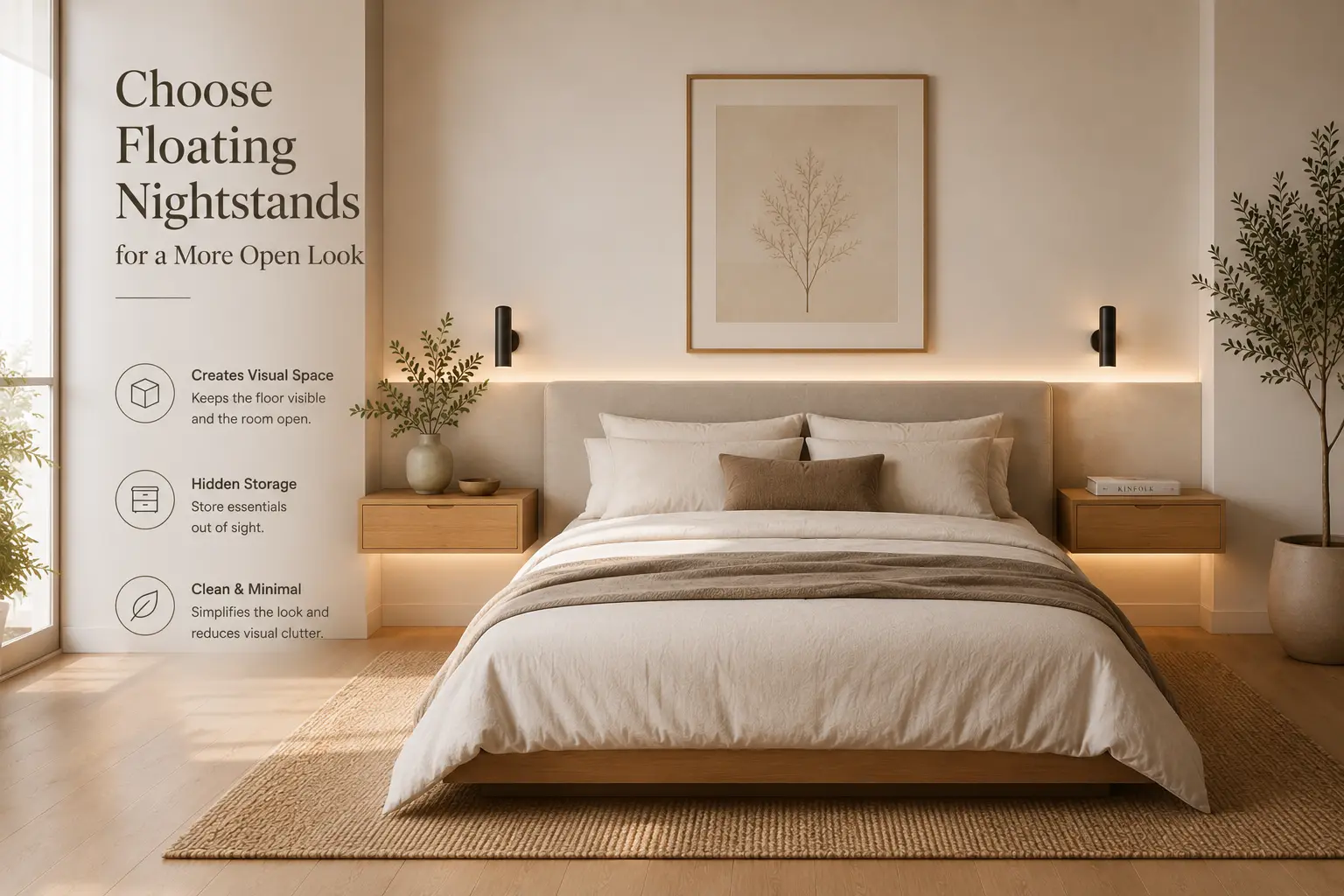
If your bedroom feels cramped or visually heavy, replacing traditional nightstands with floating versions can make a surprising difference.
Because they don’t touch the floor, floating nightstands create the illusion of extra space while keeping the room clean and modern. This simple design trick allows more of your flooring to remain visible, making even small bedrooms appear larger.
They’re also practical. A floating nightstand provides enough room for essentials like a lamp, book, or glass of water without encouraging clutter to pile up. Many designs include a hidden drawer, making it easy to keep chargers, notebooks, and other everyday items neatly tucked away.
When choosing a floating nightstand, look for finishes that complement the rest of your furniture. Natural oak, walnut, or matte white work particularly well in minimalist interiors because they blend seamlessly into neutral color palettes.
Designer Tip
Mount floating nightstands so the top aligns closely with the height of your mattress. This creates a balanced, custom-built appearance.
Common Mistake
Choosing oversized nightstands that dominate the room. In minimalist design, proportion matters just as much as style.
9. Add Texture Instead of More Color
A common misconception is that minimalist bedrooms must rely on bold accent colors to avoid looking boring. In reality, the most sophisticated spaces create depth through texture rather than color.
Instead of introducing bright decorative pieces, layer different materials within the same neutral palette. Think linen bedding, chunky knit throws, woven baskets, boucle chairs, soft wool rugs, and natural wood furniture.
These subtle contrasts add warmth and visual interest without disrupting the calm atmosphere that defines minimalist interiors.
Texture also changes the way light interacts with the room. Sunlight falling across linen curtains, a woven rug, or a textured duvet creates gentle shadows that make the space feel rich and inviting.
Designer Tip
Aim for at least three different textures in your bedroom. For example, combine smooth cotton bedding, natural wood furniture, and a woven area rug for a balanced, layered look.
Common Mistake
Adding bright accent colors simply to create interest. Texture often achieves the same goal in a more timeless and elegant way.
10. Keep Wall Decor Simple and Intentional
Minimalist bedrooms don’t need empty walls—but they do benefit from thoughtful restraint.
Rather than creating a gallery wall filled with small frames, choose one or two larger pieces of artwork that complement the room’s overall style. Oversized art naturally becomes a focal point while maintaining a clean, uncluttered appearance.
Abstract prints, black-and-white photography, botanical sketches, or simple line art all work beautifully in minimalist interiors. Select frames with clean edges and finishes that coordinate with your furniture for a cohesive look.
Mirrors are another excellent option. A large mirror not only serves a practical purpose but also reflects natural light, making the room feel brighter and more spacious.
Designer Tip
Hang artwork so the center sits at eye level for a balanced, gallery-inspired presentation.
Common Mistake
Filling every wall with small decorations. Too many pieces can make even a spacious bedroom feel visually busy.
11. Bring Nature Indoors with a Single Plant
One carefully chosen plant can completely change the mood of a minimalist bedroom.
Natural greenery introduces life, softness, and subtle color without overwhelming the space. Instead of displaying multiple small plants, choose one statement variety that complements the room’s scale.
Low-maintenance options like a snake plant, ZZ plant, rubber plant, or olive tree fit beautifully within minimalist interiors. Their sculptural shapes add interest while reinforcing the calm, organic feel of the room.
Pair your plant with a simple ceramic or concrete planter in a neutral tone to maintain the cohesive aesthetic.
Designer Tip
Position your plant near a window where it receives appropriate light while naturally drawing attention to the room’s brightest area.
Common Mistake
Using several small plants scattered throughout the room. A single larger plant often creates a stronger visual impact.
12. Keep Everyday Essentials Out of Sight
One of the easiest ways to maintain a minimalist bedroom is to reduce what remains visible on a daily basis.
Items like phone chargers, skincare products, books, jewelry, and miscellaneous accessories can quickly create visual clutter—even if the room is otherwise clean.
Instead of leaving these essentials on open surfaces, store them inside drawers, decorative boxes, or bedside cabinets. A tidy nightstand with only a lamp and one book instantly makes the entire room feel more peaceful.
Adopting a simple nightly reset routine can also help. Spend just a few minutes returning items to their designated places before going to bed, ensuring your bedroom feels calm when you wake up the next morning.
Designer Tip
Use drawer organizers to separate small everyday items and make storage more efficient.
Common Mistake
Allowing the nightstand to become temporary storage for everything you carry into the bedroom.
13. Design for Peace, Not Perfection
The most beautiful minimalist bedrooms aren’t perfect—they’re personal.
Rather than chasing an unrealistic image from social media, focus on creating a space that supports your daily routine and helps you unwind. Keep the pieces you genuinely use, choose decor that feels meaningful, and remove only what no longer serves a purpose.
Minimalism should make your bedroom easier to live in, not harder. A room that feels calm, functional, and comfortable will always be more successful than one designed solely for photographs.
As your needs change, allow your bedroom to evolve naturally. The goal isn’t to own as little as possible—it’s to create a space where every element contributes to comfort, clarity, and peace.
Designer Tip
Before adding something new to your bedroom, ask yourself whether it improves the room’s function or simply fills empty space.
Common Mistake
Mistaking minimalism for emptiness. A well-designed minimalist bedroom should feel warm, inviting, and lived in.
Best Minimalist Bedroom Color Palettes
Choosing the right color palette is one of the easiest ways to create a bedroom that feels calm, cohesive, and timeless. Rather than relying on bold contrasts, minimalist interiors work best when colors blend naturally and allow textures to stand out.
Here’s a simple guide to some of the most popular minimalist bedroom palettes:
| Style | Color Palette | Best For |
|---|---|---|
| Warm Minimalist | Cream, Beige, Oak, Ivory | Cozy and inviting spaces |
| Scandinavian | White, Light Gray, Birch | Bright bedrooms with lots of natural light |
| Japandi | Sand, Taupe, Walnut | Warm modern interiors |
| Earthy Minimalist | Stone, Olive, Clay | Nature-inspired bedrooms |
| Modern Minimalist | White, Charcoal, Black | Clean contemporary spaces |
Whichever palette you choose, keep consistency in mind. Repeating the same tones across walls, bedding, furniture, and accessories creates a sense of harmony that makes the room feel professionally designed.
Common Minimalist Bedroom Mistakes to Avoid
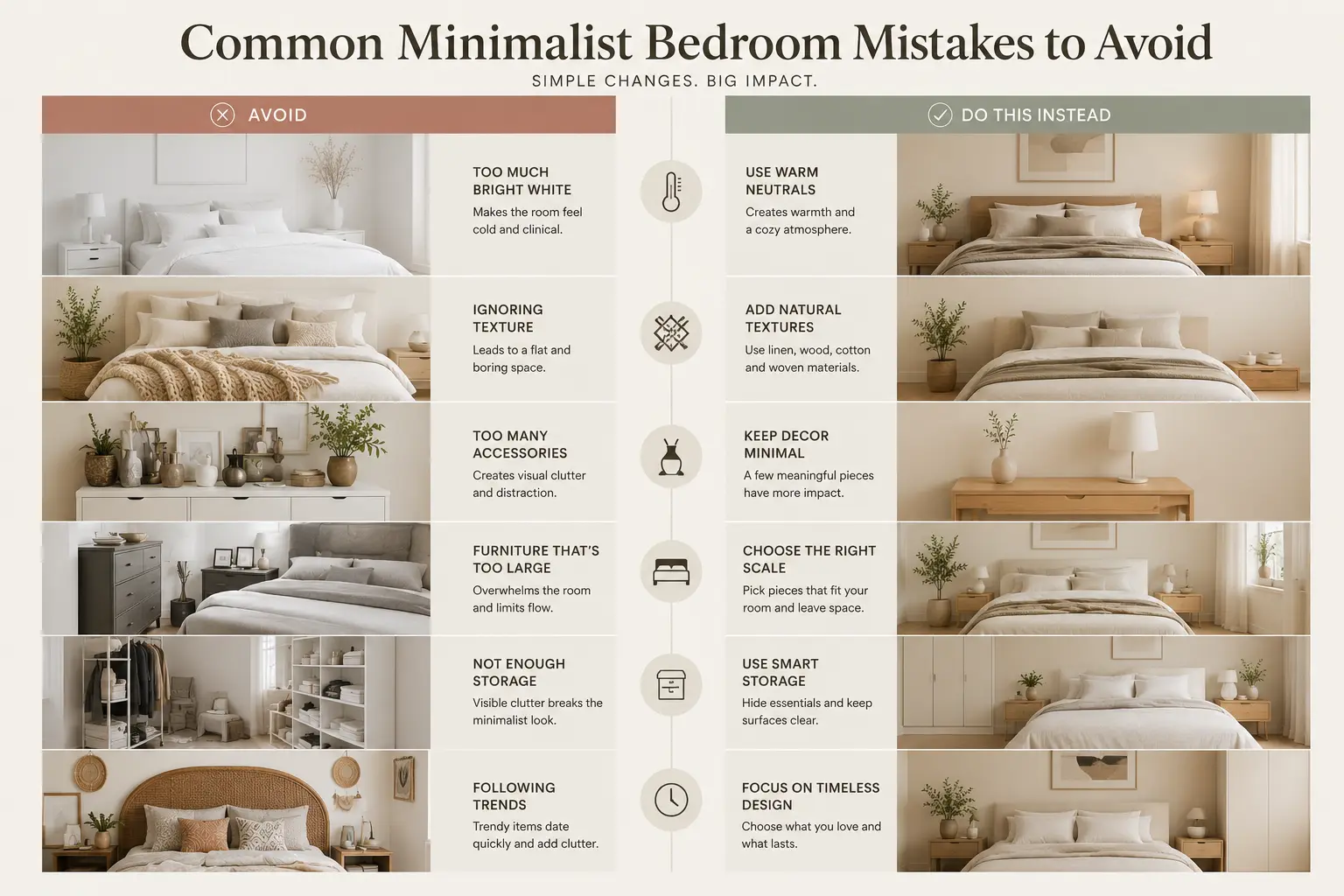
Minimalist design may look effortless, but small decisions can dramatically change how your bedroom feels. Avoiding these common mistakes will help you create a space that feels calm rather than unfinished.
Using Too Much Bright White
Pure white walls, bedding, and furniture can sometimes make a bedroom feel cold or clinical. Introducing warm neutrals like ivory, greige, or beige creates a softer, more welcoming atmosphere.
Ignoring Texture
Without texture, minimalist rooms can appear flat. Layering linen, cotton, wood, wool, and woven materials adds depth while maintaining simplicity.
Buying Too Many Decorative Accessories
Minimalism isn’t about decorating every surface. A few meaningful pieces will always have more impact than dozens of small accessories.
Choosing Furniture That’s Too Large
Oversized furniture can overwhelm even spacious bedrooms. Measure your room carefully and leave enough open space to move comfortably.
Forgetting About Storage
Visible clutter quickly undermines a minimalist aesthetic. Prioritize furniture with hidden storage to keep everyday essentials out of sight.
Following Trends Instead of Your Lifestyle
Your bedroom should support the way you live. Choose timeless pieces you’ll enjoy for years rather than short-lived trends that may soon feel outdated.
Minimalist Bedroom Checklist
Use this quick checklist to evaluate your bedroom and identify simple improvements.
- ☐ Choose a warm neutral color palette.
- ☐ Limit decorative accessories to a few meaningful pieces.
- ☐ Use natural materials like wood, linen, and cotton.
- ☐ Keep everyday clutter hidden with smart storage.
- ☐ Invest in high-quality bedding.
- ☐ Maximize natural light during the day.
- ☐ Add warm ambient lighting for evenings.
- ☐ Leave some surfaces intentionally empty.
- ☐ Include one statement artwork or mirror.
- ☐ Add one healthy indoor plant.
- ☐ Maintain a consistent color palette.
- ☐ Organize your bedroom regularly.
Remember, you don’t need to complete everything at once. Even one or two thoughtful changes can make your bedroom feel noticeably calmer.
Frequently Asked Questions
What colors work best in a minimalist bedroom?
Warm neutrals such as ivory, beige, greige, soft gray, and sand create a calming atmosphere while making it easier to layer natural textures.
Can a minimalist bedroom still feel cozy?
Absolutely. Soft lighting, quality bedding, warm wood furniture, and textured fabrics help minimalist bedrooms feel inviting instead of cold.
For more inspiration, explore our guide to 25 Cozy Bedroom Ideas That Make Your Room Feel Like a Luxury Retreat, where you’ll find additional ideas for creating a warm and relaxing retreat.
How do I make a small bedroom look minimalist?
Focus on furniture with hidden storage, floating nightstands, light colors, and keeping unnecessary items out of sight.
If you’re decorating a compact space, don’t miss 12 Small Bedroom Ideas That Instantly Maximize Space for even more practical solutions.
What’s the difference between minimalist and modern bedroom design?
Minimalist design emphasizes simplicity, functionality, and reducing visual clutter. Modern bedroom design often includes clean lines as well but may incorporate bolder materials, contrasting colors, and contemporary furniture styles.
If you’re drawn to timeless contemporary interiors, you’ll also enjoy 15 Modern Bedroom Ideas That Never Go Out of Style.
How much furniture should a minimalist bedroom have?
Only include furniture you genuinely use. Most minimalist bedrooms need a bed, one or two nightstands, appropriate storage, and perhaps a chair if it serves a practical purpose.
Is minimalism expensive?
Not necessarily. Minimalism often encourages buying fewer, better-quality items over time rather than filling a room with inexpensive furniture and accessories.
Final Thoughts
Creating a minimalist bedroom isn’t about making your space feel empty—it’s about making it feel intentional.
By simplifying your color palette, investing in quality essentials, reducing clutter, and embracing natural materials, you can transform almost any bedroom into a peaceful retreat that supports better rest and everyday comfort.
The best minimalist bedrooms evolve over time. Start with one improvement, see how it changes the feel of your space, and continue making thoughtful choices that reflect your lifestyle rather than short-lived trends.
If you’re looking for more bedroom inspiration, continue exploring these guides:
- 25 Cozy Bedroom Ideas That Make Your Room Feel Like a Luxury Retreat — Learn how to make your bedroom feel warm, inviting, and effortlessly luxurious.
- 12 Small Bedroom Ideas That Instantly Maximize Space — Discover clever design tricks that make compact bedrooms feel bigger and brighter.
- 15 Modern Bedroom Ideas That Never Go Out of Style — Explore timeless modern designs that combine elegance with everyday functionality.




No comment