






19 Cozy Living Room Ideas That Make Your Home Feel Warm and Inviting
Imagine walking into a living room that immediately helps you relax. The lighting feels soft, the textures invite you to sit down, and every detail creates a sense of comfort without looking cluttered. That’s what a truly cozy living room should feel like.
Many people believe creating a warm and inviting space means buying expensive furniture or following every interior design trend. In reality, the most comfortable living rooms are built around thoughtful choices that work together. Warm lighting, layered textures, natural materials, balanced furniture layouts, and meaningful decorative pieces all contribute to a space that feels welcoming.
Whether you have a spacious family room, a compact apartment, or a small living area, you can achieve this look without a complete renovation. Even a few intentional updates can dramatically change how your home looks and feels.
In this guide, you’ll discover 19 cozy living room ideas that designers regularly use to create spaces that are stylish, functional, and comfortable throughout every season. You’ll also learn which decorating mistakes to avoid, how to choose the right colors, and simple ways to make your living room feel more inviting every day.
Table of Contents
- What Makes a Living Room Feel Cozy?
- Popular Cozy Living Room Styles
- 19 Cozy Living Room Ideas
- Cozy Living Room Ideas by Room Size
- Best Color Palettes for Cozy Spaces
- Common Decorating Mistakes
- Frequently Asked Questions
What Makes a Living Room Feel Cozy?
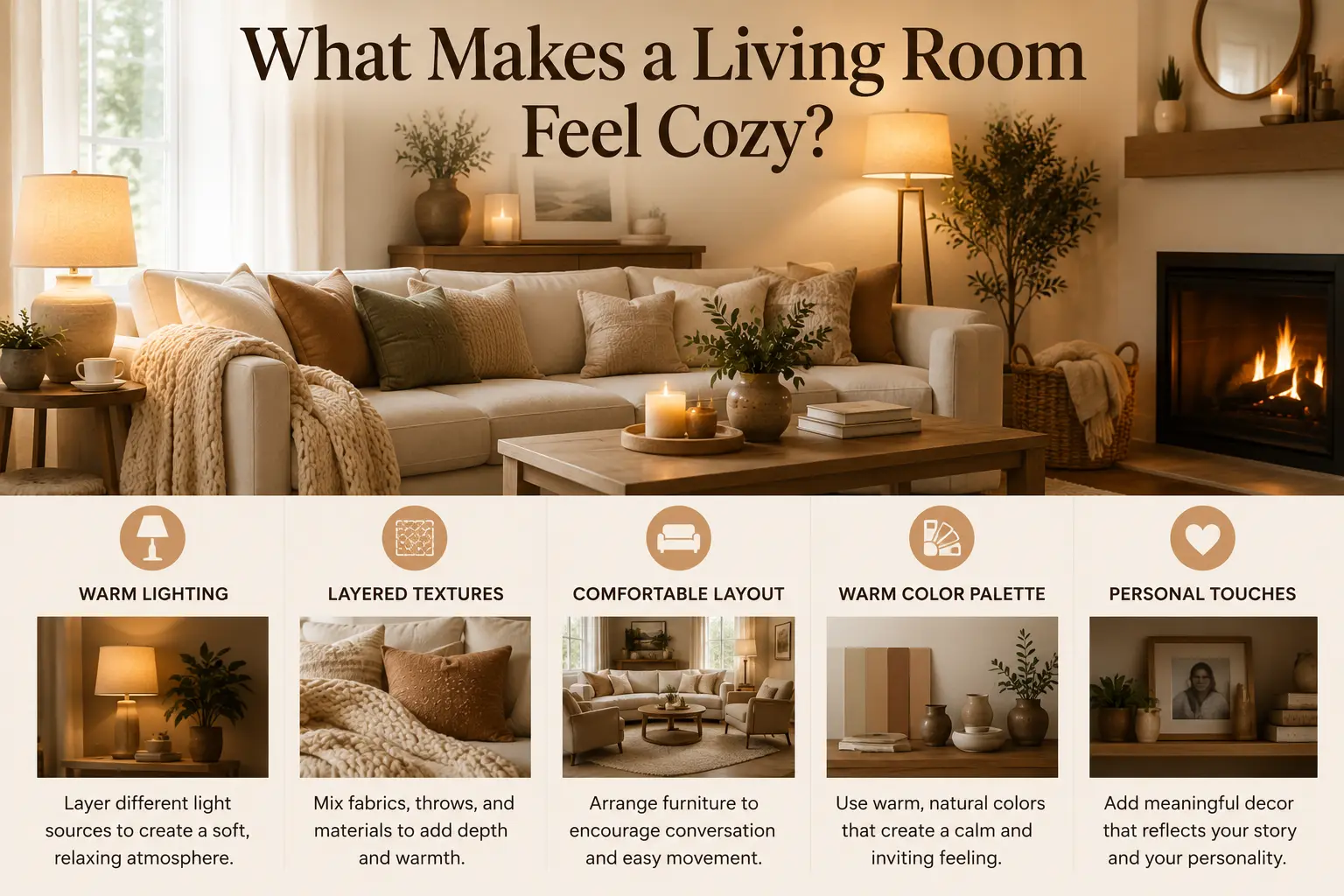
Before choosing new furniture or buying decorative accessories, it’s important to understand what actually creates a cozy atmosphere. Surprisingly, comfort has less to do with how many items you own and more to do with how well every element works together.
The most inviting living rooms typically share five essential characteristics.
Warm Lighting
Lighting is often the biggest difference between a room that feels cold and one that feels welcoming. Instead of relying on a single bright ceiling light, designers layer multiple light sources throughout the room.
A combination of table lamps, floor lamps, wall sconces, candles, and warm LED bulbs creates soft shadows that instantly make a space feel more relaxing.
Designer Tip
Choose bulbs around 2700K for a warm, comfortable glow instead of cool white lighting.
Layered Textures
Texture gives a room visual warmth even when using a neutral color palette.
Combine different materials like:
- Linen
- Wool
- Bouclé
- Velvet
- Cotton
- Natural wood
- Woven baskets
- Ceramic accessories
When these textures are layered together, the room feels richer without becoming visually overwhelming.
Comfortable Furniture Layout
A cozy room encourages conversation.
Instead of pushing every piece of furniture against the wall, arrange seating so people naturally face one another. Even in a small apartment, floating a sofa a few inches away from the wall can create a more intentional layout.
Warm Color Palette
Color has a significant impact on how comfortable a room feels.
Warm neutrals such as cream, beige, taupe, greige, warm white, caramel, olive green, and terracotta create a relaxing foundation that works in every season.
These colors also make it easier to update your decor throughout the year without replacing major furniture pieces.
Personal Touches
The coziest homes never feel like furniture showrooms.
Books you’ve actually read, framed family photos, travel souvenirs, handmade pottery, and meaningful artwork all help create a space that reflects your personality rather than current decorating trends.
Popular Cozy Living Room Styles
There’s no single definition of a cozy living room. The right style depends on your taste and the atmosphere you want to create.
Modern Cozy
Clean furniture lines paired with soft fabrics, warm lighting, and natural wood create a modern space that still feels inviting.
Perfect for homeowners who prefer minimal clutter.
Scandinavian Cozy
Inspired by Nordic interiors, this style combines bright spaces with soft textiles, simple furniture, and warm neutral colors to create a calm atmosphere.
Farmhouse Cozy
Natural wood finishes, vintage-inspired accessories, woven baskets, and comfortable slipcovered sofas make farmhouse interiors feel welcoming without trying too hard.
Japandi
Japandi combines Japanese simplicity with Scandinavian comfort.
Expect clean lines, calming colors, handcrafted materials, and intentional decorating.
Boho Cozy
Layered rugs, textured pillows, plants, woven materials, and earthy colors create a relaxed environment filled with personality.
Minimalist Cozy
Minimalism doesn’t have to feel cold.
Choosing fewer but higher-quality decorative pieces, soft textiles, and warm lighting creates a minimalist room that still feels comfortable.
1. Layer Different Lighting Instead of Relying on One Ceiling Fixture
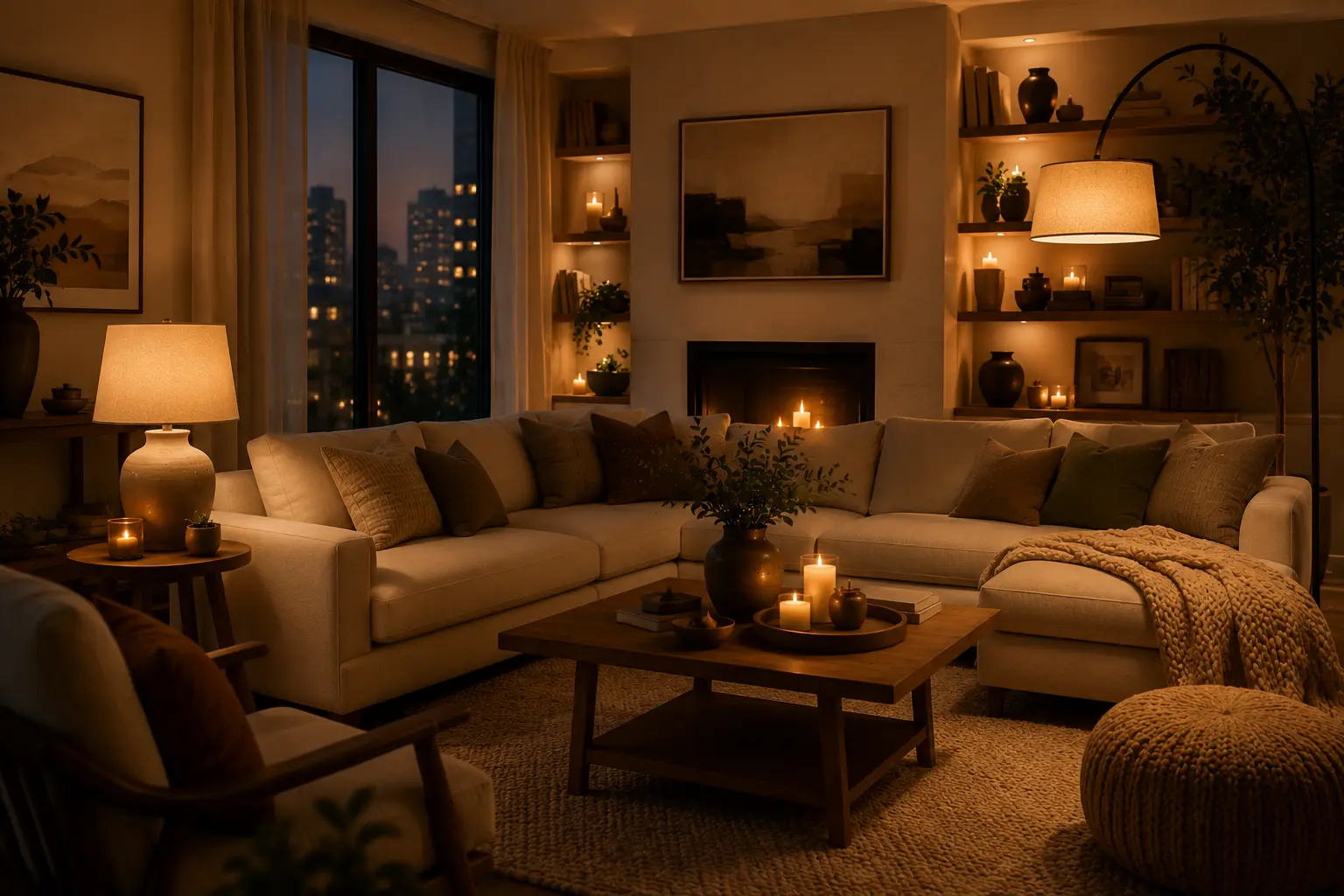
Many living rooms feel cold simply because they’re lit by a single overhead light.
Professional interior designers almost never rely on one lighting source. Instead, they create depth by combining ambient, task, and accent lighting throughout the room.
For example, a floor lamp beside the sofa, a table lamp on a side table, and candles placed on the coffee table work together to produce a much softer atmosphere than one bright ceiling fixture ever could.
Warm lighting also highlights textures like knit blankets, linen curtains, and wooden furniture, making the room feel naturally inviting.
Why It Works
Different light levels create visual depth, reduce harsh shadows, and encourage relaxation, especially during the evening.
Designer Tip
Use dimmable warm-white bulbs whenever possible. Being able to adjust brightness throughout the day makes your living room feel comfortable in every season.
Common Mistake
Using bright daylight bulbs throughout the entire room.
They often make neutral colors appear flat and remove the cozy feeling you’re trying to create.
2. Choose Warm Neutral Colors as Your Foundation
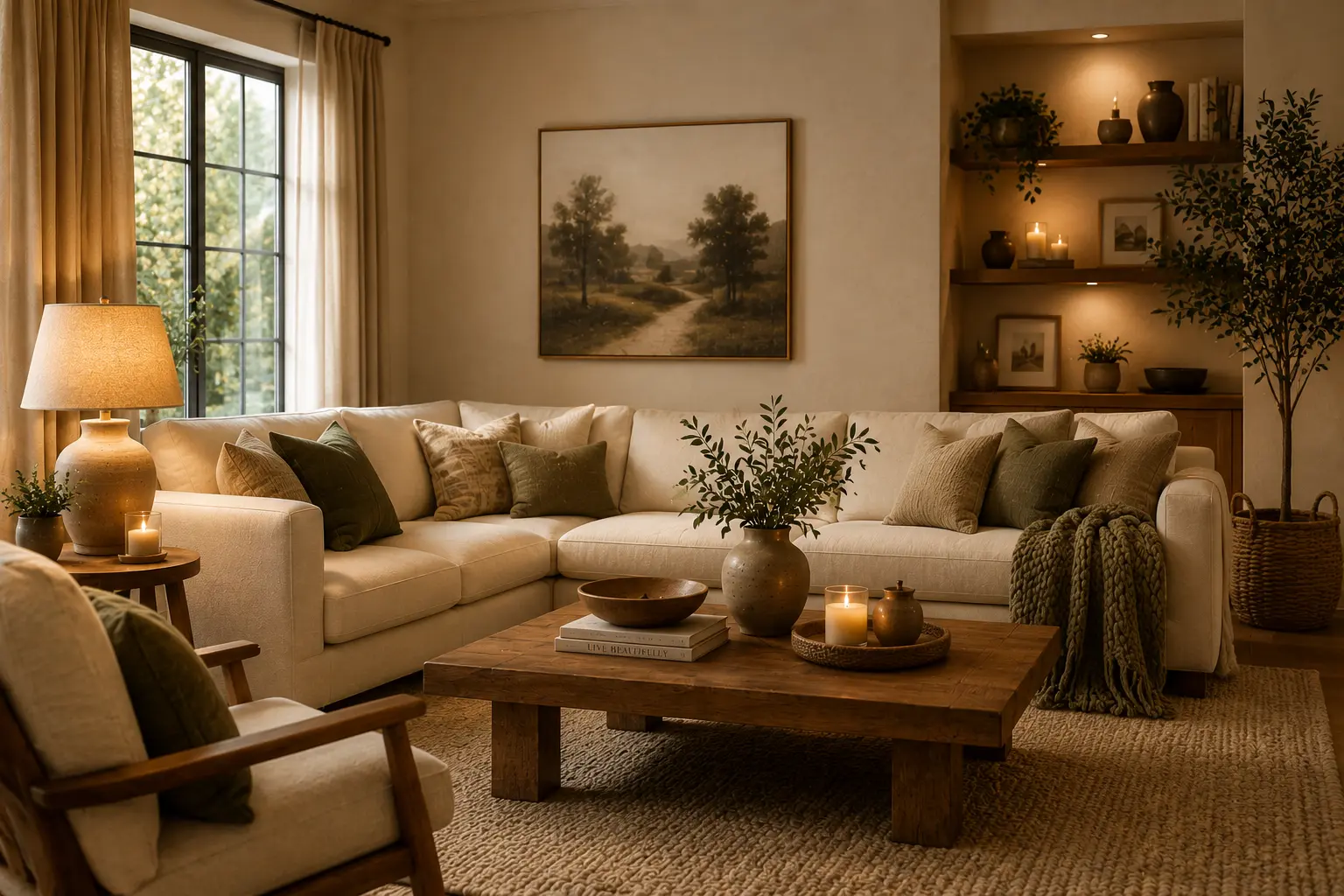
Color sets the mood long before anyone notices your furniture or decor.
While cool gray interiors dominated for years, today’s coziest living rooms embrace warmer shades that feel timeless and relaxing.
Start with a neutral base using colors like cream, beige, greige, taupe, or warm white. These shades reflect natural light beautifully while creating a calm backdrop for layered textures and decorative accents.
Once the foundation is in place, introduce earthy tones such as olive green, terracotta, caramel, or muted rust through pillows, artwork, throws, or ceramics. This approach keeps the room feeling rich without becoming visually overwhelming.
Why It Works
Warm neutrals create a welcoming atmosphere and make it easier to mix materials like wood, linen, boucle, and woven baskets without clashing.
Designer Tip
Choose one dominant neutral color for walls and larger furniture pieces, then add two or three accent colors that repeat throughout the room for a cohesive look.
Common Mistake
Using too many trendy colors at once. A limited palette almost always feels more elegant and relaxing.
10. Decorate with Books That Reflect Your Personality
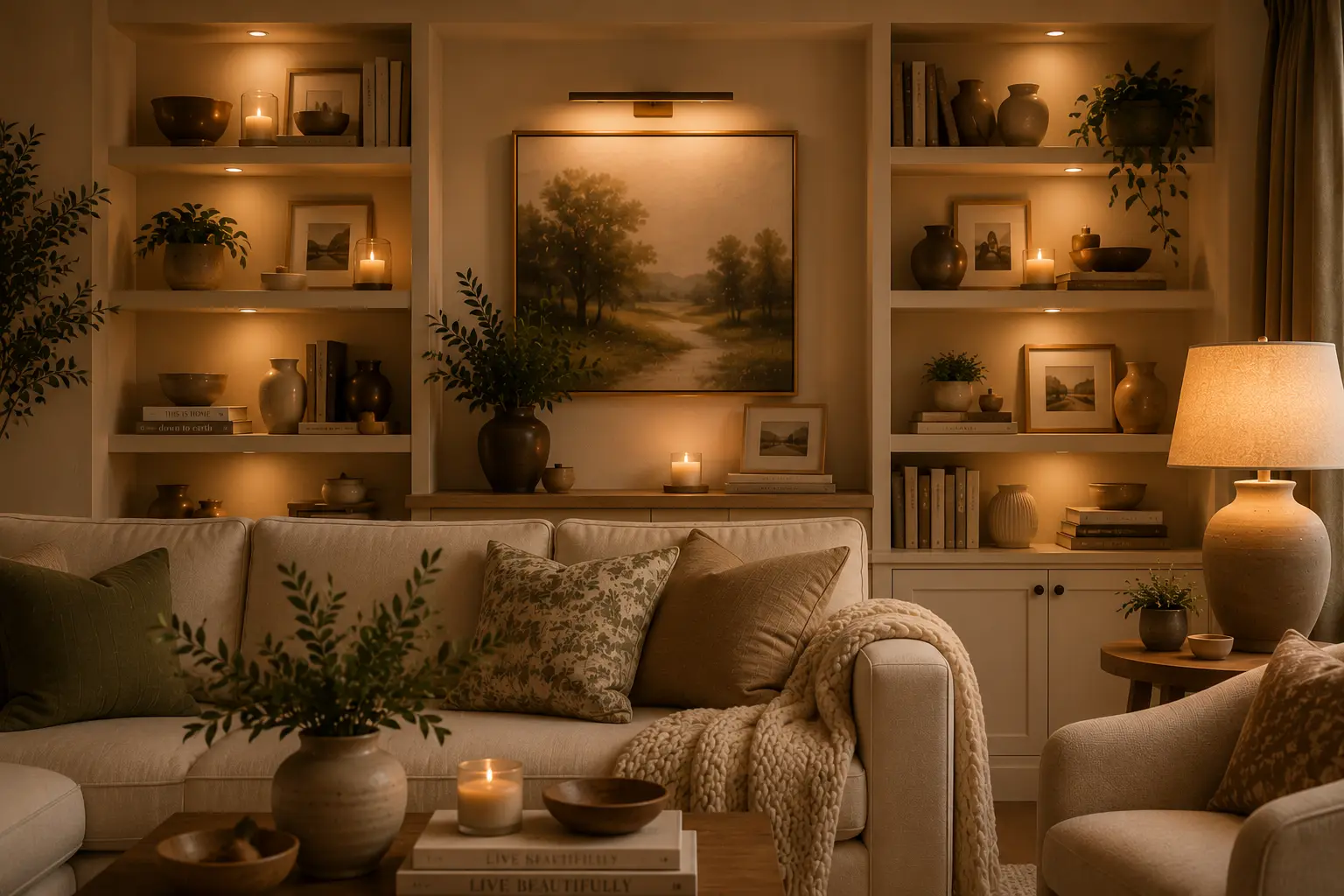
Books do more than fill empty shelves—they make a living room feel personal, lived-in, and welcoming.
Instead of buying decorative books solely for their covers, display books you genuinely enjoy reading. Stack a few on your coffee table, style them on open shelves, or pair them with candles and small ceramic objects.
Books instantly tell a story about the people who live in the home, making the space feel authentic rather than staged.
Why It Works
Personal items create emotional warmth. A room filled with meaningful objects naturally feels more inviting than one designed only for appearances.
Designer Tip
Arrange books both vertically and horizontally, then leave some empty space between decorative objects to keep shelves from feeling crowded.
Common Mistake
Filling every shelf completely. Empty space is just as important as decoration.
11. Mix Different Materials for a Designer Finish
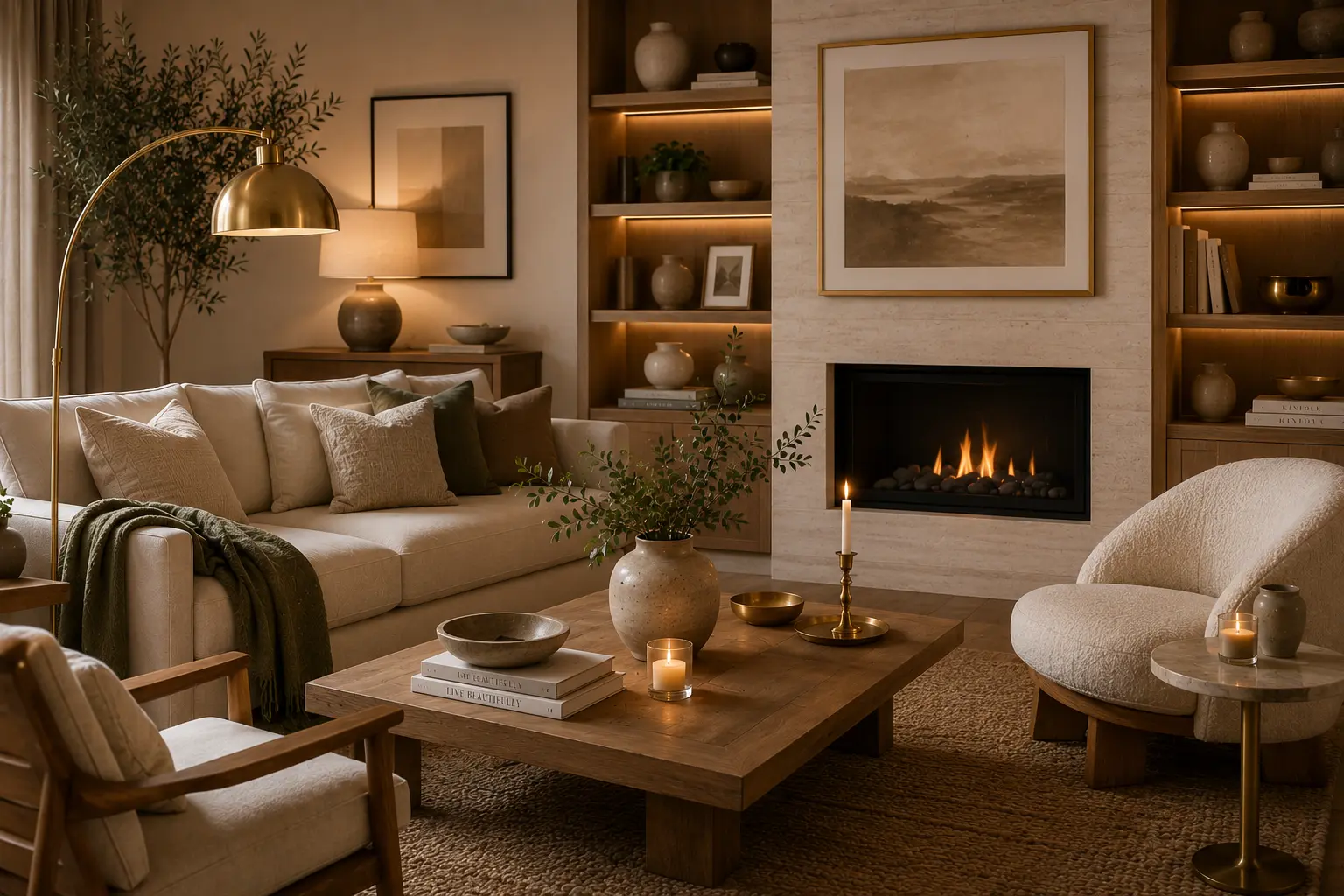
Professional interior designers rarely use one material throughout an entire room.
Instead, they combine wood, linen, stone, metal, glass, leather, woven fibers, and ceramics to create a balanced interior.
For example:
- Linen sofa
- Oak coffee table
- Marble tray
- Ceramic vase
- Brass floor lamp
- Woven baskets
Each material brings a unique texture, making the room feel layered without relying on bold colors.
Why It Works
Material contrast creates visual richness while maintaining a calm and cohesive color palette.
Designer Tip
Choose one dominant material—such as wood—and use the others as supporting accents.
Common Mistake
Buying matching furniture sets made from identical materials.
12. Add Warm Ambient Lighting with Candles
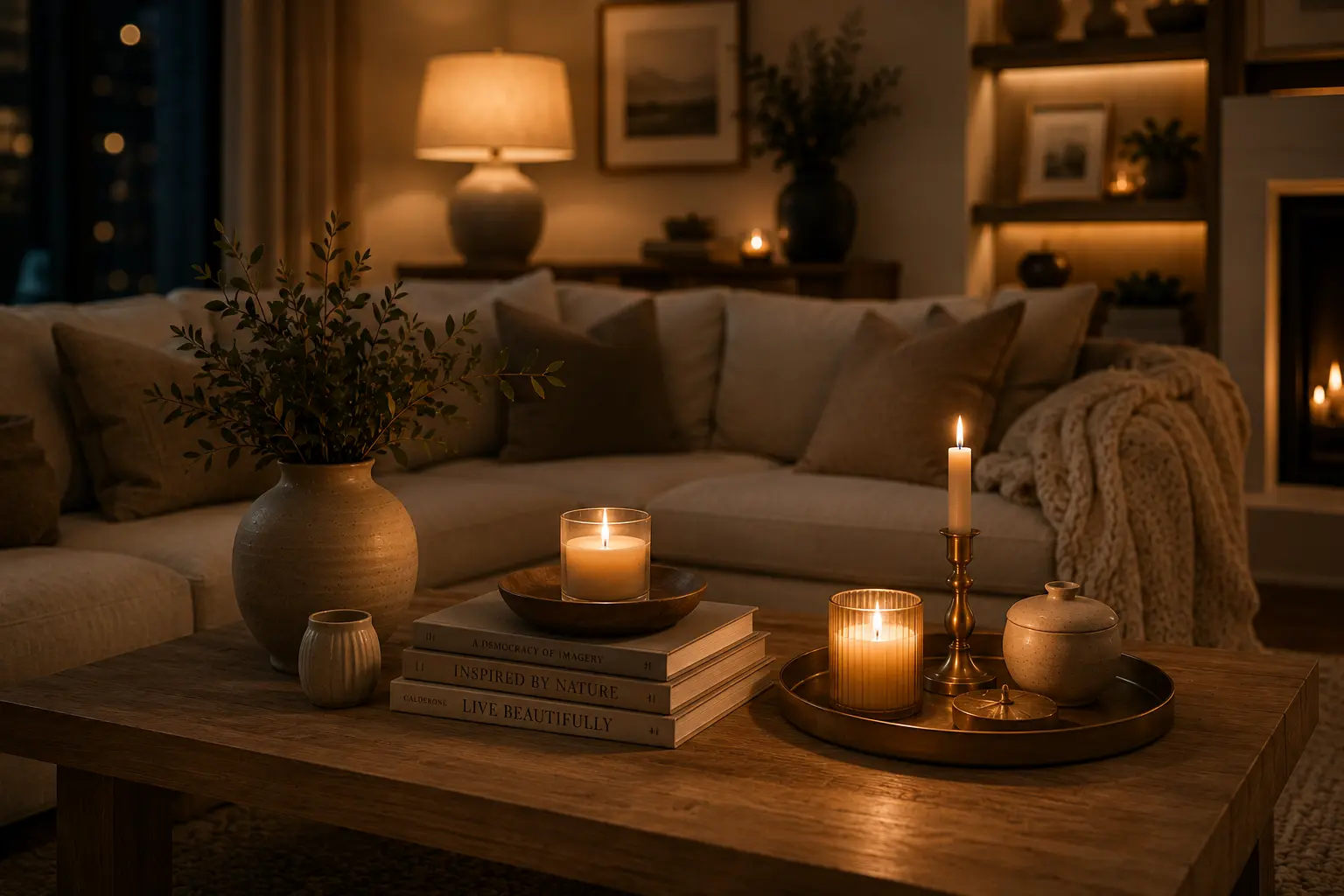
Nothing transforms the atmosphere of a room faster than candlelight.
Whether you use real candles or high-quality flameless versions, their warm glow creates an intimate setting that overhead lighting simply can’t replicate.
Place candles in groups of three on your coffee table, mantel, console table, or bookshelf for a balanced arrangement.
Why It Works
Soft, flickering light naturally encourages relaxation and makes a room feel calm during the evening.
Designer Tip
Use candles with different heights to create more visual interest.
Common Mistake
Scattering single candles randomly throughout the room instead of grouping them together.
13. Display Large Wall Art Instead of Many Small Pieces
Many homeowners try to fill empty walls with several small frames.
Ironically, this often makes the room feel busier and smaller.
One oversized artwork or a carefully designed gallery wall usually creates a stronger focal point while making the space feel more sophisticated.
Choose artwork featuring soft landscapes, abstract neutrals, botanical prints, or minimalist photography that complements your overall color palette.
Why It Works
A clear focal point reduces visual clutter and helps organize the entire room.
Designer Tip
Hang artwork so its center sits roughly at eye level—about 57 to 60 inches (145–152 cm) from the floor.
Common Mistake
Choosing artwork that’s too small for the wall.
14. Rearrange Furniture to Encourage Conversation
Furniture placement affects how comfortable a room feels just as much as the furniture itself.
Instead of lining every piece against the walls, try creating a conversation area where seating naturally faces one another.
Even moving a sofa forward by a few inches can make the room feel more intentional.
Use a rug to visually connect the seating arrangement and leave enough space for comfortable walking paths.
Why It Works
Conversation-friendly layouts feel warmer because people naturally gather together rather than sitting around the edges of the room.
Designer Tip
Aim to keep coffee tables about 16–18 inches (40–45 cm) away from the sofa for comfortable access.
Common Mistake
Leaving large empty spaces in the middle of the room while pushing every piece of furniture outward.
15. Add a Statement Accent Chair
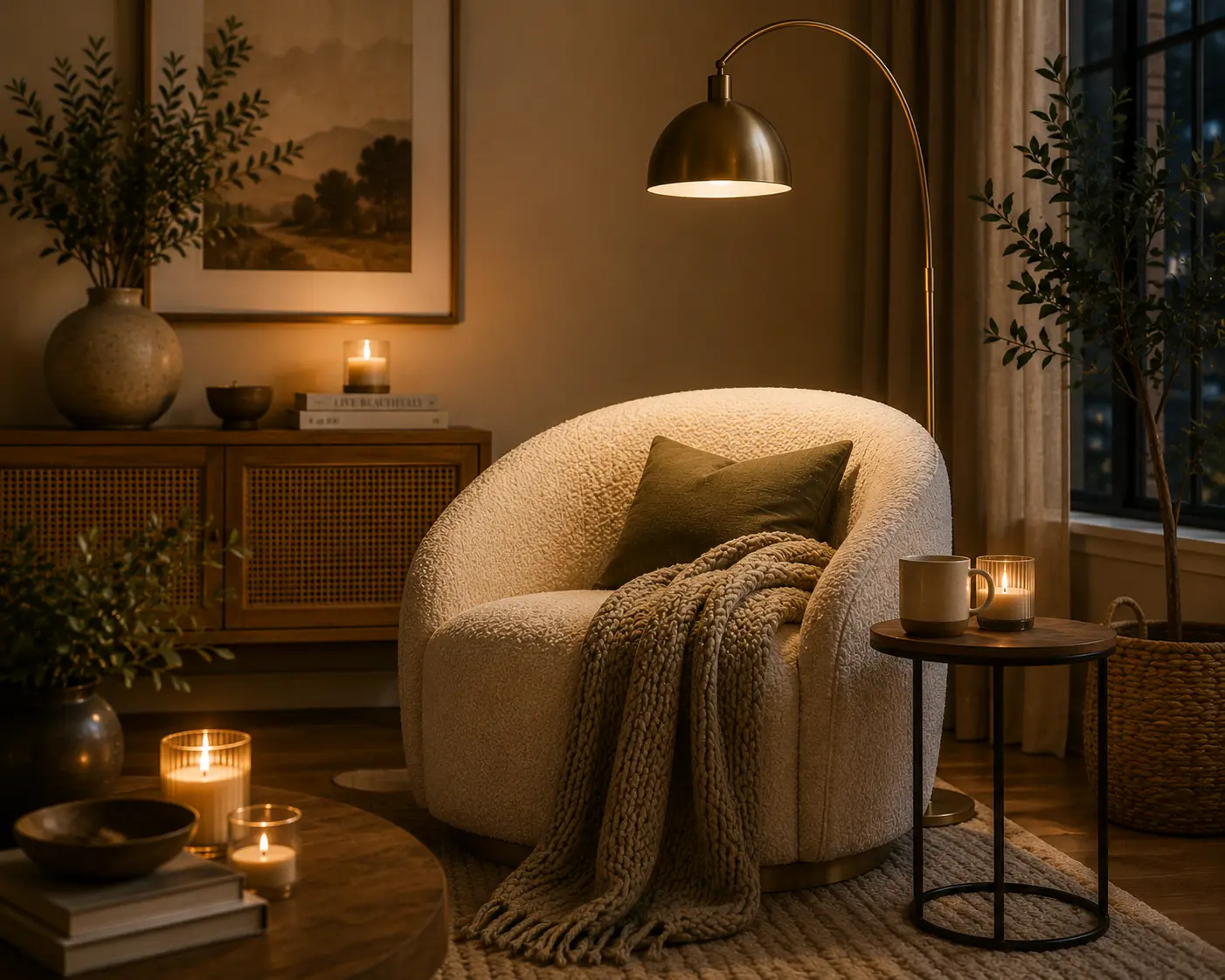
An accent chair does more than provide extra seating.
It introduces shape, texture, and personality while making the room feel thoughtfully designed.
Bouclé, linen, leather, or woven chairs work beautifully in cozy interiors, especially when paired with a small side table and floor lamp.
Why It Works
Accent chairs break up large furniture arrangements and help create smaller, more intimate zones.
Designer Tip
Choose a chair with a slightly different texture from your sofa while keeping the color palette coordinated.
Common Mistake
Buying a chair that matches the sofa exactly.
16. Incorporate Woven Baskets for Stylish Storage
Cozy spaces stay cozy because they’re organized.
Woven baskets provide hidden storage while adding natural texture to the room.
Use them to store:
- Throw blankets
- Magazines
- Children’s toys
- Extra pillows
- Remote controls
This keeps everyday essentials within reach without creating clutter.
Why It Works
Functional storage helps maintain a clean, relaxing environment while introducing warm organic materials.
Designer Tip
Mix different basket sizes instead of buying matching sets.
Common Mistake
Using plastic storage bins that distract from the room’s aesthetic.
17. Introduce Seasonal Decor in Small Doses
Updating your living room with the seasons doesn’t require a complete makeover.
Swap a few accessories throughout the year:
Spring
Fresh greenery
Light linen textiles
Soft florals
Summer
Natural fibers
Coastal accents
Bright ceramics
Autumn
Rust-colored pillows
Chunky knit blankets
Candles
Wooden bowls
Winter
Faux fur throws
Evergreen branches
Warm lighting
Textured cushions
Why It Works
Small seasonal changes keep your home feeling fresh without becoming wasteful.
Designer Tip
Limit seasonal decor to around 10–15% of your accessories so the room still feels timeless.
Common Mistake
Replacing every decorative item each season.
18. Create a Focal Point That Draws the Eye
Every well-designed living room has one feature that immediately captures attention.
Without a focal point, the eye doesn’t know where to look, making the room feel busy and unorganized.
Your focal point could be:
- A fireplace
- A large window
- Oversized artwork
- A statement mirror
- Built-in shelving
- A beautifully styled media wall
Once you’ve identified the focal point, arrange the rest of the furniture to support it rather than compete with it.
Why It Works
A clear visual anchor creates balance and makes the room feel thoughtfully designed.
Designer Tip
If your living room doesn’t have architectural features, create one using a large mirror or an oversized piece of art above the sofa.
Common Mistake
Adding multiple statement pieces that compete for attention.
19. Finish with Personal Details That Tell Your Story
The final step is what truly transforms a beautiful living room into a home.
Designer-inspired spaces are attractive, but the most memorable rooms reflect the people who live in them.
Display meaningful objects like:
- Family photos
- Travel souvenirs
- Handmade pottery
- Vintage finds
- Favorite books
- Meaningful artwork
- Heirloom pieces
These small touches make your living room feel warm, authentic, and impossible to replicate.
Why It Works
Personal items create emotional connection, making the space feel welcoming rather than staged.
Designer Tip
Edit your decor regularly. Display only the pieces that genuinely mean something to you instead of filling every available surface.
Common Mistake
Buying decorations simply because they’re trending on social media.
Cozy Living Room Ideas by Room Size
Small Living Room
Small spaces become cozy when every piece serves a purpose.
Focus on:
- Light, warm neutral colors
- Multi-functional furniture
- Floating shelves
- Large mirrors
- One oversized rug
- Slim floor lamps
- Hidden storage
Related: Read our guide to 12 Small Bedroom Ideas That Instantly Maximize Space for more smart small-space solutions.
Apartment Living Room
Apartments often have limited square footage, so avoid bulky furniture.
Instead, choose:
- Apartment-sized sofas
- Nesting tables
- Open-leg furniture
- Soft lighting
- Lightweight curtains
- Vertical storage
The goal is to create warmth without making the room feel crowded.
Large Living Room
Large living rooms can actually feel less cozy if they’re left too open.
Try:
- Dividing the room into conversation zones
- Adding oversized rugs
- Layering lighting
- Using tall plants
- Incorporating large artwork
- Including multiple seating areas
Open-Concept Living Room
Use rugs, lighting, and furniture placement to define separate zones while maintaining visual flow throughout the space.
Best Cozy Living Room Color Palettes
Choosing the right colors is one of the easiest ways to create a warm and inviting atmosphere.
Warm Beige + Cream
Timeless, bright, and perfect for almost any decorating style.
Greige + Natural Oak
A modern combination that balances cool and warm tones beautifully.
Olive Green + Warm White
Fresh, calming, and inspired by nature.
Terracotta + Sand
Earthy and welcoming, especially when paired with wood and woven textures.
Taupe + Soft Brown
Creates a sophisticated, hotel-inspired living room.
Charcoal + Camel
Perfect for modern interiors that still feel cozy and comfortable.
Common Mistakes That Make a Living Room Feel Less Cozy
Even beautiful furniture can’t create a cozy atmosphere if these common mistakes are overlooked.
Using Cool White Lighting
Bright blue-toned bulbs often make interiors feel sterile instead of relaxing.
Choosing a Rug That’s Too Small
A small rug disconnects your furniture and makes the room appear smaller than it is.
Decorating Every Surface
Leaving some empty space allows your favorite pieces to stand out.
Ignoring Texture
Rooms filled with smooth surfaces often feel cold, even when decorated with beautiful furniture.
Buying Matching Furniture Sets
Designer interiors feel more natural because they combine different materials, shapes, and finishes.
Following Every Trend
The coziest living rooms evolve over time instead of changing with every seasonal trend.
Frequently Asked Questions
How can I make my living room feel cozy on a budget?
Start with affordable updates like warm lighting, textured throw blankets, decorative pillows, candles, indoor plants, and rearranging your furniture. These small changes often make a bigger impact than buying expensive furniture.
What colors make a living room feel warm?
Warm neutrals such as cream, beige, taupe, greige, warm white, caramel, olive green, and terracotta help create a welcoming atmosphere.
Can a modern living room still feel cozy?
Absolutely. A modern living room becomes cozy by incorporating layered lighting, soft textiles, natural wood, warm colors, and meaningful accessories.
What’s the best lighting for a cozy living room?
Warm LED bulbs around 2700K, combined with table lamps, floor lamps, candles, and wall sconces, create the most inviting atmosphere.
How do I make a small living room look cozy without making it feel crowded?
Choose multi-functional furniture, keep your color palette light and warm, use one large rug instead of several small ones, and decorate intentionally rather than filling every corner.
How many throw pillows should a sofa have?
For most sofas, three to five pillows provide a balanced, comfortable look without feeling cluttered.
Are indoor plants good for cozy living rooms?
Yes. Indoor plants introduce natural texture, soften furniture lines, and make any living room feel fresher and more inviting.
What decorating style is the coziest?
Scandinavian, Japandi, farmhouse, and modern organic interiors are among the most popular styles because they prioritize comfort, natural materials, and timeless design.
Final Thoughts
A cozy living room isn’t created by copying every trend or filling the space with decorations. It’s built through thoughtful decisions that prioritize comfort, warmth, and functionality.
Start with the basics: choose a warm color palette, layer your lighting, introduce different textures, and arrange your furniture in a way that encourages conversation. Then, add meaningful personal touches that make the space uniquely yours.
Remember, the most inviting living rooms aren’t necessarily the most expensive—they’re the ones that feel lived in, balanced, and welcoming. Even one or two intentional changes can completely transform how your home looks and feels.



No comment