
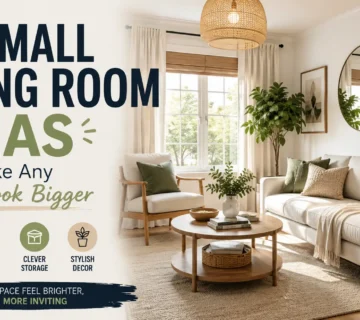
21 Small Living Room Ideas That Instantly Make Your Space Look Bigger
Living in a small apartment or compact home doesn’t mean you have to sacrifice comfort or style. In fact, some of the most beautiful living rooms prove that thoughtful design matters far more than square footage.
The secret isn’t knocking down walls or spending thousands on renovations. It’s about choosing furniture wisely, maximizing natural light, creating visual flow, and using clever decorating tricks that fool the eye into seeing more space than actually exists.
Whether you’re decorating a tiny apartment, studio, condo, or cozy home, these 21 small living room ideas will help transform your space into one that feels brighter, more open, and surprisingly spacious.
Let’s dive into the best ideas that interior designers use to make small living rooms feel much larger.
1. Choose Light, Neutral Colors
One of the easiest ways to visually enlarge a room is by using light colors.
White, cream, soft beige, warm gray, and pale taupe reflect natural light rather than absorbing it. The result is a brighter room that instantly feels more expansive.
Instead of painting everything stark white, layer several neutral shades to create warmth and depth.
Popular color choices include:
- Warm White
- Ivory
- Sand Beige
- Greige
- Soft Stone
- Light Taupe
Pair these colors with natural wood textures and soft fabrics to keep the room from feeling cold.
2. Let Natural Light Take Center Stage
Natural light is your greatest ally in a small living room.
Heavy curtains can make even a decent-sized room feel cramped.
Instead, choose:
- Sheer linen curtains
- Light cotton drapes
- Ceiling-mounted curtain rods
- Floor-to-ceiling curtains
Mounting curtains higher than the window frame creates the illusion of taller ceilings.
If privacy isn’t a concern, keep window treatments minimal to allow maximum daylight inside.
3. Use Mirrors to Double the Space
Interior designers have relied on mirrors for decades—and for good reason.
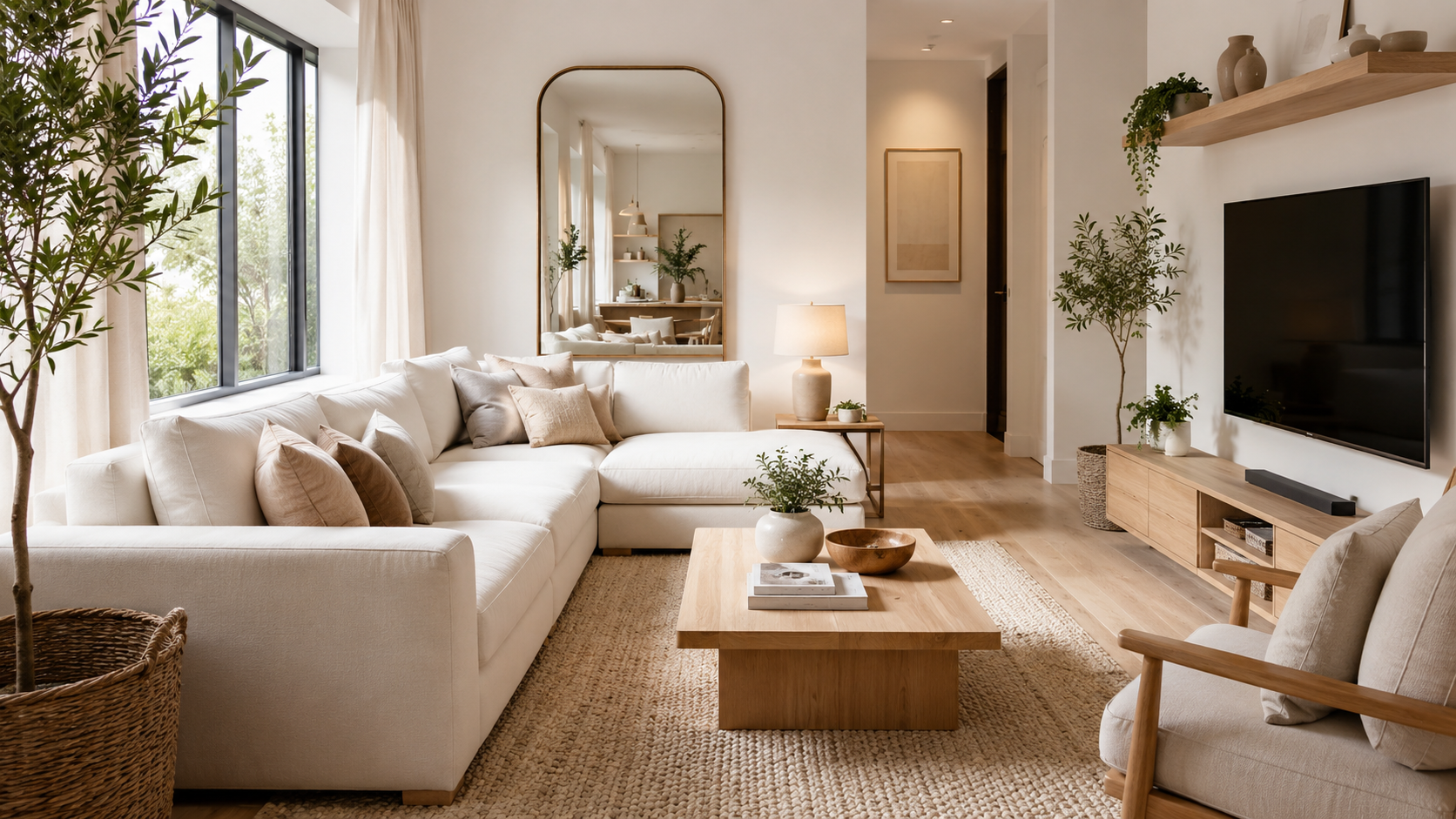
A large mirror reflects both natural and artificial light while visually extending the room.
Try placing a mirror:
- Opposite a window
- Behind the sofa
- Above a fireplace
- Near a light fixture
Large mirrors work better than several small ones because they create one continuous reflection.
4. Invest in Furniture with Exposed Legs
Bulky furniture blocks sight lines.
Furniture with visible legs allows light to flow underneath, making the room feel lighter and less crowded.
Look for:
- Mid-century sofas
- Accent chairs
- Coffee tables
- TV stands
- Sideboards
This simple design trick instantly creates a more open atmosphere.
5. Keep Furniture Proportional
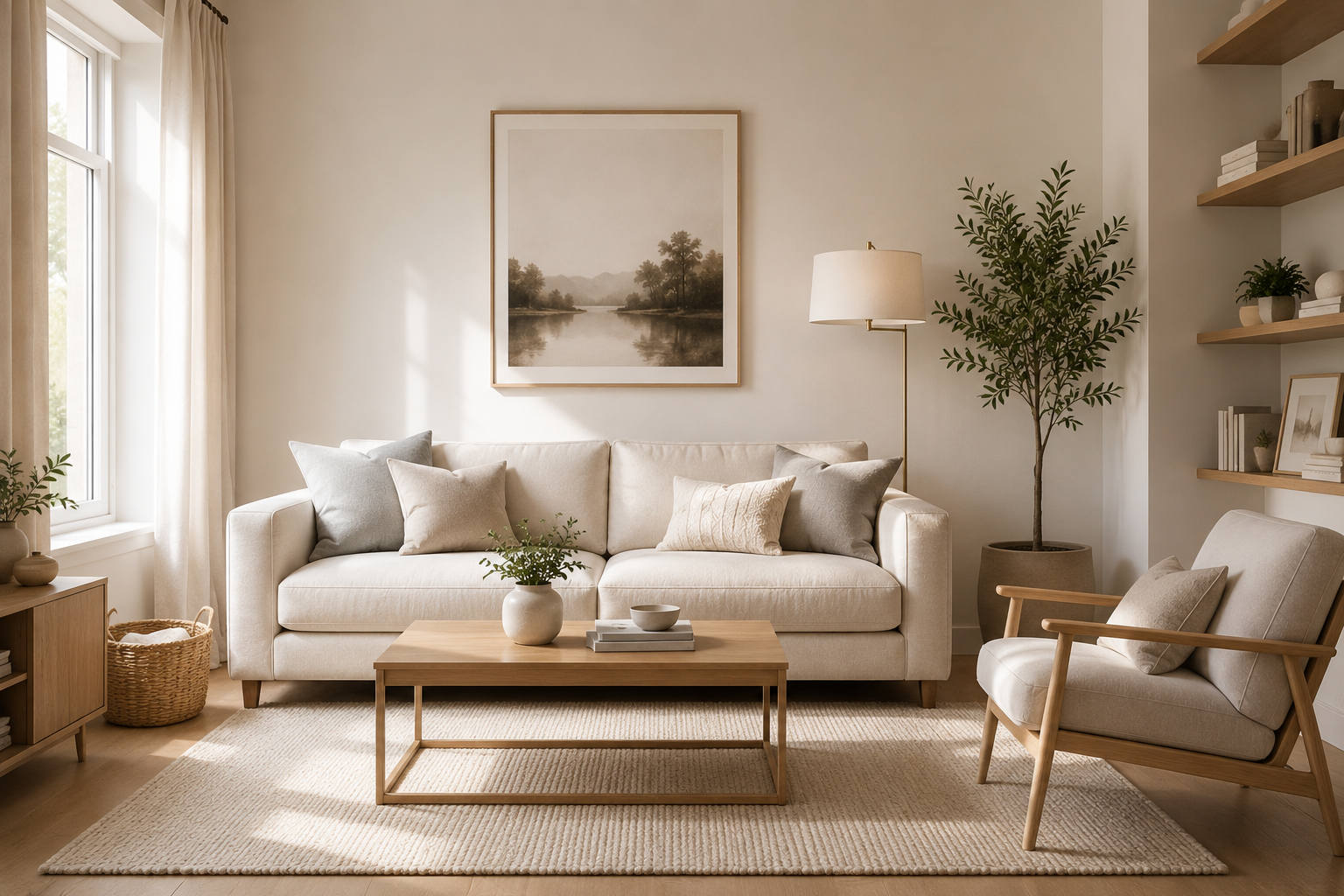
Many homeowners assume smaller rooms require tiny furniture.
Actually, filling a room with many miniature pieces often creates clutter.
Instead:
- Choose one medium-sized sofa.
- Limit extra chairs.
- Use fewer, better-quality pieces.
A balanced layout always feels larger than an overcrowded one.
6. Float Your Furniture
Don’t automatically push every piece against the wall.
Leaving just a few inches between the sofa and the wall creates depth and makes the room feel intentionally designed.
If possible:
- Float the sofa slightly.
- Place a slim console table behind it.
- Use the extra space for lighting or storage.
7. Pick a Glass Coffee Table
Glass practically disappears.
Because you can see through it, it doesn’t interrupt visual flow.
Other transparent materials work well too:
- Acrylic
- Lucite
- Tempered glass
These materials make furniture appear lighter while still providing function.
8. Decorate Vertically
Small rooms often have unused wall height.
Draw the eye upward by adding:
- Tall bookshelves
- Vertical artwork
- Floor-to-ceiling shelving
- Hanging plants
Vertical design naturally emphasizes ceiling height.
9. Choose Multi-Functional Furniture
Every piece should work harder in a compact room.
Consider:
- Storage ottomans
- Nesting tables
- Lift-top coffee tables
- Sofa beds
- Benches with hidden storage
Reducing the number of furniture pieces automatically creates more open floor space.
10. Keep Flooring Consistent
Changing flooring between spaces visually cuts the room into sections.
Using the same flooring throughout:
- Creates continuity
- Makes rooms feel connected
- Encourages visual flow
Large-format flooring also minimizes grout or seam lines.
11. Add an Oversized Area Rug
Many people buy rugs that are too small.
Ironically, a larger rug makes the room appear larger.
Choose a rug large enough so that:
- Front legs of the sofa sit on it
- Chairs partially rest on it
- Furniture feels connected
This anchors the room and creates a unified layout.
12. Minimize Visual Clutter
Nothing shrinks a room faster than clutter.
Keep surfaces mostly clear.
Limit decorative accessories to a few carefully selected pieces like:
- A ceramic vase
- A stack of books
- A candle
- One decorative tray
Minimal styling creates breathing room.
13. Install Floating Shelves
Traditional bookcases occupy precious floor space.
Floating shelves provide storage without making the room feel heavy.
Use them to display:
- Books
- Plants
- Framed photos
- Decorative objects
Keep shelves evenly spaced for a clean appearance.
14. Incorporate Hidden Storage
Smart storage keeps everyday items out of sight.
Excellent hidden storage ideas include:
- Storage baskets
- Ottoman seating
- Lift-top tables
- Built-in cabinets
- Storage benches
The fewer visible items you have, the larger your room appears.
15. Create a Cohesive Color Palette
Too many contrasting colors break up a room visually.
Stick to:
- Two or three main colors
- Similar wood finishes
- Coordinated textiles
Adding subtle variations through texture keeps things interesting without creating chaos.
16. Choose Slim Furniture
Chunky furniture overwhelms compact spaces.
Instead, choose designs with:
- Thin arms
- Narrow profiles
- Clean lines
- Open frames
Scandinavian and modern furniture styles are perfect for smaller homes.
17. Add Plants Without Overcrowding
Plants bring life into any room.
However, dozens of small plants can create clutter.
Instead, select:
- One tall fiddle leaf fig
- A large olive tree
- One snake plant
- A hanging pothos
A few statement plants feel intentional and elegant.
18. Use Wall-Mounted Lighting
Floor lamps consume valuable floor area.
Swap them for:
- Wall sconces
- Swing-arm lamps
- Plug-in sconces
- Picture lights
This frees up surfaces while adding stylish illumination.
19. Keep the TV Wall Simple
The entertainment wall often becomes visually busy.
Instead:
- Mount the TV.
- Hide wires.
- Choose a slim media console.
- Limit accessories.
A clean TV wall instantly feels more spacious.
20. Decorate with Large Artwork
Many tiny pieces of wall art create visual noise.
One oversized artwork makes the room feel sophisticated while reducing clutter.
Large art also draws attention upward and outward, creating the illusion of scale.
21. Embrace Minimalism
Minimalism isn’t about empty rooms.
It’s about intentional decorating.
Ask yourself before adding anything:
- Does it serve a purpose?
- Does it bring joy?
- Does it improve the room?
Removing unnecessary furniture often has a greater impact than buying something new.
Common Small Living Room Mistakes
Avoid these common decorating mistakes:
- Buying furniture that’s too large.
- Using dark paint throughout the room.
- Hanging curtains too low.
- Choosing rugs that are too small.
- Blocking windows.
- Over-accessorizing shelves.
- Filling every corner with furniture.
- Ignoring vertical storage.
- Mixing too many colors.
- Using oversized coffee tables.
Correcting just a few of these mistakes can dramatically improve how spacious your living room feels.
Budget-Friendly Ways to Make a Small Living Room Feel Bigger
You don’t need a huge budget to transform your space.
Affordable upgrades include:
- Repainting walls in lighter colors.
- Rearranging furniture.
- Adding one large mirror.
- Replacing heavy curtains with sheers.
- Decluttering surfaces.
- Using woven baskets for storage.
- Swapping bulky tables for slimmer designs.
- Adding floating shelves.
- Updating lighting.
- Styling with fewer decorative accessories.
Many of these improvements cost very little but create a significant visual difference.
Frequently Asked Questions
What color makes a small living room look bigger?
Soft whites, warm beige, light gray, cream, and pale greige reflect more light and make compact spaces feel larger.
Is a sectional good for a small living room?
A compact sectional can work well if it fits the room proportionally. In many cases, one sectional replaces multiple pieces of furniture, creating a cleaner layout.
Should all furniture touch the walls?
No. Pulling furniture slightly away from the walls often creates depth and gives the room a professionally designed appearance.
What size rug is best?
Choose a rug large enough that at least the front legs of your seating furniture rest on it. This creates a cohesive layout and visually expands the room.
How can I make my living room feel brighter?
Maximize natural light, use light-colored walls, incorporate mirrors, select sheer curtains, and add layered lighting with floor, table, or wall-mounted fixtures.
Final Thoughts
Designing a small living room is all about making thoughtful choices that enhance light, improve flow, and eliminate unnecessary clutter. By combining light colors, strategically placed mirrors, smart storage solutions, and well-proportioned furniture, you can create a space that feels both stylish and surprisingly spacious.
Remember, the goal isn’t to fill every inch of the room—it’s to create balance. Even adopting just a handful of these small living room ideas can dramatically change how your home looks and feels. Start with the changes that fit your budget, and build from there. With a little planning, your compact living room can become one of the most inviting spaces in your home.

No comment