
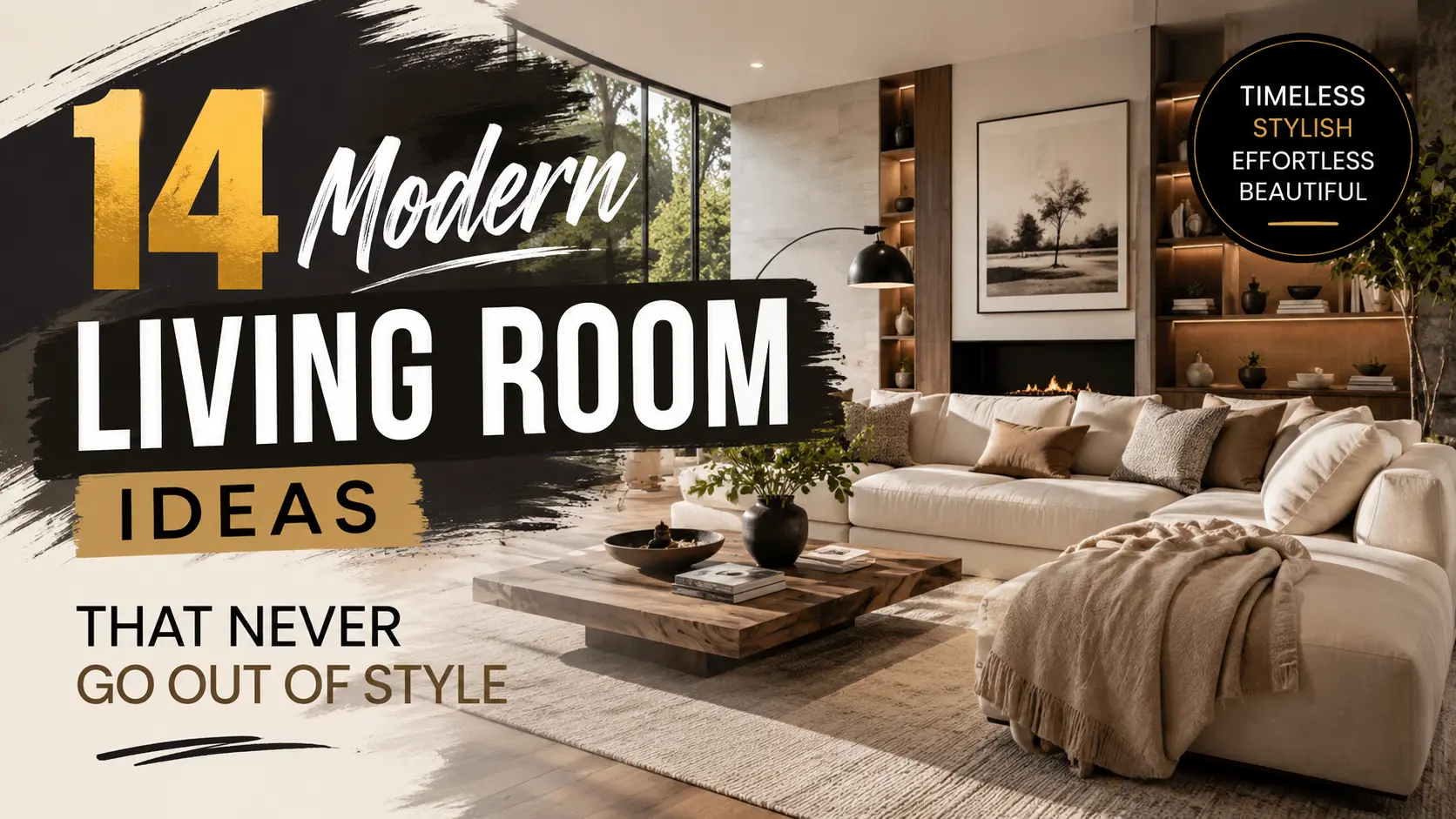
14 Modern Living Room Ideas That Never Go Out of Style
Modern design changes every year—or at least that’s what social media wants you to believe. One month it’s curved furniture. The next it’s bold color drenching, oversized lighting, or a completely different decorating style. If you tried to follow every trend, you’d end up redesigning your living room every few months.
The truth is, the most beautiful modern living rooms don’t depend on what’s trending. They rely on timeless design principles that continue to feel fresh, elegant, and functional year after year. That’s why you’ll notice that professionally designed homes rarely look outdated, even a decade later.
A well-designed modern living room isn’t about filling every empty corner with décor or buying the newest furniture collection. It’s about creating balance, choosing quality over quantity, and designing a space that supports everyday living while still looking effortlessly stylish.
Whether you’re decorating a brand-new home, updating an older space, or simply looking for fresh inspiration, these modern living room ideas will help you create a room that’s sophisticated today—and just as beautiful years from now.
Let’s start with the foundation that every timeless living room has in common.
What Makes a Modern Living Room Timeless?
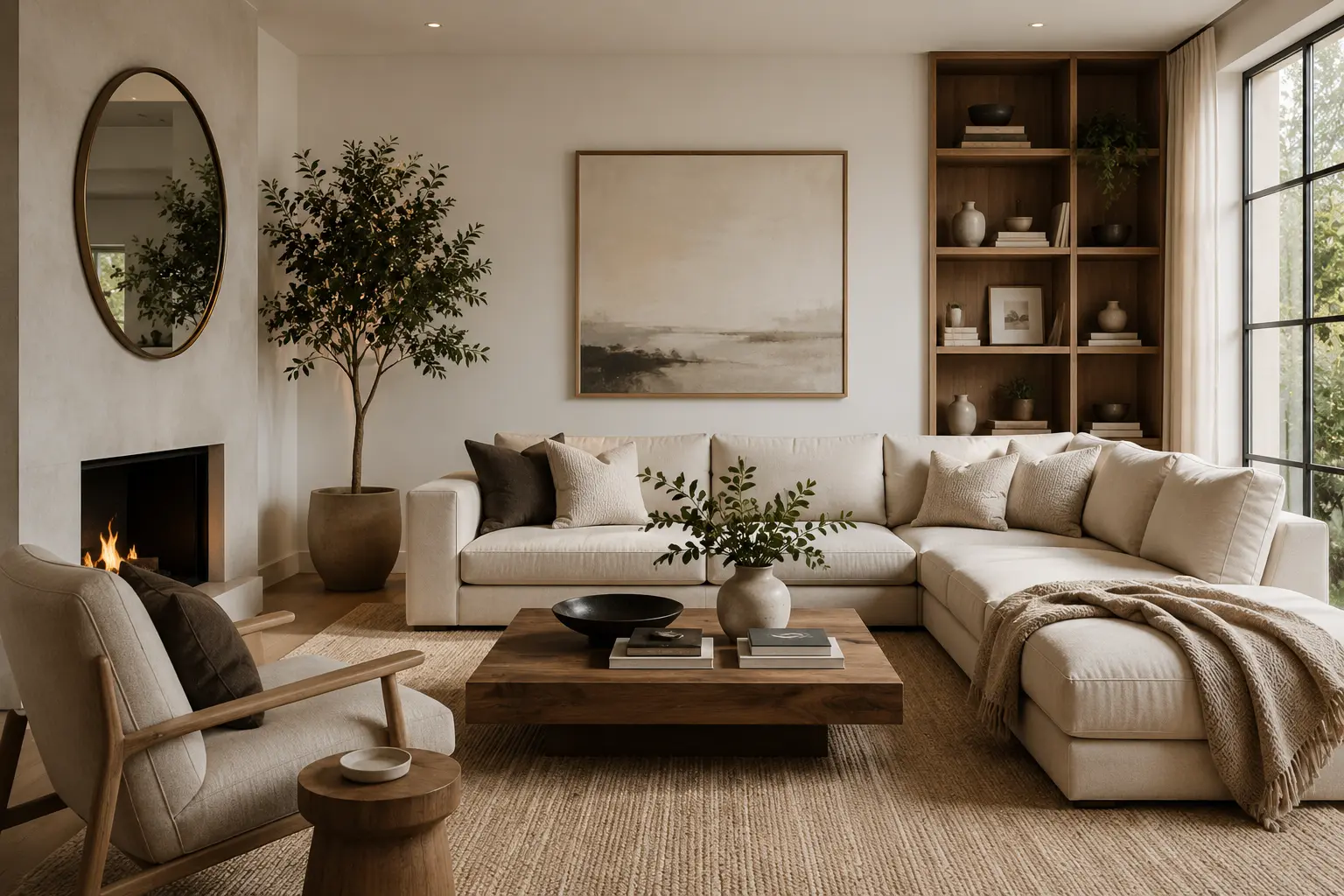
Many people confuse modern with trendy, but they’re not the same thing.
A trendy living room follows what’s popular today. A timeless modern living room is built on thoughtful design choices that continue to work regardless of changing trends.
Interior designers often rely on a few core principles that never go out of style:
- Clean, uncluttered layouts
- Neutral colors with warm undertones
- Comfortable, functional furniture
- Natural materials like wood, linen, cotton, and stone
- Layered lighting instead of relying on one ceiling fixture
- Meaningful décor instead of excessive accessories
Instead of asking, “What’s trending this year?” ask yourself:
“Will I still love this room five years from now?”
If the answer is yes, you’re making decisions that are far more likely to stand the test of time.
The ideas below are built around that philosophy.
1. Start with a Calm Neutral Color Palette
Every timeless modern living room begins with a neutral foundation. Rather than overwhelming the space with bold colors that may quickly feel dated, designer-approved interiors usually start with soft, versatile shades that allow the room to evolve over time.
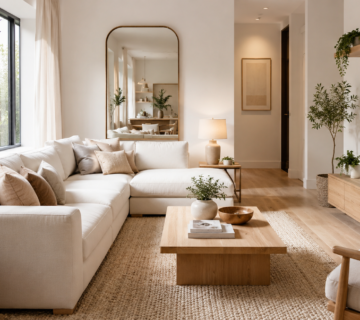
Think warm whites, creamy beige, soft greige, light taupe, sand, and gentle stone tones. These colors make a room feel brighter, larger, and more inviting while giving you the flexibility to refresh the space with seasonal accents whenever you want.
Why It Works
Neutral colors create visual balance. They reflect natural light, reduce visual clutter, and allow furniture, artwork, and textures to become the focal point instead of competing for attention.
Unlike trendy color palettes, warm neutrals rarely feel outdated because they complement almost every decorating style—from Scandinavian to Japandi, Contemporary, and Organic Modern.
How to Get the Look
- Paint the walls in a warm neutral shade.
- Choose a sofa in cream, beige, or light gray.
- Add warmth through wood furniture instead of bright colors.
- Introduce subtle contrast with black accents or natural greenery.
Designer Tip
Instead of using several different neutral colors, stick to two or three complementary shades throughout the room. This creates a more cohesive and luxurious look.
Common Mistake
Avoid using cool gray everywhere. While it was once extremely popular, all-gray living rooms can now feel flat and uninviting. Mixing warm neutrals with natural wood instantly creates a softer, more timeless atmosphere.
Why This Idea Lasts
Color trends come and go, but a balanced neutral foundation allows everything else in the room to evolve without requiring a complete redesign.
2. Mix Soft Textures Instead of Adding More Decorations
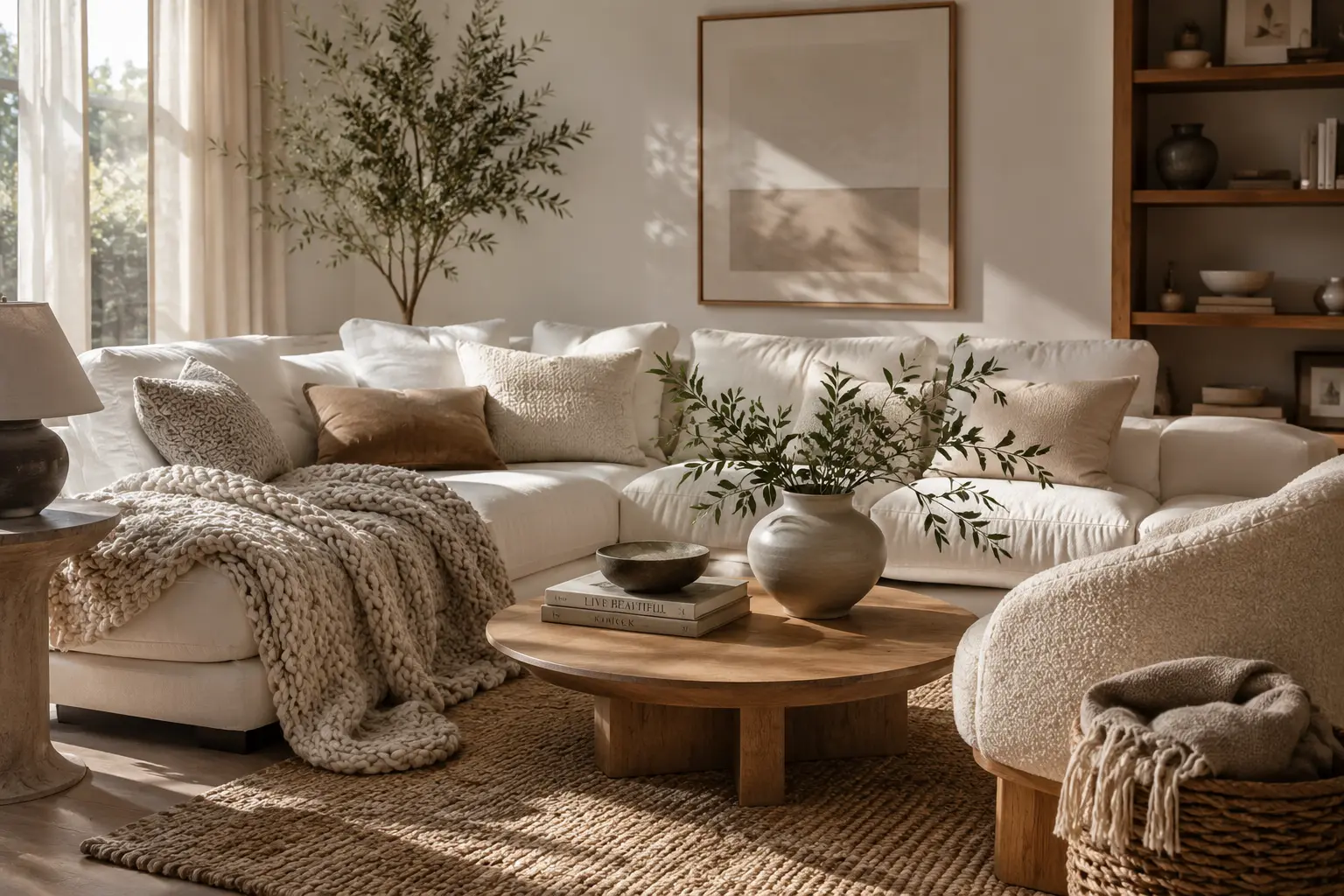
One of the biggest differences between an average living room and one that feels professionally designed isn’t the amount of décor—it’s the variety of textures.
Modern interiors often appear simple at first glance, but they’re carefully layered with materials that create depth and warmth without making the room feel crowded.
Imagine a linen sofa paired with a chunky knit throw, a boucle accent chair, a natural wood coffee table, woven baskets, ceramic vases, and a soft wool rug. None of these pieces are loud on their own, yet together they make the room feel rich, inviting, and effortlessly stylish.
Why It Works
Texture adds visual interest without relying on bold colors or excessive accessories. Even when a room uses a neutral color palette, different materials prevent the space from feeling flat.
Layering fabrics, wood, stone, metal, and natural fibers creates dimension while maintaining the clean aesthetic that defines modern interior design.
How to Get the Look
- Combine linen, cotton, wool, and boucle fabrics.
- Mix smooth surfaces with rough natural textures.
- Add woven baskets for practical storage.
- Incorporate wood furniture to soften modern lines.
- Choose handmade ceramic décor instead of mass-produced accessories.
Designer Tip
Try following the “Rule of Three.” Include at least three different textures in every seating area—for example, fabric, wood, and woven fiber—to create natural depth.
Common Mistake
Don’t confuse texture with clutter. Filling shelves with dozens of decorative objects creates visual noise rather than warmth. A few carefully selected pieces usually make a stronger impact.
Why This Idea Lasts
Textures create comfort without depending on seasonal trends, making them one of the easiest ways to keep a modern living room feeling fresh year after year.
Looking for an even warmer atmosphere? Explore our guide to 19 Cozy Living Room Ideas That Make Your Home Feel Warm and Inviting for more ideas on layering textures, lighting, and décor to create a comfortable space you’ll never want to leave.
3. Choose Furniture with Clean, Simple Lines
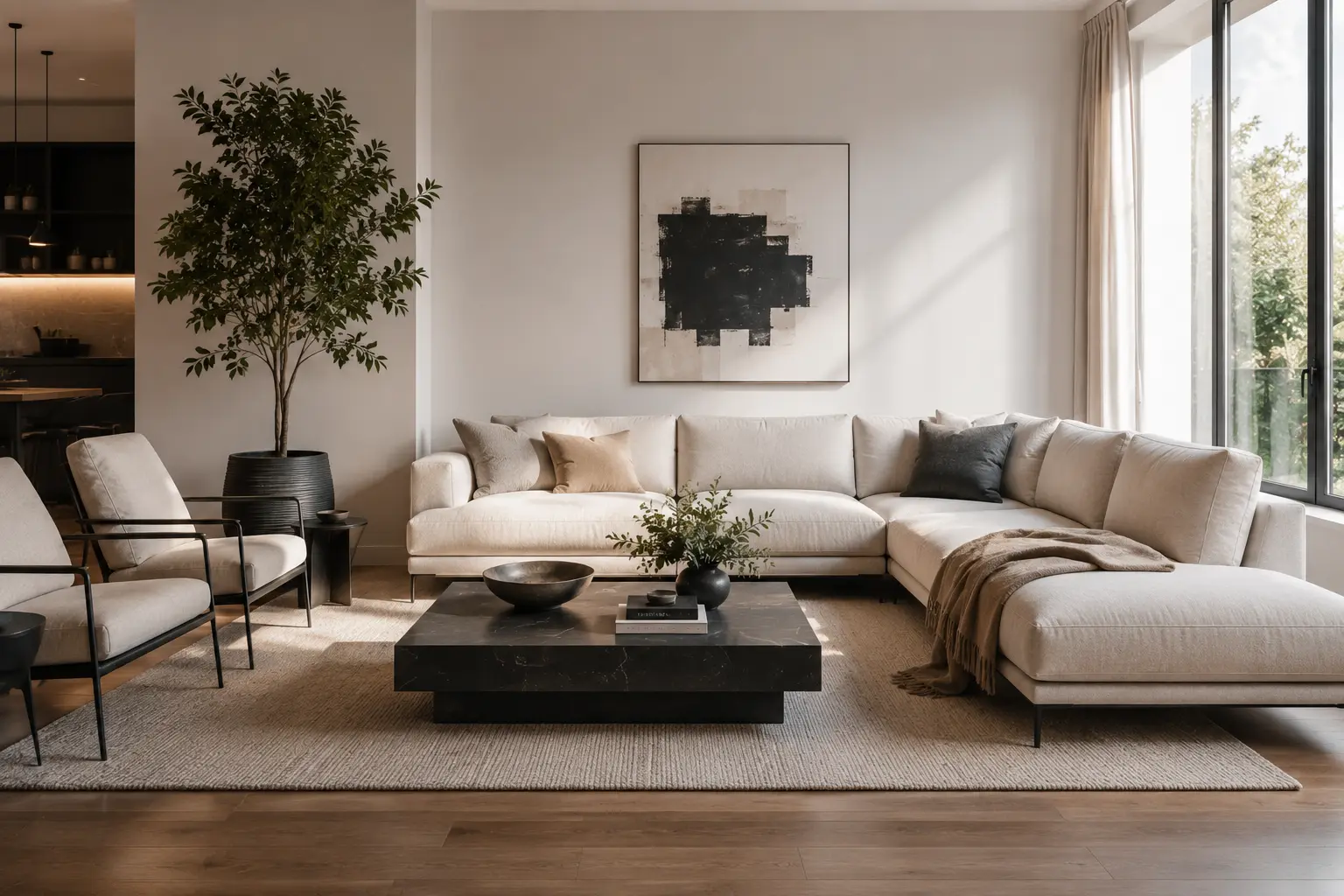
The furniture you choose has a greater impact on your living room than almost anything else. While decorative accessories can easily be replaced, sofas, coffee tables, and media consoles usually stay with you for years.
That’s why timeless modern interiors favor furniture with clean silhouettes instead of oversized decorative details.
Simple doesn’t mean boring. It means every piece has a clear purpose, balanced proportions, and enough visual simplicity to adapt as your decorating style changes.
Why It Works
Furniture with clean lines creates a calm, organized look and allows the room to feel open rather than crowded. It’s also far easier to update with new pillows, artwork, or rugs over time.
How to Get the Look
- Choose sofas with straight or gently curved arms.
- Look for slim-legged furniture to create visual openness.
- Avoid bulky entertainment centers.
- Mix soft upholstery with wood or metal frames.
Designer Tip
Before buying a large piece of furniture, leave at least 30–36 inches of walking space around major pathways. Good flow is just as important as beautiful furniture.
Common Mistake
Avoid buying oversized furniture simply because it looks impressive in a showroom. Pieces that are too large often overwhelm the room and make it feel significantly smaller.
Why This Idea Lasts
Well-proportioned furniture adapts easily to changing décor styles, making it a long-term investment instead of a short-lived trend.
4. Create Visual Balance Instead of Filling Every Empty Corner
A beautifully designed modern living room doesn’t feel full—it feels balanced.
Many homeowners assume empty space is wasted space, so they continue adding side tables, extra chairs, decorative shelves, or accessories until the room feels busy.
Professional designers do the opposite.
They intentionally leave breathing room around furniture, allowing each piece to stand out while making the entire room feel calmer and more spacious.
Why It Works
Negative space gives your eyes a place to rest. It highlights your favorite furniture instead of competing with it and makes the room feel more expensive without increasing your decorating budget.
How to Get the Look
- Leave open space between furniture groupings.
- Limit decorative accessories to meaningful pieces.
- Keep shelves partially empty instead of filling every surface.
- Choose fewer, larger decorative items instead of many small ones.
Designer Tip
If you remove one decorative object from every surface and don’t miss it after a week, your room probably didn’t need it in the first place.
Common Mistake
Avoid pushing every piece of furniture against the wall. Floating key furniture slightly inward often creates a more natural conversation area and improves the room’s proportions.
Why This Idea Lasts
Visual balance isn’t influenced by yearly decorating trends. It’s a fundamental design principle that continues to make interiors feel sophisticated regardless of style.
5. Invest in One Statement Piece Instead of Filling the Room
One of the easiest ways to make a living room look expensive isn’t buying more furniture—it’s choosing one unforgettable piece that naturally becomes the room’s focal point.
Professional designers rarely spread visual attention across dozens of decorative objects. Instead, they create a clear focal point that immediately catches your eye when you walk into the room. Everything else simply supports that centerpiece.
Your statement piece doesn’t have to be extravagant or oversized. It just needs to be intentional.
For one home, it might be a beautifully crafted oak coffee table. In another, it could be a sculptural sectional sofa, an oversized piece of artwork, a marble fireplace, or even a dramatic light fixture.
Why It Works
Every well-designed room needs a visual anchor.
Without one, the eye jumps from object to object, making the space feel busy and unorganized. A single statement piece creates hierarchy, giving the room structure while allowing the surrounding décor to remain simple.
Ironically, buying less often creates a more luxurious result than buying more.
How to Get the Look
- Choose one item you truly love.
- Let it become the room’s centerpiece.
- Keep nearby décor minimal.
- Repeat one or two colors from the statement piece throughout the room for a cohesive look.
Designer Tip
If guests immediately ask where you bought one specific item, you’ve probably chosen the right statement piece.
Common Mistake
Many homeowners accidentally create several competing focal points—an oversized TV wall, colorful artwork, patterned curtains, and bold furniture all fighting for attention. Instead of making the room feel exciting, this often creates visual chaos.
Why This Idea Lasts
Quality statement pieces rarely go out of style because they reflect craftsmanship rather than trends. Even as accessories change over time, the room continues to feel grounded around one timeless feature.
6. Layer Your Lighting Like a Designer
Lighting is one of the most overlooked elements of modern interior design, yet it’s often the reason one living room feels inviting while another feels cold—even if both have beautiful furniture.
Many homes rely almost entirely on a single ceiling light. While it’s functional, it creates flat lighting that removes depth, highlights imperfections, and leaves the room feeling less comfortable.
Designer spaces take a different approach.
Instead of depending on one source of light, they combine multiple layers that work together throughout the day.
Why It Works
Layered lighting gives you flexibility.
Bright overhead lighting works well for cleaning or entertaining, while softer lamps create a relaxed atmosphere during the evening. Accent lighting highlights artwork, shelving, or architectural details, adding depth without overwhelming the room.
The result is a space that feels warm, sophisticated, and comfortable at any hour.
How to Get the Look
Combine at least three types of lighting:
- Ambient lighting for overall brightness.
- Task lighting beside reading chairs.
- Accent lighting for artwork, plants, or shelves.
Warm white bulbs between 2700K and 3000K generally create the most welcoming atmosphere in modern living rooms.
Designer Tip
Place a floor lamp in one corner that usually feels dark. This small change often transforms the entire room more than buying new décor.
Common Mistake
Avoid using cool white or blue-toned bulbs in living spaces. They tend to make furniture and wall colors feel harsh rather than inviting.
Why This Idea Lasts
Lighting isn’t a decorating trend—it’s part of how a room functions. Well-planned lighting will always improve both comfort and appearance, regardless of changing design styles.
7. Bring Natural Materials Indoors
Modern interiors sometimes get a reputation for feeling cold or overly minimal, but the best ones feel exactly the opposite.
The secret isn’t adding more decorations—it’s introducing materials that naturally create warmth and texture.
Wood, linen, cotton, leather, wool, rattan, stone, and ceramic all bring subtle imperfections that make a room feel authentic rather than manufactured.
These materials age beautifully, developing character over time instead of looking worn out.
Why It Works
Nature creates balance.
When smooth surfaces like painted walls, glass, and metal are paired with organic materials, the room instantly feels softer and more welcoming.
This contrast is one of the defining characteristics of timeless modern design.
How to Get the Look
- Replace plastic décor with ceramic accessories.
- Choose a solid wood coffee table.
- Add woven baskets for storage.
- Use linen curtains instead of heavy synthetic fabrics.
- Include one or two indoor plants to soften clean lines.
Designer Tip
Even if your furniture is contemporary, introducing just one natural wood element can completely change the feeling of the room.
Common Mistake
Don’t mix too many different wood finishes in the same space. Two complementary tones usually create a cleaner, more intentional look than four or five competing shades.
Why This Idea Lasts
Natural materials have been used in interior design for centuries. Their beauty isn’t tied to trends, which is why they continue to define some of the world’s most timeless homes.
8. Decorate with Purpose, Not Quantity
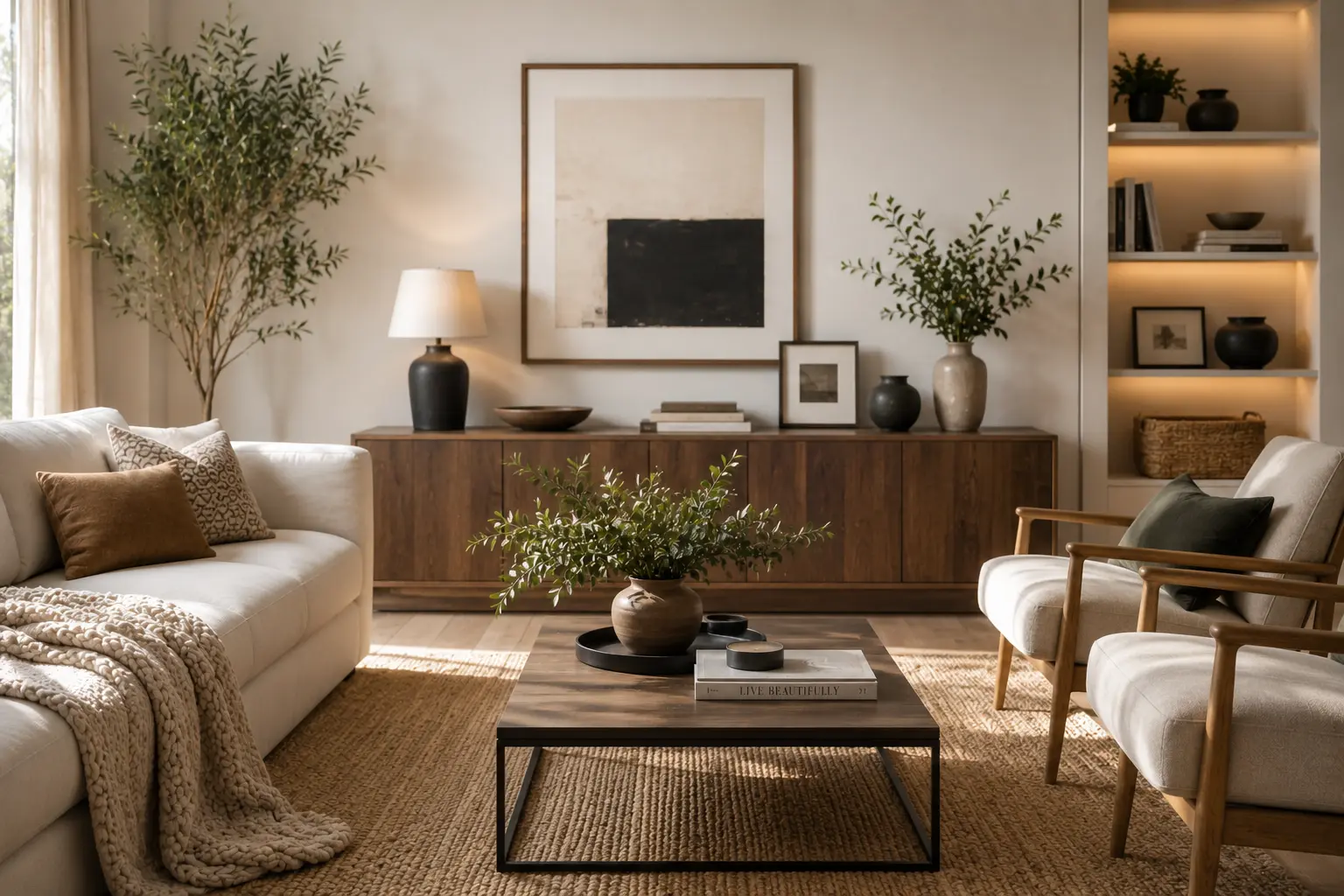
A common misconception is that every shelf, table, and wall should be decorated.
In reality, professionally designed living rooms often contain fewer decorative objects than expected.
Every item has a reason for being there.
Instead of filling empty space simply because it exists, thoughtful decorating focuses on pieces that add personality, tell a story, or improve the overall balance of the room.
This approach creates a cleaner, calmer environment that feels intentional rather than unfinished.
Why It Works
Purposeful decorating reduces visual clutter while allowing the items you truly love to stand out.
A carefully chosen ceramic vase, framed artwork, or stack of beautiful books creates far more impact than dozens of unrelated accessories.
How to Get the Look
- Display meaningful artwork instead of generic wall décor.
- Group decorative objects in odd numbers.
- Leave empty space around shelves.
- Rotate seasonal accessories instead of buying new décor every year.
Designer Tip
When styling a shelf, step back several feet after arranging it. If your eye doesn’t immediately know where to focus, simplify the display.
Common Mistake
Avoid buying décor simply because it matches a trend on social media. Trends change quickly, but meaningful pieces continue to make your home feel personal.
Why This Idea Lasts
Homes that reflect the people who live in them always feel more timeless than homes designed to imitate temporary trends.
Love the balance between modern simplicity and everyday comfort? Explore our guide to 19 Cozy Living Room Ideas That Make Your Home Feel Warm and Inviting for more inspiration on creating a living room that feels both stylish and welcoming.
9. Define the Room with a Large Area Rug
A rug does much more than add softness underfoot—it quietly organizes the entire room.
One of the biggest decorating mistakes homeowners make is choosing a rug that’s too small. While it may seem like a budget-friendly decision, an undersized rug often makes the furniture appear disconnected and the room feel smaller than it actually is.
A generously sized rug, on the other hand, visually ties the seating area together and creates a strong sense of structure.
Why It Works
Think of a rug as the foundation of your furniture layout.
When the sofa, coffee table, and accent chairs all relate to the same rug, the room immediately feels more cohesive and professionally designed.
It also introduces warmth, texture, and subtle color without overwhelming the space.
How to Get the Look
- Choose a rug large enough for at least the front legs of all major furniture pieces to sit on it.
- Stick with low-contrast patterns for a timeless appearance.
- Layer soft textures over neutral flooring for added warmth.
- Use the rug to clearly define the conversation area in open-concept homes.
Designer Tip
If you’re debating between two rug sizes, choose the larger one. An oversized rug almost always makes a living room feel more spacious and luxurious.
Common Mistake
Leaving all of your furniture floating outside the rug creates a disconnected layout that lacks visual unity.
Why This Idea Lasts
The right rug doesn’t just decorate a room—it gives it structure. Because it’s rooted in proportion rather than trends, this design principle remains timeless in every style of home.
10. Bring Greenery Indoors for an Effortlessly Fresh Look
If there’s one design element that instantly makes a modern living room feel more alive, it’s greenery.
Plants do far more than decorate empty corners. They soften clean architectural lines, introduce organic shapes, improve visual balance, and create the relaxed atmosphere that’s common in professionally designed homes.
You don’t need to turn your living room into a jungle, either.
In fact, one large indoor plant often makes a stronger statement than five smaller ones scattered throughout the room.
Whether it’s a Fiddle Leaf Fig beside the sofa, an Olive Tree near a sunny window, or a simple Snake Plant on a console table, greenery brings movement and life to a space that furniture alone can’t achieve.
Why It Works
Modern interiors naturally include many straight lines—square coffee tables, rectangular sofas, flat walls, and geometric shelving.
Plants introduce curves, texture, and natural variation, preventing the room from feeling too rigid or overly designed.
They also help connect indoor spaces with nature, making the room feel calmer and more inviting.
How to Get the Look
- Choose one tall statement plant for an empty corner.
- Mix larger floor plants with one or two smaller tabletop plants.
- Use simple ceramic or stone planters.
- Position plants near natural light whenever possible.
Designer Tip
If you’re new to indoor plants, start with low-maintenance varieties like Snake Plants, ZZ Plants, or Pothos. They require very little care while delivering a big visual impact.
Common Mistake
Avoid placing small plants on every shelf. Instead of creating a fresh look, too many scattered plants can make the room feel cluttered.
Why This Idea Lasts
Natural elements never go out of style. While decorative trends change every season, greenery continues to complement virtually every modern interior style.
11. Hide Everyday Clutter with Smart Storage
One of the biggest reasons professionally designed living rooms always look calm is surprisingly simple:
You don’t see everyday clutter.
Remote controls, charging cables, children’s toys, magazines, blankets, board games, and paperwork all exist—but they’re stored intentionally rather than left on display.
Modern design isn’t about owning fewer things.
It’s about making everyday items disappear when they’re not being used.
Why It Works
Visual clutter creates mental clutter.
When countertops, coffee tables, and shelves are filled with miscellaneous objects, the room immediately feels smaller and more stressful.
Hidden storage keeps the space functional without sacrificing its clean appearance.
How to Get the Look
- Choose coffee tables with hidden compartments.
- Use storage ottomans for blankets.
- Add baskets beneath console tables.
- Install closed cabinets instead of open shelving where possible.
- Keep only your favorite decorative objects visible.
Designer Tip
Follow the “One-Minute Reset.”
Every evening, spend one minute returning loose items to their proper place. This simple habit keeps your living room looking organized with very little effort.
Common Mistake
Open shelves can be beautiful—but only when they’re intentionally styled. Filling every shelf with random household items quickly creates visual noise.
Why This Idea Lasts
Organization isn’t a trend.
A clutter-free room always feels larger, cleaner, and more luxurious, regardless of changing decorating styles.
12. Make Small Living Rooms Feel Bigger with Smart Design Choices
Not everyone has a large open-concept living room—and that’s perfectly okay.
Some of the most impressive modern interiors are surprisingly compact.
The difference isn’t square footage.
It’s thoughtful planning.
By making a few intentional design decisions, even a small living room can feel brighter, more open, and significantly more comfortable.
Why It Works
Your eyes judge space based on light, openness, and visual flow—not just actual measurements.
Large furniture, dark colors, and blocked walkways interrupt that flow, making a room feel cramped.
Removing visual obstacles instantly creates the illusion of more space.
How to Get the Look
- Choose furniture with visible legs.
- Hang curtains close to the ceiling.
- Use mirrors to reflect natural light.
- Keep walkways open.
- Limit oversized decorative furniture.
Designer Tip
Instead of buying several small pieces of furniture, choose fewer pieces that are properly scaled. Surprisingly, this often makes compact rooms feel larger.
Common Mistake
Avoid pushing every piece of furniture against the walls.
While it seems logical, floating furniture slightly inward often creates a more balanced and spacious layout.
Why This Idea Lasts
Good space planning never becomes outdated because it improves how the room functions—not just how it looks.
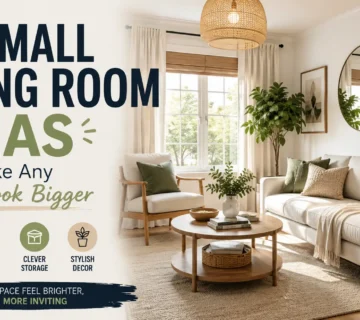
Working with limited square footage? Don’t miss our guide to 16 Small Living Room Ideas That Make Any Space Look Bigger, where you’ll discover smart layout tricks, furniture ideas, and designer techniques for maximizing every inch of your space.
13. Mix Modern and Vintage Pieces for Character
One of the biggest myths about modern interior design is that everything has to be brand new.
In reality, many of the world’s most beautiful homes combine contemporary furniture with carefully chosen vintage pieces.
This contrast creates personality.
Without it, a room can begin to feel more like a furniture showroom than a home.
A vintage wooden side table beside a modern sofa…
An antique mirror above a sleek console…
A handcrafted ceramic lamp on a minimalist shelf…
These small contrasts make a room feel collected over time instead of purchased all at once.
Why It Works
Contrast creates visual interest.
Modern furniture provides clean structure, while vintage pieces add warmth, craftsmanship, and history.
Together, they create a space that feels unique rather than predictable.
How to Get the Look
- Pair contemporary seating with one antique accent piece.
- Look for vintage artwork instead of mass-produced prints.
- Incorporate handmade ceramics or woven baskets.
- Choose reclaimed wood whenever possible.
Designer Tip
Aim for roughly an 80/20 balance—mostly modern furniture with a few carefully selected vintage accents.
Common Mistake
Avoid turning the room into multiple decorating styles at once.
One or two vintage elements create character.
Too many create confusion.
Why This Idea Lasts
Rooms built gradually over time almost always age better than rooms designed around one temporary trend.
14. Prioritize Comfort Over Trends
At the end of the day, your living room isn’t a showroom.
It’s where you relax after work, spend time with family, host friends, read books, watch movies, and create memories.
That’s why the most timeless modern living rooms always prioritize comfort before appearance.
Beautiful furniture means very little if no one enjoys sitting on it.
The homes people remember most aren’t necessarily the most expensive.
They’re the ones that feel welcoming the moment you walk through the door.
Why It Works
Comfort encourages people to actually use the space.
And rooms that are lived in thoughtfully almost always feel more authentic than rooms designed only for photographs.
How to Get the Look
- Choose seating you’ll enjoy for years.
- Layer soft pillows and throws.
- Keep pathways open.
- Design around your lifestyle—not social media trends.
- Invest in quality where it matters most.
Designer Tip
Before buying anything new, ask one simple question:
“Will this improve how we live, or just how the room looks?”
The answer usually makes the decision much easier.
Common Mistake
Buying furniture because it’s trending rather than because it’s comfortable often leads to expensive replacements within a few years.
Why This Idea Lasts
Comfort never goes out of style.
Design trends change.
Human needs don’t.
Modern Living Room Trends Worth Keeping (And the Ones to Skip)
| Worth Keeping | Trends to Skip |
|---|---|
| Warm neutral color palettes | Cool all-gray interiors |
| Natural wood finishes | High-gloss furniture everywhere |
| Layered lighting | Single overhead lighting |
| Quality furniture | Fast furniture with poor durability |
| Organic textures | Plastic decorative accessories |
| Functional layouts | Furniture that’s too large for the room |
| Thoughtful minimalism | Overdecorated shelves and walls |
Common Modern Living Room Mistakes to Avoid
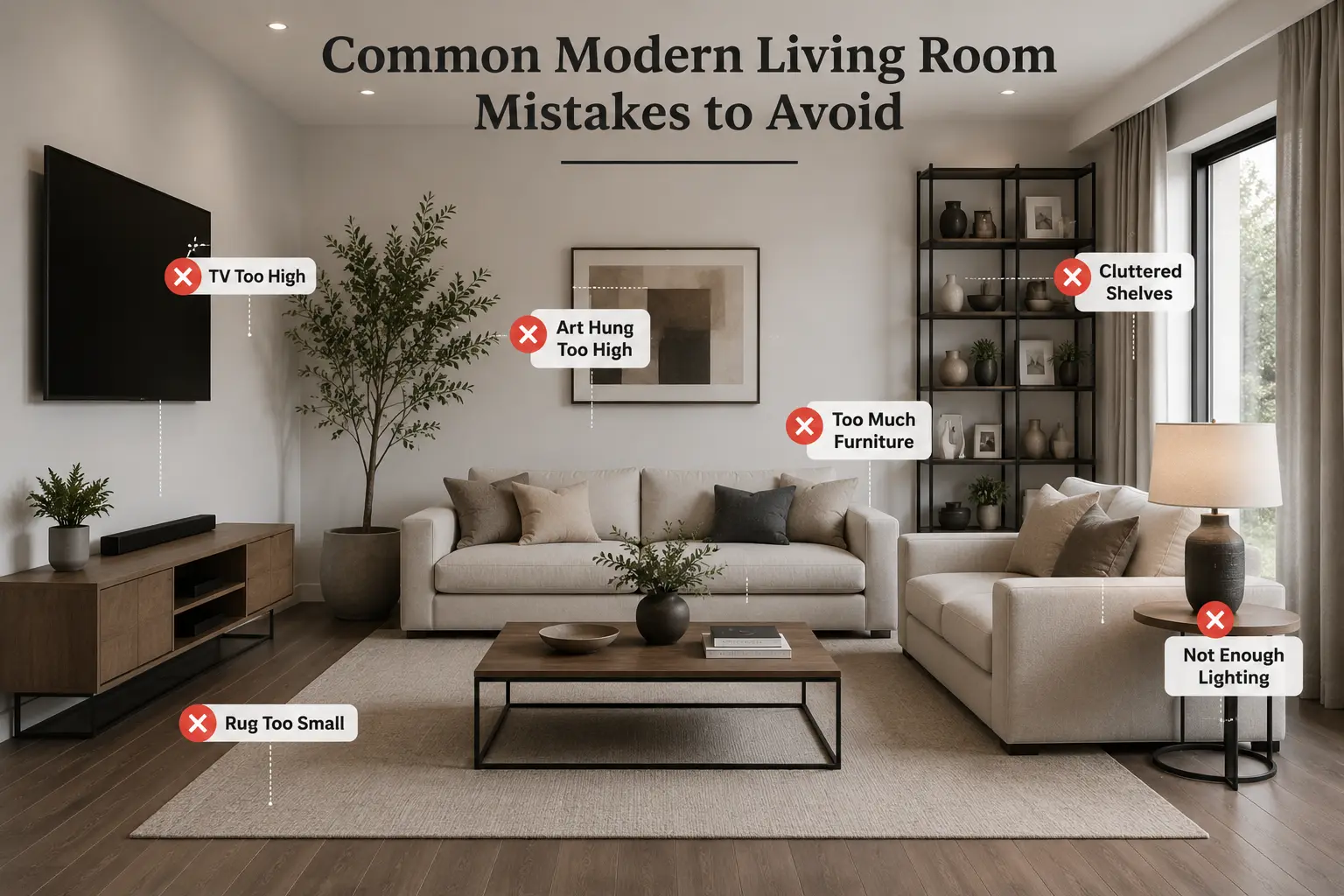
Even beautiful furniture can’t save a poorly planned room. Avoid these common mistakes if you want your living room to feel timeless rather than trendy.
- Choosing a rug that’s too small.
- Hanging artwork too high.
- Buying matching furniture sets.
- Depending on one ceiling light.
- Filling every shelf with decorations.
- Ignoring storage solutions.
- Following trends instead of your lifestyle.
Affordable Ways to Modernize Your Living Room
Creating a modern living room doesn’t always require a complete renovation.
Small upgrades often have the biggest impact.
- Paint the walls in a warm neutral color.
- Replace outdated light fixtures.
- Add one oversized piece of artwork.
- Upgrade throw pillows with textured fabrics.
- Rearrange your furniture before buying anything new.
- Introduce natural wood accents.
- Add one large indoor plant.
- Replace heavy curtains with light linen panels.
Designer’s Final Checklist
Before you consider your living room finished, ask yourself these questions:
✔ Does every piece serve a purpose?
✔ Is there enough natural light?
✔ Have I layered different textures?
✔ Is there one clear focal point?
✔ Does the room feel comfortable as well as beautiful?
✔ Is there enough hidden storage?
✔ Would I still love this design five years from now?
If you answered “yes” to most of these questions, you’re well on your way to creating a modern living room that truly stands the test of time.
Frequently Asked Questions
What makes a living room look modern?
A modern living room typically features clean lines, neutral colors, functional furniture, layered lighting, natural materials, and thoughtfully selected décor. Rather than following short-term trends, it focuses on simplicity, comfort, and balance.
Is modern interior design still in style?
Yes. While individual trends change, modern interior design continues to evolve by emphasizing timeless principles such as functionality, quality materials, and uncluttered layouts.
How can I make my living room look more expensive?
Invest in quality furniture, use layered lighting, choose a large area rug, incorporate natural materials, and avoid overcrowding the space with decorative accessories.
What colors never go out of style in a modern living room?
Warm whites, soft beige, greige, taupe, sand, and earthy neutral tones remain timeless because they work well with almost every decorating style.
Can a modern living room also feel cozy?
Absolutely. Soft textures, layered lighting, warm wood finishes, comfortable seating, and natural fabrics help create a modern space that also feels welcoming.
Final Thoughts
A timeless modern living room isn’t created by copying every trend that appears on Pinterest or Instagram. It’s built through thoughtful choices that balance beauty, comfort, and functionality.
Instead of asking what’s popular this year, focus on what will continue to make your home feel inviting years from now. Invest in quality, embrace simplicity, and choose pieces that genuinely improve the way you live.
And if you’re looking for more inspiration, continue exploring our 19 Cozy Living Room Ideas That Make Your Home Feel Warm and Inviting for ways to add warmth and personality, or discover 16 Small Living Room Ideas That Make Any Space Look Bigger if you’re working with a compact space. Together, these guides will help you create a living room that’s not only stylish today—but timeless for years to come.


No comment