
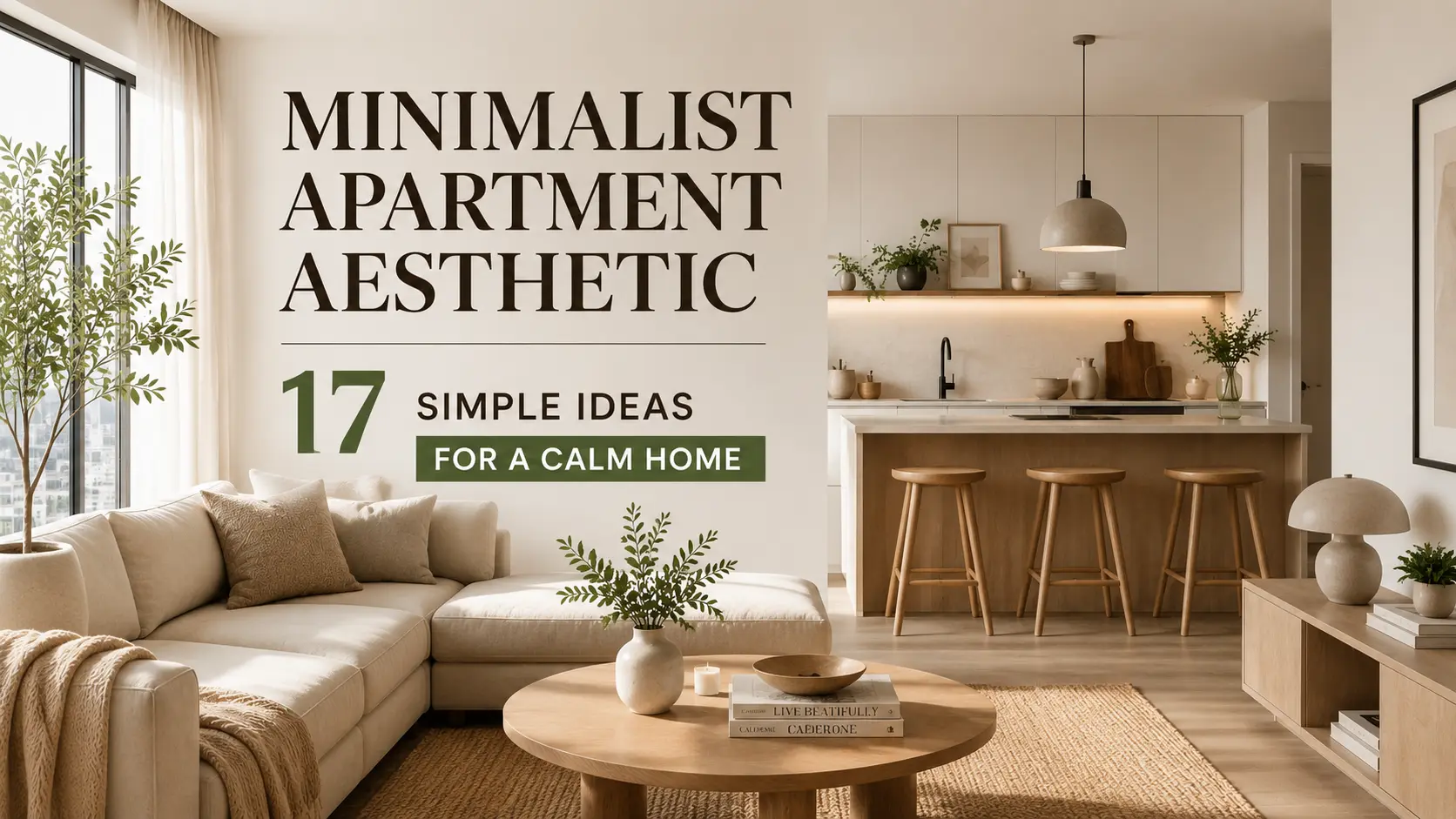
Minimalist Apartment Aesthetic: 17 Simple Ideas for a Calm Home
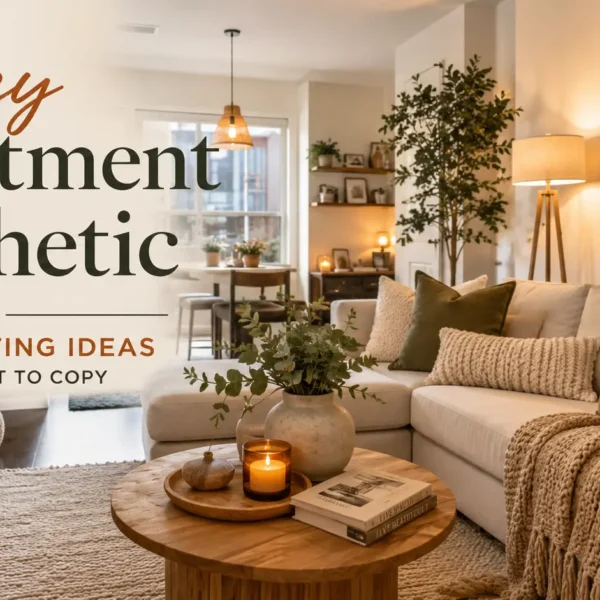
Imagine walking into an apartment that feels bright, organized, and effortlessly relaxing. There’s no visual clutter, every piece has a purpose, and the space feels larger than it actually is. That’s the beauty of a minimalist apartment aesthetic.
Contrary to popular belief, creating a minimalist home doesn’t mean living in an empty white room or getting rid of everything you own. Instead, it’s about making thoughtful design choices that prioritize simplicity, functionality, and comfort. By choosing the right colors, furniture, lighting, and décor, you can create a home that feels elegant without looking cold or unfinished.
Whether you’re decorating a small studio apartment or refreshing a larger living space, these minimalist apartment aesthetic ideas will help you design a home that feels calm, timeless, and beautifully balanced.
In this guide, you’ll discover practical decorating ideas, common mistakes to avoid, and designer-inspired tips that make achieving a minimalist look both realistic and affordable.
What Is a Minimalist Apartment Aesthetic?
A minimalist apartment aesthetic is an interior design style that focuses on simplicity, intentional living, and functional beauty. Instead of filling a room with unnecessary furniture and decorations, every element is carefully chosen to serve a purpose while contributing to a clean, cohesive look.
The goal isn’t to own less simply for the sake of minimalism. It’s to create a space where every item adds value, allowing the room to feel open, peaceful, and easy to live in.
Most minimalist apartments share a few defining characteristics:
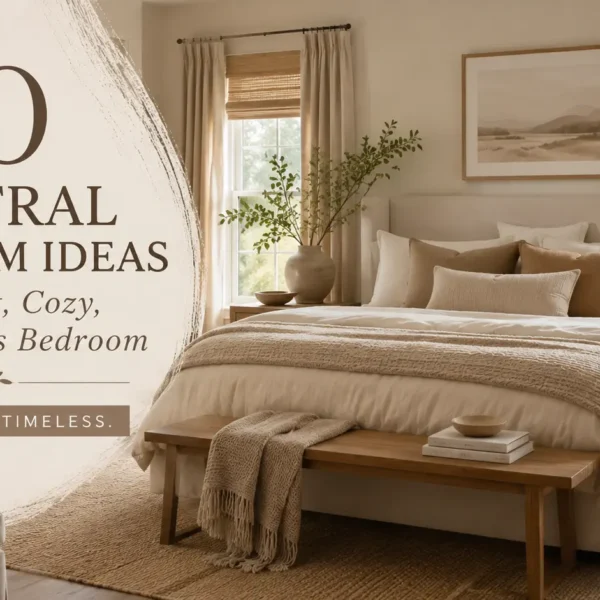
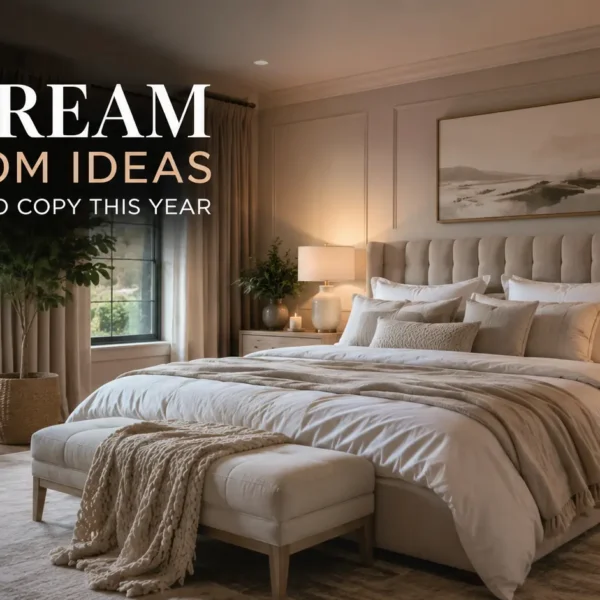
- A soft neutral color palette with warm whites, beige, gray, or earthy tones.
- Furniture with clean lines and simple silhouettes.
- Hidden storage solutions that reduce everyday clutter.
- Natural materials like wood, linen, cotton, and stone to add warmth.
- Carefully selected décor instead of crowded shelves and walls.
- Plenty of natural light to create an airy, inviting atmosphere.
Modern minimalist interiors also avoid one common misconception: minimal doesn’t have to mean sterile. Today’s most beautiful apartments often combine clean design with cozy textures, warm lighting, and personal touches that make the space feel lived in rather than staged.
When done well, a minimalist apartment aesthetic creates more than just a beautiful home—it creates an environment that feels less stressful, easier to maintain, and more enjoyable to spend time in.
Why Minimalism Works So Well in Apartments
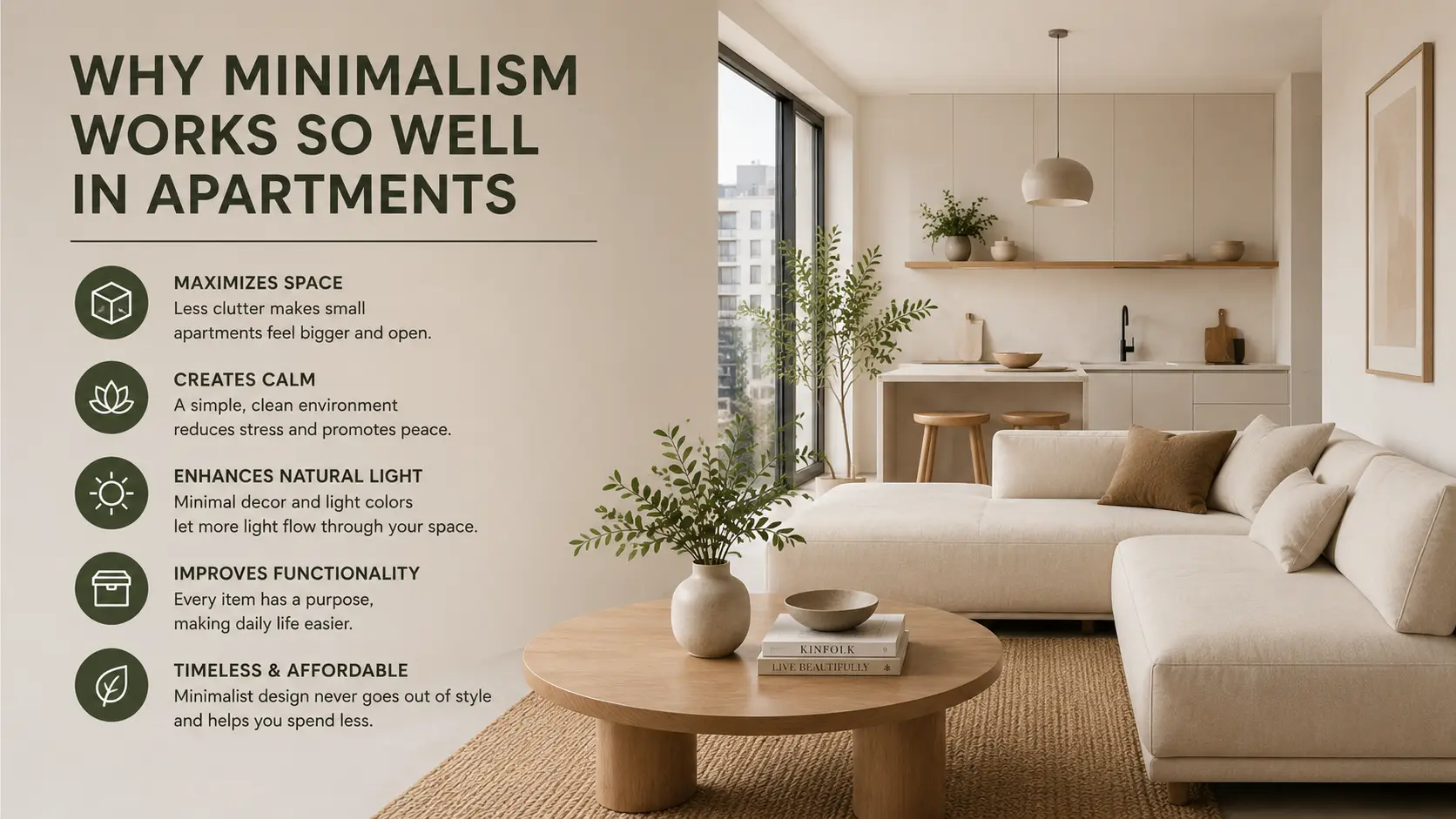
Apartments often come with limited square footage, making every design decision more important. A minimalist approach naturally complements smaller spaces because it emphasizes openness over excess.
Reducing visual clutter allows your apartment to feel larger without changing its actual size. Strategic furniture placement improves movement throughout the room, while neutral colors reflect more light and create a brighter atmosphere. Hidden storage keeps everyday essentials out of sight, helping your home stay organized with less effort.
Perhaps most importantly, minimalist design shifts the focus from owning more to choosing better. A few well-designed pieces can have a greater visual impact than a room filled with furniture and accessories.
That’s why minimalist apartments often feel elegant, expensive, and timeless—even when they’re decorated on a modest budget.
Now that you understand the principles behind this design style, let’s explore 17 practical ideas that can help you create a minimalist apartment aesthetic you’ll love coming home to.
1. Build Your Apartment Around a Warm Neutral Color Palette
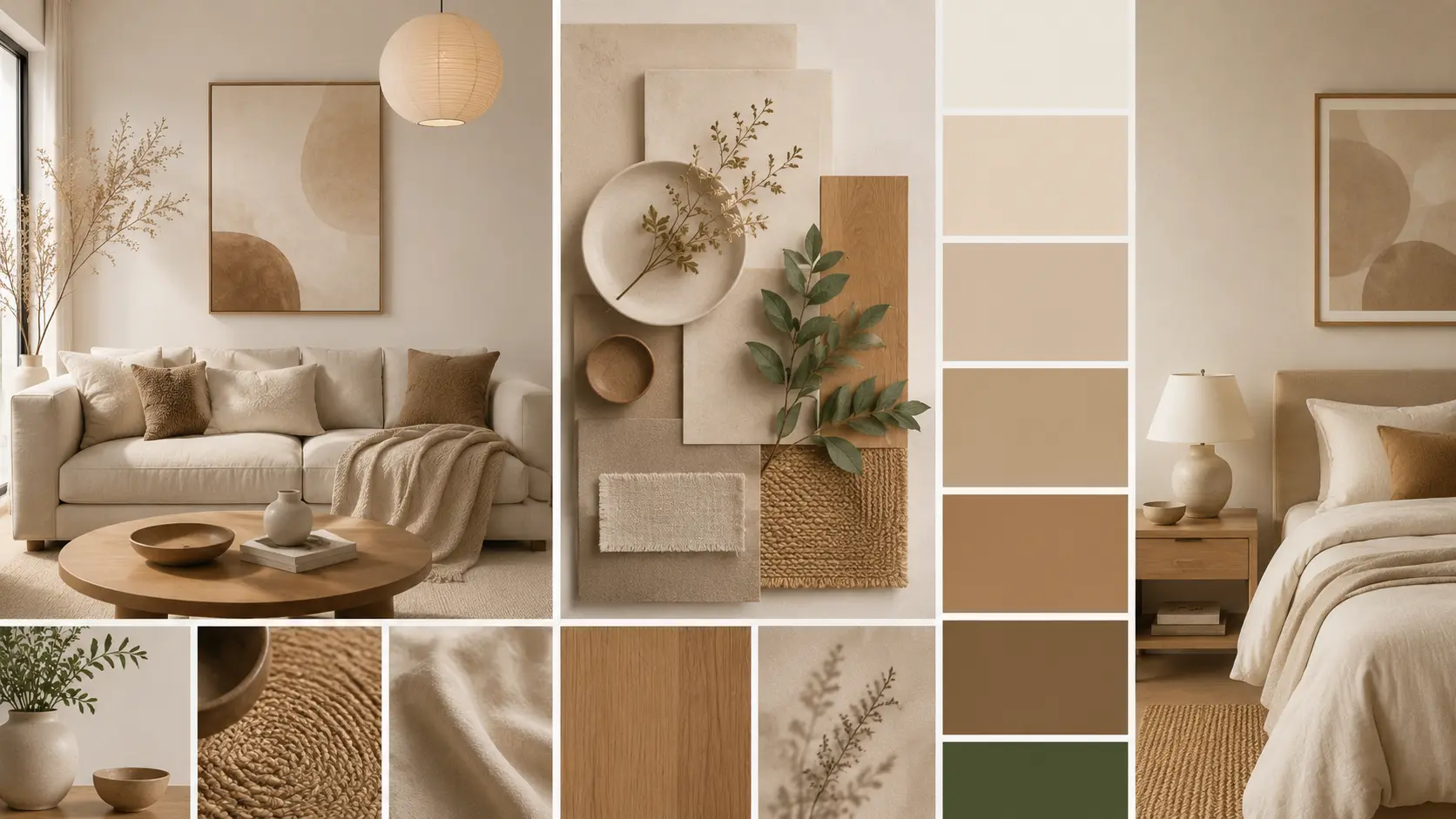
The easiest way to achieve a minimalist apartment aesthetic is by simplifying your color palette. Warm neutrals instantly create a calm atmosphere while making your apartment feel brighter and more spacious.
Instead of using stark white everywhere, combine soft shades like ivory, cream, warm beige, taupe, greige, and light sand. These colors reflect natural light beautifully and make every room feel welcoming rather than cold.
To keep the space visually interesting, layer different shades of the same color instead of introducing many contrasting colors. A cream sofa, beige curtains, a light oak coffee table, and textured linen pillows create depth without overwhelming the room.
Why It Works
A limited color palette reduces visual noise, making your apartment feel more cohesive and relaxing. It also creates the perfect backdrop for natural materials and carefully chosen décor.
Designer Tip
Follow the 60-30-10 rule:
- 60% primary neutral color
- 30% secondary neutral tone
- 10% accent color through artwork, books, or plants
Avoid This Mistake
Choosing bright white for every wall and piece of furniture can make the apartment feel sterile. Mixing warm neutral tones usually creates a softer and more inviting atmosphere.
2. Choose Furniture With Clean Lines and Simple Shapes
Minimalist furniture isn’t about buying the most expensive designer pieces—it’s about selecting furniture with balanced proportions and uncomplicated shapes.
Look for sofas with straight arms, coffee tables with simple silhouettes, floating TV units, and dining tables that prioritize function over decoration.
Whenever possible, choose fewer high-quality pieces instead of filling the room with extra furniture. Leaving space between items allows each piece to stand out while making the apartment feel larger.
Furniture with exposed legs is another great choice because it reveals more of the floor, creating an open and airy appearance.
Why It Works
Simple furniture allows the architecture of the room to become part of the design rather than competing with oversized or heavily decorated pieces.
Designer Tip
Before buying a new piece, ask yourself:
“Does this improve both the appearance and functionality of my apartment?”
If the answer is no, it’s probably unnecessary.
Avoid This Mistake
Avoid purchasing matching furniture sets. They often make a room feel flat and less personal. Mixing complementary materials such as light wood, fabric, and matte black metal creates a more sophisticated look.
3. Declutter Every Surface Before You Decorate
One of the biggest differences between an ordinary apartment and a beautiful minimalist home isn’t the furniture—it’s the amount of visible clutter.
Kitchen counters, coffee tables, entry consoles, bathroom vanities, and nightstands should have enough empty space to let the room breathe.
Instead of displaying every decorative item you own, choose only a few meaningful pieces. A ceramic vase, one coffee table book, and a small candle often make a stronger statement than ten scattered accessories.
Whenever possible, store everyday essentials inside drawers, baskets, or cabinets instead of leaving them in plain sight.
Why It Works
Our eyes naturally seek visual order. Clear surfaces instantly make a room feel cleaner, larger, and more luxurious without spending any money.
Designer Tip
Leave around 20–30% of each visible surface intentionally empty. This negative space is what gives minimalist interiors their calm and elegant appearance.
Avoid This Mistake
Minimalism doesn’t mean removing every decorative object. Empty rooms can feel unfinished. Focus on editing rather than eliminating.
4. Add Texture Instead of More Decorations
Many people think minimalist interiors look boring because they rely on color alone. In reality, designers create warmth through texture rather than clutter.
Layer linen curtains with cotton bedding, add a woven rug beneath your coffee table, place a boucle accent chair in the corner, or introduce a knitted throw blanket over the sofa.
Natural materials like wood, stone, rattan, wool, and ceramic add depth while maintaining the clean aesthetic that defines minimalist design.
The room becomes visually rich without feeling crowded.
Why It Works
Texture creates contrast in a subtle way, making neutral spaces feel inviting instead of flat.
Designer Tip
Try combining at least three different textures in every room. For example:
- Linen
- Wood
- Woven fibers
This simple combination creates a designer-inspired look with very little effort.
Avoid This Mistake
Using too many shiny materials such as glass, chrome, and glossy finishes can make the apartment feel cold. Balance them with soft natural textures.
5. Let Natural Light Become Part of the Design
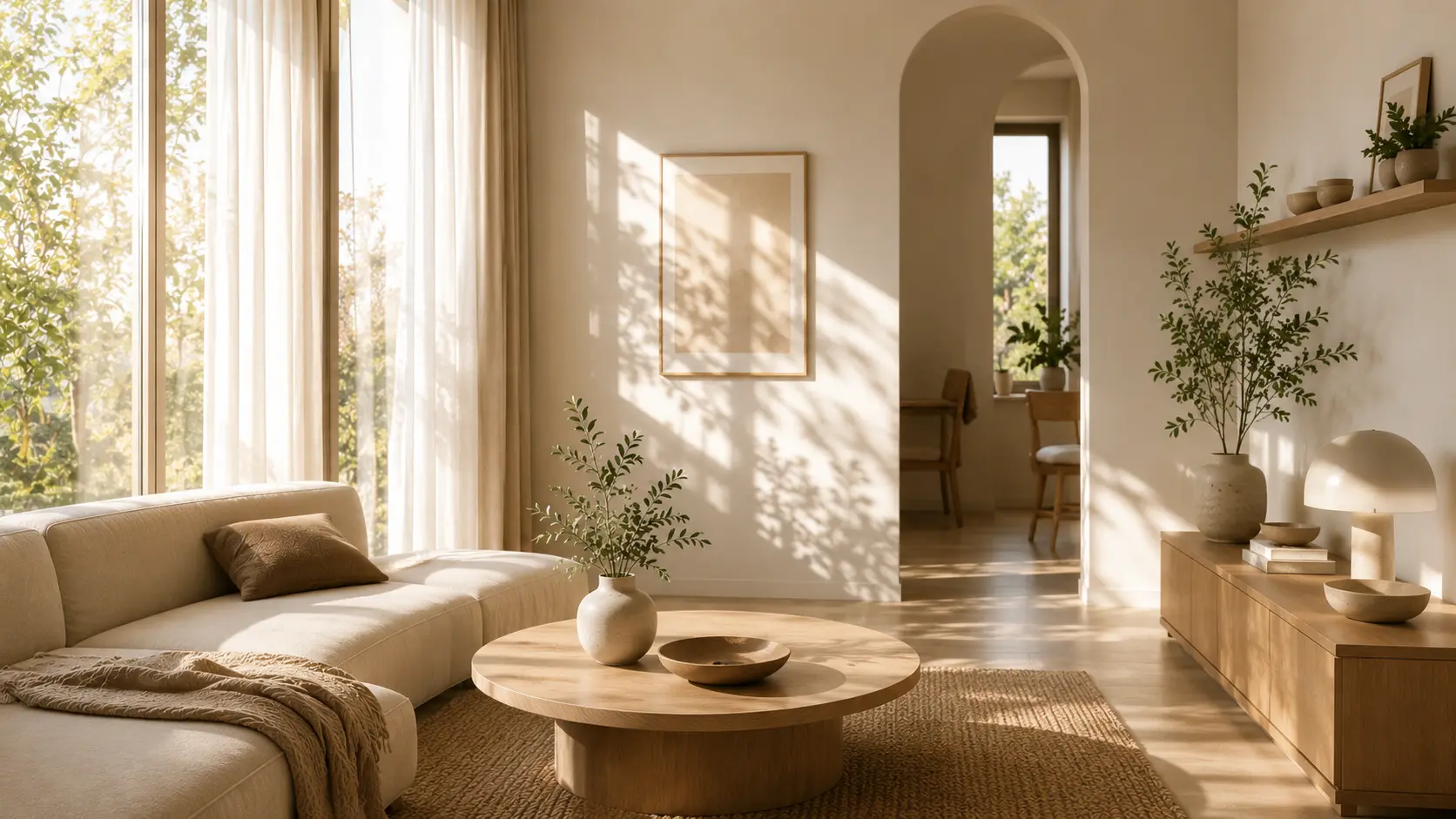
Lighting is one of the most powerful elements in a minimalist apartment aesthetic. Even the best furniture won’t achieve the desired look if the space feels dark.
Keep windows as open as possible by choosing lightweight curtains in linen or sheer fabrics. Position mirrors where they can reflect daylight into darker corners, making the apartment appear brighter and more spacious.
During the evening, replace harsh ceiling lights with layered lighting. A floor lamp beside the sofa, a warm table lamp on a console, and soft bedside lighting create a relaxing atmosphere that complements minimalist interiors.
Choose warm white bulbs instead of cool daylight bulbs to maintain a cozy and elegant feel.
Why It Works
Good lighting enhances colors, highlights textures, and creates visual depth. It also makes small apartments feel significantly more open.
Designer Tip
Think of lighting in three layers:
- Ambient lighting for overall brightness.
- Task lighting for reading or working.
- Accent lighting to highlight artwork, shelves, or architectural details.
Using all three creates a space that feels intentionally designed.
Avoid This Mistake
Relying on a single bright ceiling fixture often creates harsh shadows and makes a room feel less inviting. Multiple light sources provide a softer, more balanced effect.
6. Hide Everyday Clutter With Smart Storage Solutions
A minimalist apartment isn’t about owning fewer things—it’s about keeping everyday items out of sight when they’re not in use. Smart storage is what allows a home to feel clean and organized without sacrificing functionality.
Choose furniture that works harder for you, such as ottomans with hidden storage, beds with built-in drawers, or coffee tables with concealed compartments. In the entryway, use a slim cabinet to store shoes and bags instead of leaving them visible. In the living room, woven baskets can neatly hide blankets, magazines, or electronics while still complementing the overall aesthetic.
The less visual clutter your apartment has, the more peaceful it feels.
Why It Works
Hidden storage keeps surfaces clear and helps maintain a minimalist look even during busy weeks when you’re not constantly tidying up.
Designer Tip
Follow the “one-touch rule.” Whenever possible, give every everyday item a permanent home so putting it away becomes automatic.
Avoid This Mistake
Don’t buy decorative baskets just because they look good. Every storage solution should solve a real organizational problem.
7. Invest in One Statement Piece Instead of Many Small Decorations
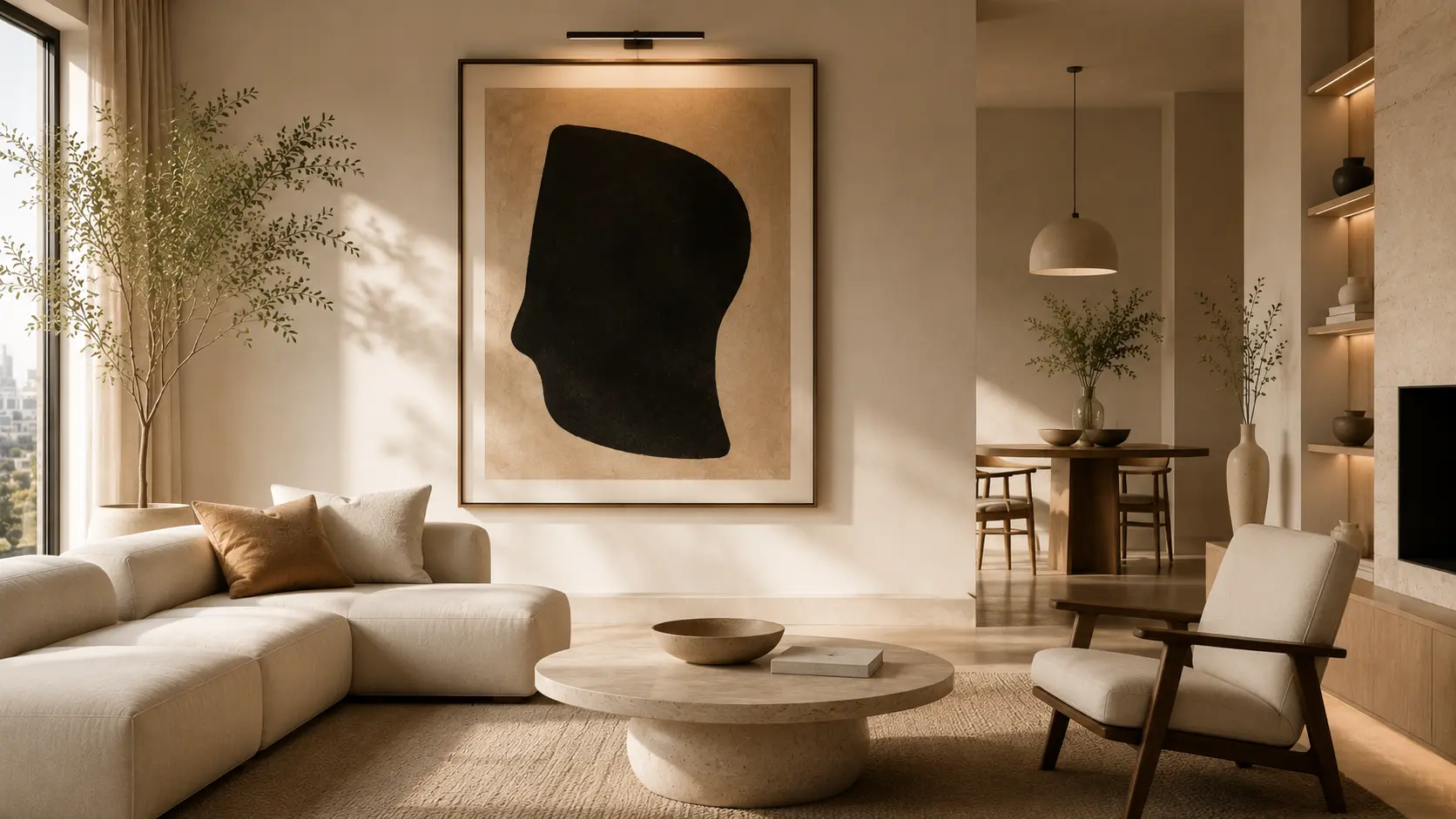
Minimalist interiors don’t have to be plain. Instead of filling a room with dozens of decorative accessories, choose one feature that naturally draws attention.
This could be:
- A large abstract artwork.
- A sculptural floor lamp.
- A beautifully designed coffee table.
- A curved accent chair.
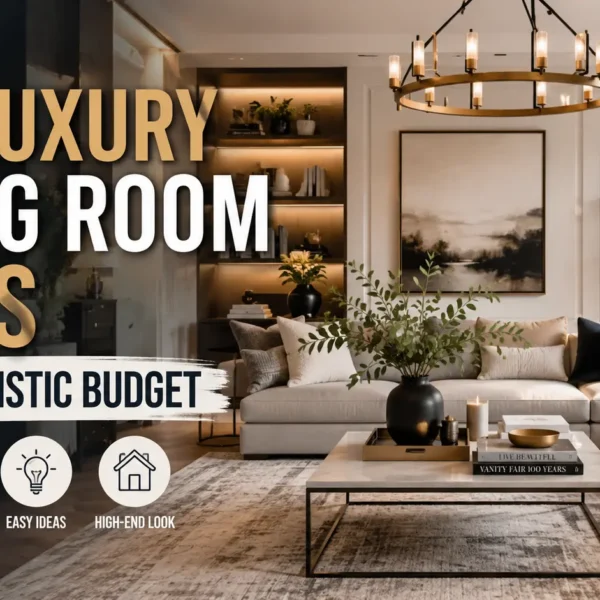
- A statement pendant light.
A single focal point creates visual interest while allowing the rest of the room to remain calm and uncluttered.
Why It Works
A strong focal point gives the eye somewhere to rest, making the entire room feel intentional rather than busy.
Designer Tip
When selecting a statement piece, think about scale. One oversized artwork often creates a more luxurious look than several small frames scattered across the wall.
Avoid This Mistake
Avoid adding multiple “statement” pieces in the same room. If everything stands out, nothing actually becomes the focal point.
8. Decorate With Natural Materials
One reason today’s minimalist apartments feel warmer than older minimalist designs is the use of natural materials.
Wood, stone, linen, cotton, leather, clay, travertine, and rattan introduce organic textures that soften clean lines and neutral color palettes.
For example, pair a light oak dining table with linen dining chairs, add a handmade ceramic vase to a floating shelf, or place a woven basket beside the sofa. These simple additions create depth without adding unnecessary clutter.
Natural materials also age beautifully, giving your apartment a timeless character that synthetic finishes often lack.
Why It Works
Organic materials bring warmth and authenticity, making minimalist spaces feel comfortable rather than sterile.
Designer Tip
Choose materials with visible texture and subtle imperfections. They add personality while staying true to the minimalist philosophy.
Avoid This Mistake
Mixing too many different wood tones can make a room feel inconsistent. Try to stay within two or three complementary finishes throughout your apartment.
9. Style Shelves With Intention, Not Quantity
Open shelves are common in modern apartments, but they’re often overloaded with books, souvenirs, candles, and decorative objects.
Instead, style each shelf with a purpose.
A balanced arrangement might include:
- A stack of books.
- A ceramic vase.
- A small plant.
- A framed print.
- A decorative bowl.
Leave empty space between objects so each item has room to breathe.
Think of your shelves as curated displays rather than storage areas.
Why It Works
Intentional styling creates rhythm and balance while preventing visual overload.
Designer Tip
Use the “rule of thirds.” Group objects in sets of three with varying heights to create a more natural composition.
Avoid This Mistake
Don’t try to fill every shelf completely. Empty space is an important design element in minimalist interiors.
10. Bring Life Into the Space With Greenery
Plants are one of the simplest ways to make a minimalist apartment feel more welcoming.
Their natural shapes soften straight architectural lines, while their rich green color adds contrast to neutral interiors.
Some excellent low-maintenance options include:
- Snake Plant
- ZZ Plant
- Rubber Plant
- Monstera
- Olive Tree
- Pothos
Choose simple ceramic or stone planters that complement your color palette instead of competing with it.
Even one well-placed plant can completely transform a room.
Why It Works
Plants introduce movement, texture, and color without disrupting the simplicity of the overall design.
Designer Tip
Instead of placing several small plants around the room, choose one larger floor plant for greater visual impact.
Avoid This Mistake
Avoid overcrowding every corner with greenery. Plants should enhance the design—not become the main source of visual clutter.
Looking for More Apartment Inspiration?
Minimalism is just one approach to creating a beautiful home. If you’d like to explore more decorating styles, statement pieces, and designer-inspired ideas that make any apartment feel more luxurious, don’t miss our guide to 25 Apartment Aesthetic Ideas That Make Any Space Feel Expensive. It includes practical ideas that work alongside a minimalist style while helping you create a home that feels polished, elegant, and uniquely yours.
11. Keep Wall Decor Simple and Purposeful
Walls play a major role in defining a minimalist apartment aesthetic. Instead of covering every empty space with artwork or decorative pieces, choose a few high-impact items that complement the room.
A large framed print above the sofa, an oversized abstract painting in the dining area, or a simple black-and-white photograph can instantly elevate the space without creating visual clutter.
When selecting artwork, stick to colors that work with your overall palette. Soft neutrals, earthy tones, and minimalist line art often create the most timeless look.
Why It Works
Large, intentional artwork makes a room feel curated and sophisticated while allowing the rest of the space to remain clean and uncluttered.
Designer Tip
Hang artwork so its center sits at approximately eye level. This creates a balanced look that feels professionally designed.
Avoid This Mistake
Avoid creating gallery walls with too many small frames unless you’re confident in the composition. A single oversized piece often has a stronger visual impact.
12. Create Visual Balance With Negative Space
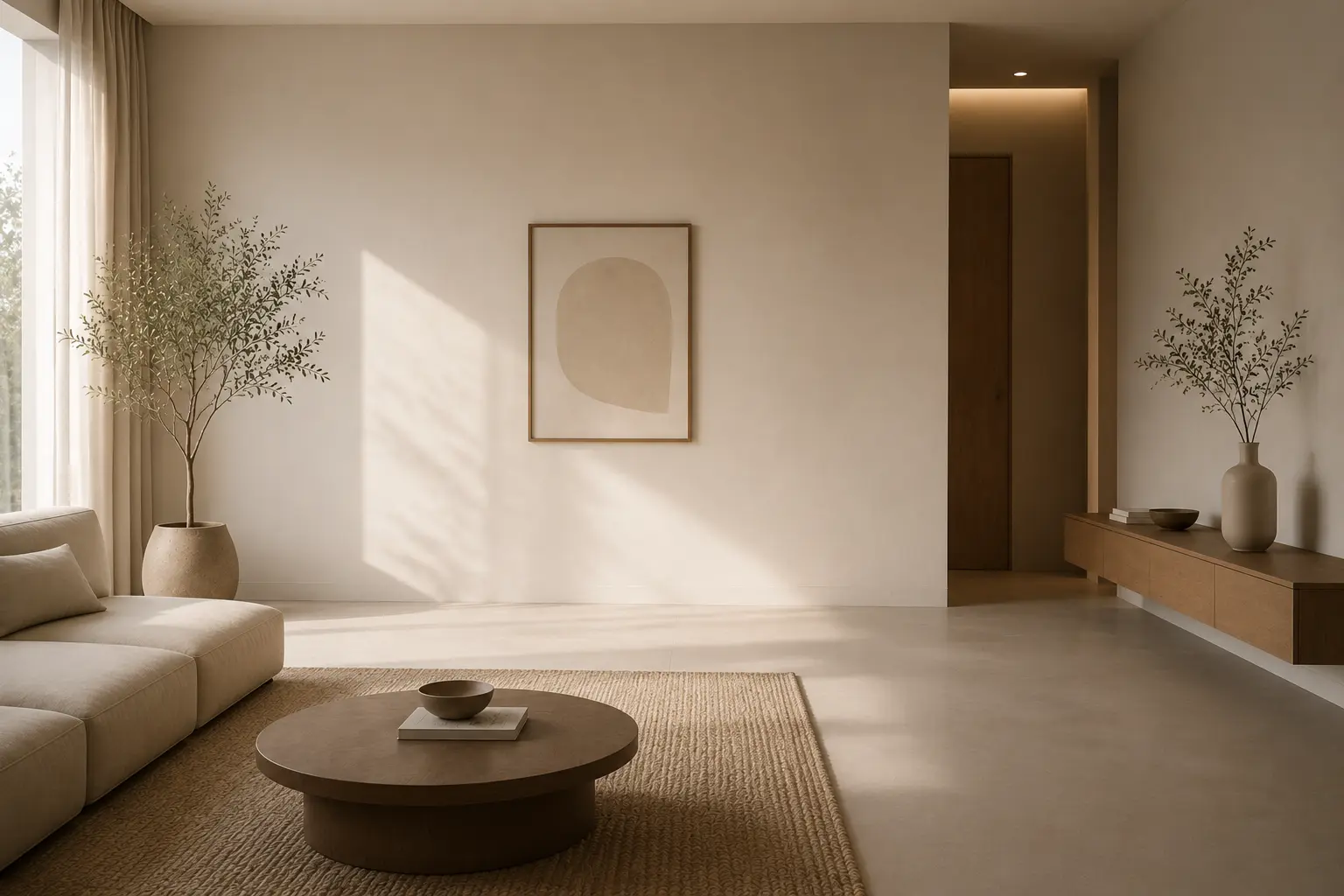
One of the most overlooked principles of minimalist design is negative space—the empty areas between furniture, décor, and architectural elements.
Many people feel the need to fill every empty corner, but professional designers know that empty space gives a room room to breathe.
Leave space around furniture, avoid pushing every item against the walls, and resist the temptation to decorate every available surface.
Negative space allows your favorite pieces to stand out naturally.
Why It Works
A balanced layout feels calmer because your eyes can move comfortably through the room without being overwhelmed by too many visual elements.
Designer Tip
After decorating a room, remove one accessory and see if the space actually looks better. Often, less truly is more.
Avoid This Mistake
Don’t mistake empty space for unfinished design. In minimalist interiors, negative space is an intentional design element.
13. Choose Quality Over Quantity
Minimalism encourages thoughtful purchasing rather than constant decorating.
Instead of buying several inexpensive items that may not last, invest in a few timeless pieces you’ll enjoy for years.
This doesn’t mean spending a fortune. It means shopping intentionally and asking whether each purchase genuinely improves your home.
A well-made sofa, a solid wood dining table, or a durable area rug will often have a greater impact than multiple trendy accessories.
Why It Works
Fewer, higher-quality pieces create a refined appearance while reducing unnecessary clutter over time.
Designer Tip
Before buying anything new, ask yourself:
“Will I still love this piece five years from now?”
If the answer is uncertain, consider waiting.
Avoid This Mistake
Don’t confuse minimalism with luxury. Expensive furniture isn’t required—carefully chosen furniture is.
14. Use Warm Lighting to Create a Cozy Atmosphere
Lighting can completely change how your apartment feels after sunset.
Instead of relying only on bright overhead fixtures, layer different light sources throughout the room. Table lamps, floor lamps, wall sconces, and warm LED bulbs create depth and make your apartment feel more inviting.
Warm lighting also softens neutral color palettes and highlights natural materials like wood and linen.
Aim for lighting that feels relaxing rather than overly bright.
Why It Works
Layered lighting creates comfort while adding depth and dimension to minimalist interiors.
Designer Tip
Choose warm white bulbs between 2700K and 3000K for a cozy atmosphere that complements neutral décor.
Avoid This Mistake
Avoid cool blue-toned lighting, which can make even beautifully decorated rooms feel harsh and unwelcoming.
15. Add Personal Touches Without Creating Clutter
A minimalist apartment should still feel like your home.
Display a few meaningful objects that tell your story—a favorite travel photo, a handmade ceramic bowl, or a stack of books you genuinely enjoy reading.
The goal isn’t to eliminate personality but to highlight it through intentional choices.
When every decorative item has meaning, your apartment feels authentic rather than staged.
Why It Works
Personal touches create emotional warmth without overwhelming the clean aesthetic.
Designer Tip
Instead of displaying everything you own, rotate decorative items seasonally to keep your apartment feeling fresh.
Avoid This Mistake
Avoid buying décor simply because it’s trending on social media. Your home should reflect your lifestyle, not someone else’s.
16. Design Every Room as Part of One Cohesive Story
One mistake many people make is decorating each room in a completely different style.
A minimalist apartment feels more elegant when every space shares the same visual language.
Repeat similar colors, materials, and finishes throughout your home. If your living room features light oak furniture and warm beige textiles, continue those elements into the bedroom and dining area.
Consistency creates flow and makes even small apartments feel thoughtfully designed.
Why It Works
A cohesive design allows each room to connect naturally, making the entire apartment feel larger and more harmonious.
Designer Tip
Create a small mood board before shopping. Having a clear vision helps prevent impulse purchases that don’t fit your overall design.
Avoid This Mistake
Don’t mix too many decorating styles unless you intentionally know how to balance them. Consistency often feels more timeless than variety.
17. Edit Your Space Regularly
Minimalism isn’t something you finish once—it’s an ongoing process.
As your lifestyle changes, your apartment should evolve with it. Every few months, take a fresh look at your space and ask yourself whether each item still serves a purpose or brings you joy.
Removing unnecessary clutter regularly keeps your apartment feeling calm and prevents small collections from gradually taking over your home.
The most beautiful minimalist interiors aren’t created by buying more—they’re maintained by choosing what deserves to stay.
Why It Works
Regular editing keeps your apartment functional, organized, and visually peaceful all year long.
Designer Tip
Schedule a seasonal reset every three or four months. Donate, recycle, or store items you no longer use, then restyle your surfaces with a fresh perspective.
Avoid This Mistake
Don’t aim for perfection. A minimalist apartment should support your daily life, not become a source of stress.
Common Minimalist Apartment Mistakes to Avoid
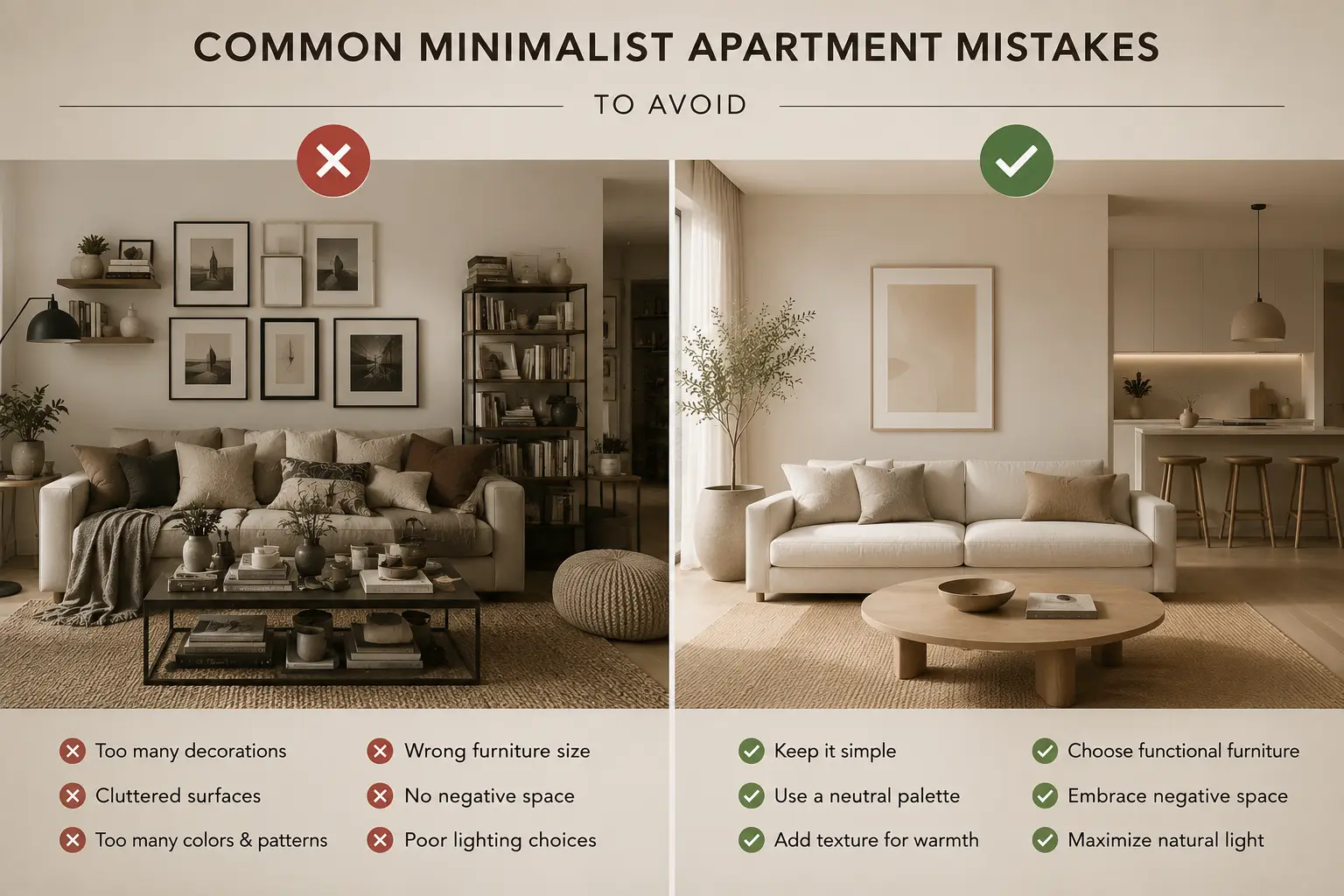
Even the most beautiful furniture won’t create a true minimalist apartment aesthetic if a few common design mistakes are holding your space back. Fortunately, they’re easy to fix once you know what to look for.
1. Choosing Pure White Everything
Many people assume minimalism means using only bright white walls, white furniture, and white décor.
In reality, this often makes an apartment feel cold, flat, and uninviting.
Instead, layer warm neutrals like ivory, cream, beige, greige, and light oak finishes to create a softer, more welcoming atmosphere.
Better Alternative
Mix different warm tones while keeping the overall palette simple.
2. Buying Too Much “Minimalist” Decor
One of the biggest contradictions is purchasing dozens of decorative objects just to make a home look minimalist.
Minimalism isn’t about owning trendy décor—it’s about choosing fewer pieces that genuinely improve the space.
Before buying anything, ask yourself:
- Does it have a purpose?
- Does it improve the room?
- Would I miss it if it disappeared tomorrow?
If the answer is no, you probably don’t need it.
3. Ignoring Storage
Visible clutter instantly breaks the minimalist aesthetic.
Phone chargers, paperwork, shopping bags, shoes, and kitchen appliances quickly make even beautiful apartments feel messy.
Prioritize furniture with built-in storage and give every everyday item a designated place.
Remember:
The best storage is the kind you don’t notice.
4. Filling Every Empty Corner
Not every corner needs a chair, a plant, or a floor lamp.
Negative space is an essential part of minimalist design because it allows your eyes to rest and makes the apartment feel more spacious.
Sometimes the best decorating decision is leaving an area intentionally empty.
5. Using Too Many Materials
Wood, marble, brass, black metal, chrome, glass, concrete, and rattan can all look beautiful—but using all of them in one apartment creates visual confusion.
Choose two or three primary materials and repeat them consistently throughout your home.
This creates harmony and makes every room feel connected.
6. Following Trends Instead of Your Lifestyle
Social media is full of beautiful apartments, but copying every trend rarely leads to a home you’ll enjoy long-term.
Design your apartment around how you actually live.
If you work from home, prioritize a functional workspace.
If you love reading, create a comfortable reading corner.
If you entertain guests often, focus on flexible seating.
Minimalism should simplify your life—not force you into someone else’s version of it.
Minimalist Apartment Shopping Checklist
Before purchasing new furniture or décor, use this checklist to make sure every item supports your overall design.
Furniture
- □ Clean, simple silhouette
- □ High-quality materials
- □ Functional design
- □ Fits the room without overcrowding
- □ Neutral color
Décor
- □ Adds texture
- □ Has a clear purpose
- □ Matches the color palette
- □ Doesn’t create visual clutter
Lighting
- □ Warm white bulbs
- □ Multiple light sources
- □ Maximizes natural daylight
Storage
- □ Hidden whenever possible
- □ Easy to access
- □ Helps reduce everyday clutter
If an item checks most of these boxes, it’s much more likely to fit a minimalist apartment aesthetic.
Frequently Asked Questions
What is a minimalist apartment aesthetic?
A minimalist apartment aesthetic is an interior design style that emphasizes simplicity, functionality, and intentional decorating. It uses clean lines, neutral colors, natural materials, and carefully selected furniture to create a calm, organized, and visually balanced home.
Can a minimalist apartment still feel cozy?
Absolutely.
Minimalism doesn’t mean removing comfort. Warm lighting, soft textiles, natural wood, layered textures, and meaningful décor can make a minimalist apartment feel both elegant and inviting.
What colors work best in a minimalist apartment?
Warm neutral colors usually create the best results.
Popular choices include:
- Warm white
- Ivory
- Beige
- Greige
- Taupe
- Light gray
- Soft brown
- Natural wood tones
These colors reflect light beautifully while creating a timeless atmosphere.
How do I make a small apartment look minimalist?
Start by removing unnecessary clutter, choosing furniture with clean lines, maximizing natural light, using hidden storage, and limiting your color palette.
Keeping surfaces clear and leaving some empty space around furniture can also make a small apartment feel significantly larger.
What’s the difference between minimalist and modern interior design?
While the two styles share clean lines, they’re not identical.
Minimalist design focuses on owning less and emphasizing simplicity, while modern design often allows for bolder materials, stronger contrasts, and more decorative elements.
Many contemporary apartments successfully combine both styles.
How much furniture should a minimalist apartment have?
Only as much as you genuinely need.
Every piece should have a clear purpose, fit the scale of the room, and contribute to a clean, functional layout.
Rather than counting furniture pieces, focus on maintaining open space and avoiding unnecessary clutter.
Final Thoughts
Creating a beautiful minimalist apartment aesthetic isn’t about making your home feel empty—it’s about making every element feel intentional.
From choosing a warm neutral color palette and investing in functional furniture to embracing natural materials and reducing visual clutter, each small decision contributes to a home that feels calmer, brighter, and easier to enjoy every day.
The best part is that you don’t need a complete renovation or a large budget to achieve this look. Start with one room, apply a few of these ideas, and gradually refine your space over time. As you remove distractions and focus on quality over quantity, you’ll create an apartment that not only looks elegant but also supports a more peaceful way of living.
Whether you’re decorating your first studio apartment or refreshing a larger home, these minimalist apartment aesthetic ideas can help you build a space that feels timeless, functional, and uniquely yours.

No comment