



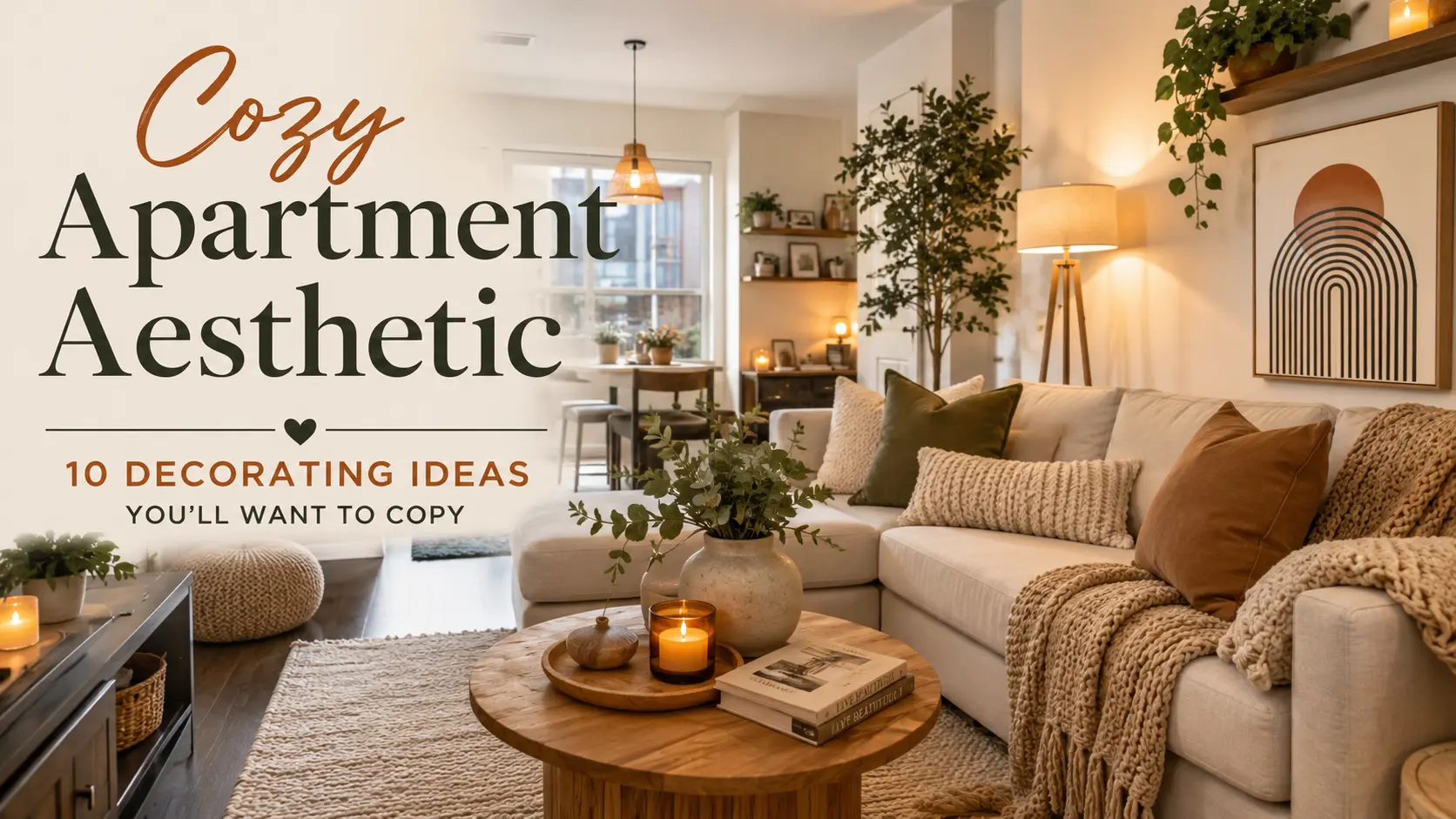
Cozy Apartment Aesthetic: 10 Decorating Ideas You’ll Want to Copy
Walking into a cozy apartment isn’t just about seeing beautiful furniture or perfectly styled shelves. It’s about how the space makes you feel the moment you step inside. Warm lighting replaces harsh overhead bulbs, soft textures invite you to relax, and every decorative detail feels intentional rather than overwhelming.
The best part is that creating a cozy apartment aesthetic doesn’t require a complete renovation or a designer-sized budget. A thoughtfully layered space often feels far more welcoming than one filled with expensive furniture. By focusing on warmth, balance, texture, and personality, even the smallest apartment can become a place that feels calm, inviting, and uniquely yours.
Whether you’re decorating your first apartment, refreshing a rental, or searching for ways to make your current home feel warmer, these ideas will help you create a space that looks beautiful while remaining practical for everyday life.
Related: If you’re exploring different decorating styles, check out our 25 Apartment Aesthetic Ideas That Make Any Space Feel Expensive for even more inspiration.
What Is a Cozy Apartment Aesthetic?
A cozy apartment aesthetic is an interior design style that prioritizes comfort, warmth, and livability without sacrificing style. Instead of relying on expensive statement pieces, it combines soft lighting, layered textures, natural materials, and carefully chosen decor to create an environment where people genuinely enjoy spending time.
Unlike trends that quickly go out of style, cozy interiors are built around timeless principles. They encourage relaxation, make rooms feel more inviting, and help even compact apartments feel personal rather than temporary.
You’ll often notice these characteristics in cozy apartments:
- Warm, layered lighting instead of one bright ceiling fixture.
- Neutral colors mixed with earthy tones.
- Soft fabrics like linen, cotton, wool, and bouclé.
- Natural materials such as wood, stone, and woven baskets.
- Comfortable furniture that encourages everyday living.
- Decorative objects that tell a personal story instead of filling empty space.
- Green plants that soften hard edges and add life.
The result isn’t a room that looks perfect for a magazine photo—it feels like somewhere you actually want to spend your evenings.
Why Cozy Apartments Feel More Comfortable Than Trendy Ones
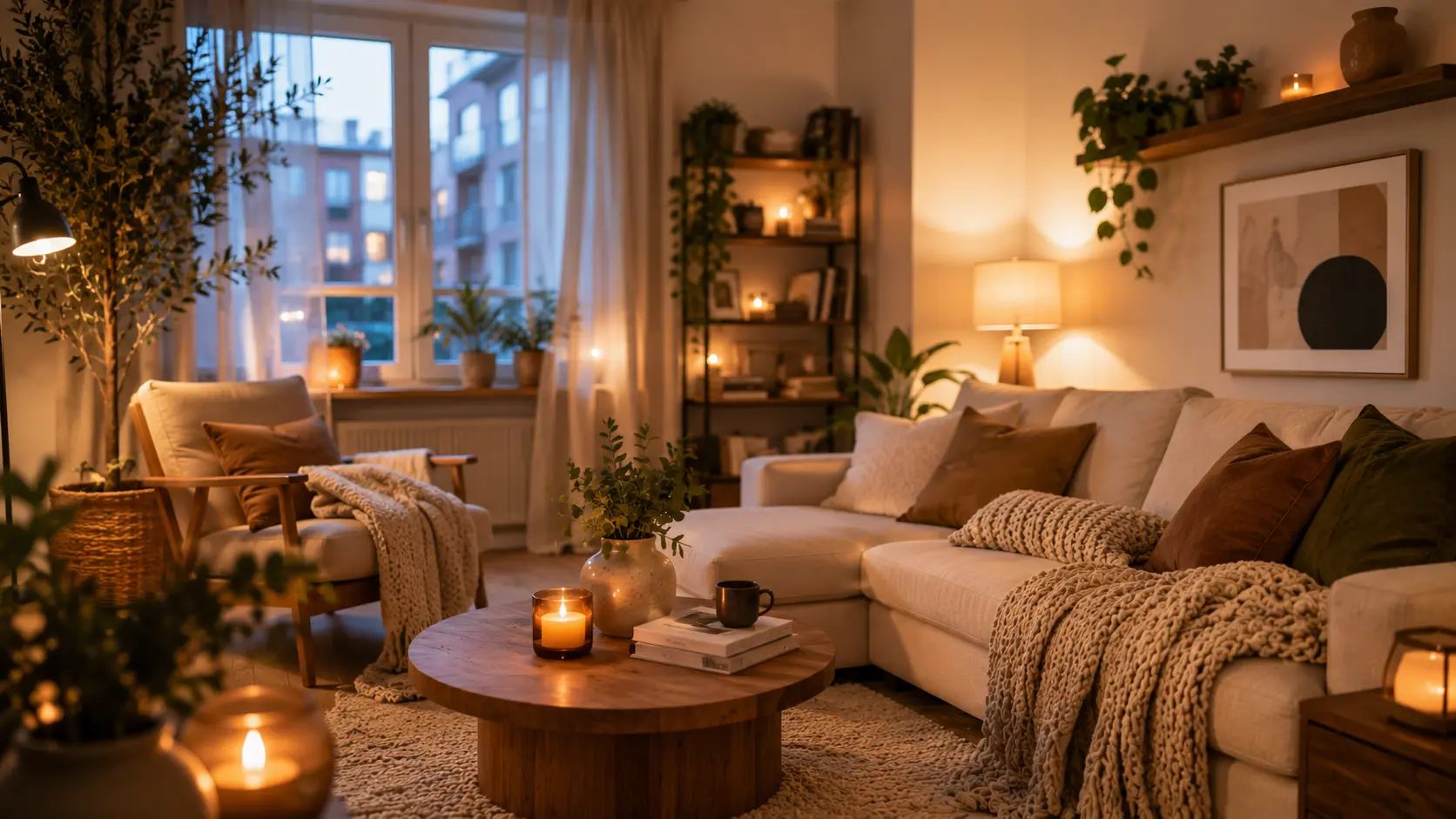
Many apartments look impressive in photos but surprisingly cold in real life. That’s because visual beauty alone doesn’t create comfort.
A truly cozy apartment appeals to multiple senses at once.
Soft lighting reduces visual fatigue after a long day. Natural materials introduce warmth that painted surfaces often lack. Thick fabrics absorb sound, making rooms quieter and more peaceful. Layered textures add depth, preventing a neutral room from feeling flat or lifeless.
This combination creates what designers often call visual warmth—a feeling that makes people naturally want to stay longer.
Instead of asking, “What decoration should I buy next?”, ask yourself:
“Does this room make me want to sit down and relax?”
That simple question leads to much better decorating decisions.
The Four Principles Behind Every Cozy Apartment
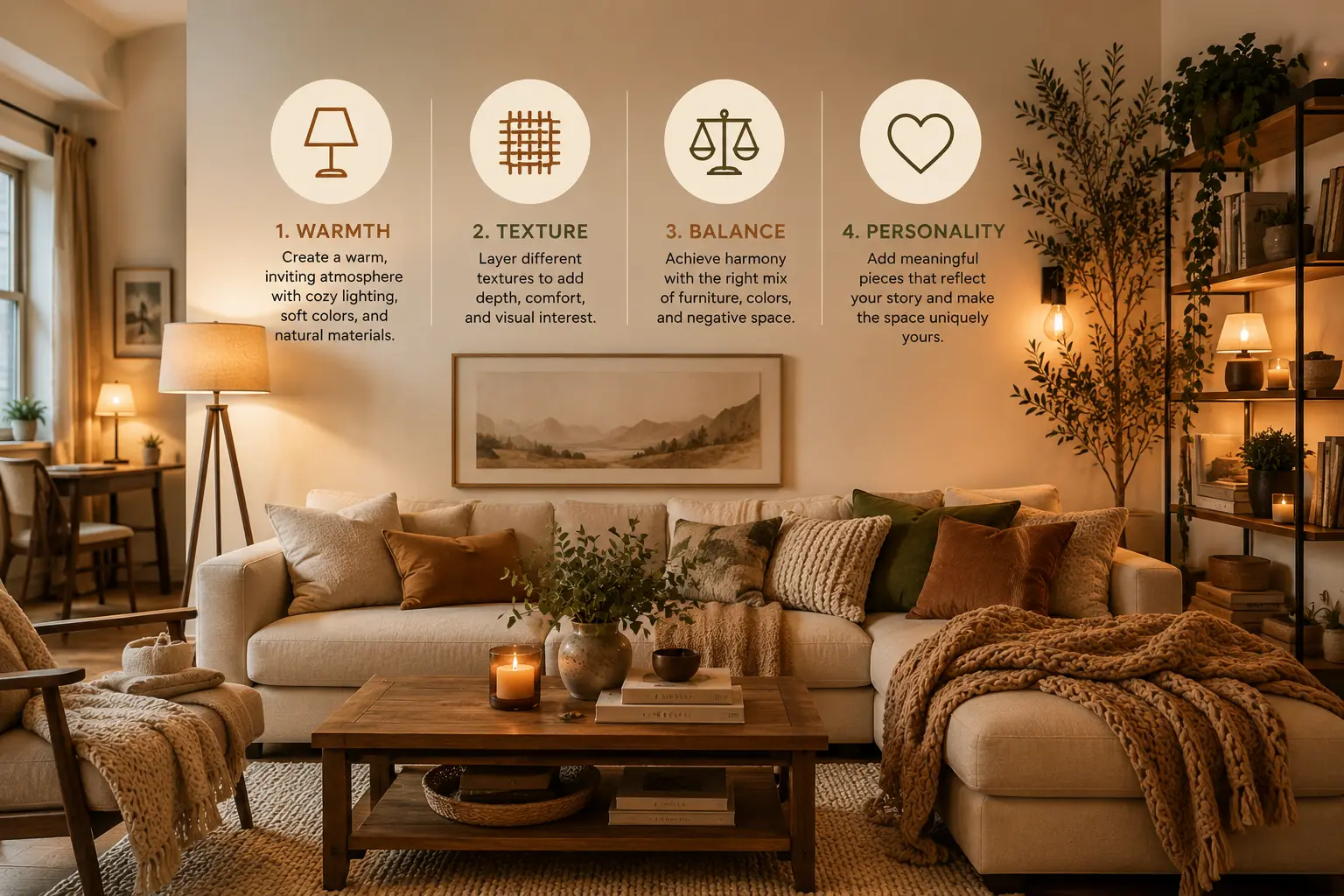
Before choosing furniture or shopping for decor, understand the four principles that appear in almost every beautiful cozy apartment.
1. Warmth
Warmth comes from more than color.
Lighting, natural wood, fabrics, candles, and soft shadows all contribute to making a room feel inviting.
Even the most luxurious furniture can feel uncomfortable if it’s surrounded by cold white lighting.
2. Texture
Texture is what transforms a flat room into one that feels rich and welcoming.
Imagine a living room with:
- A smooth leather sofa
- A chunky knit blanket
- Linen curtains
- A woven basket
- A plush rug
- Velvet pillows
None of these pieces are particularly extravagant on their own, but together they create depth that makes the room feel lived in.
One of the easiest mistakes is buying everything in the same material. Mixing textures creates visual interest without adding clutter.
3. Balance
A cozy apartment isn’t filled from wall to wall with decorations.
Beautiful interiors leave breathing room.
Empty space allows your favorite furniture and decor to stand out while making the apartment feel calm instead of chaotic.
Whenever you decorate a shelf, coffee table, or console, remember that leaving some space empty is just as important as filling it.
4. Personality
The coziest apartments always feel personal.
Instead of copying a Pinterest photo exactly, incorporate elements that reflect your own lifestyle.
Display books you actually read.
Hang artwork you genuinely love.
Use souvenirs from memorable trips.
Choose colors that make you happy rather than what’s currently trending.
These details are impossible to replicate, which is why they make a home feel authentic.
Before You Start Decorating
Many people immediately begin buying new furniture when they want their apartment to feel cozier.
That’s usually the wrong approach.
Instead, walk through your apartment and ask yourself these questions.
Is the lighting warm enough?
If your apartment feels cold at night, lighting is almost always the first thing to improve.
Are there enough soft textures?
Hard flooring, leather furniture, and empty walls can make even expensive apartments feel uncomfortable.
Does the room have a focal point?
Every room benefits from one area that naturally attracts attention, whether that’s a sofa, fireplace, gallery wall, or reading corner.
Is there unnecessary clutter?
Cozy doesn’t mean crowded.
Too many decorative objects compete for attention and make rooms feel smaller.
Does the room reflect your personality?
If removing every decorative item wouldn’t change how the room feels, it’s probably missing personal character.
Cozy Apartment Shopping Checklist
Before spending money, prioritize items that make the biggest visual difference.
High Impact Purchases
✔ Large area rug
✔ Floor lamp
✔ Table lamp
✔ Linen curtains
✔ Throw blankets
✔ Decorative pillows
✔ Indoor plants
✔ Wooden coffee table
Medium Impact Purchases
✔ Woven baskets
✔ Ceramic vases
✔ Coffee table books
✔ Framed artwork
✔ Floating shelves
✔ Candles
✔ Mirrors
Low Priority Purchases
✔ Small decorative accessories
✔ Seasonal decorations
✔ Trend-based items
✔ Tiny filler decor
A few carefully chosen pieces almost always look better than dozens of inexpensive decorations bought simply to fill empty space.
1. Layer Your Lighting Like a Designer
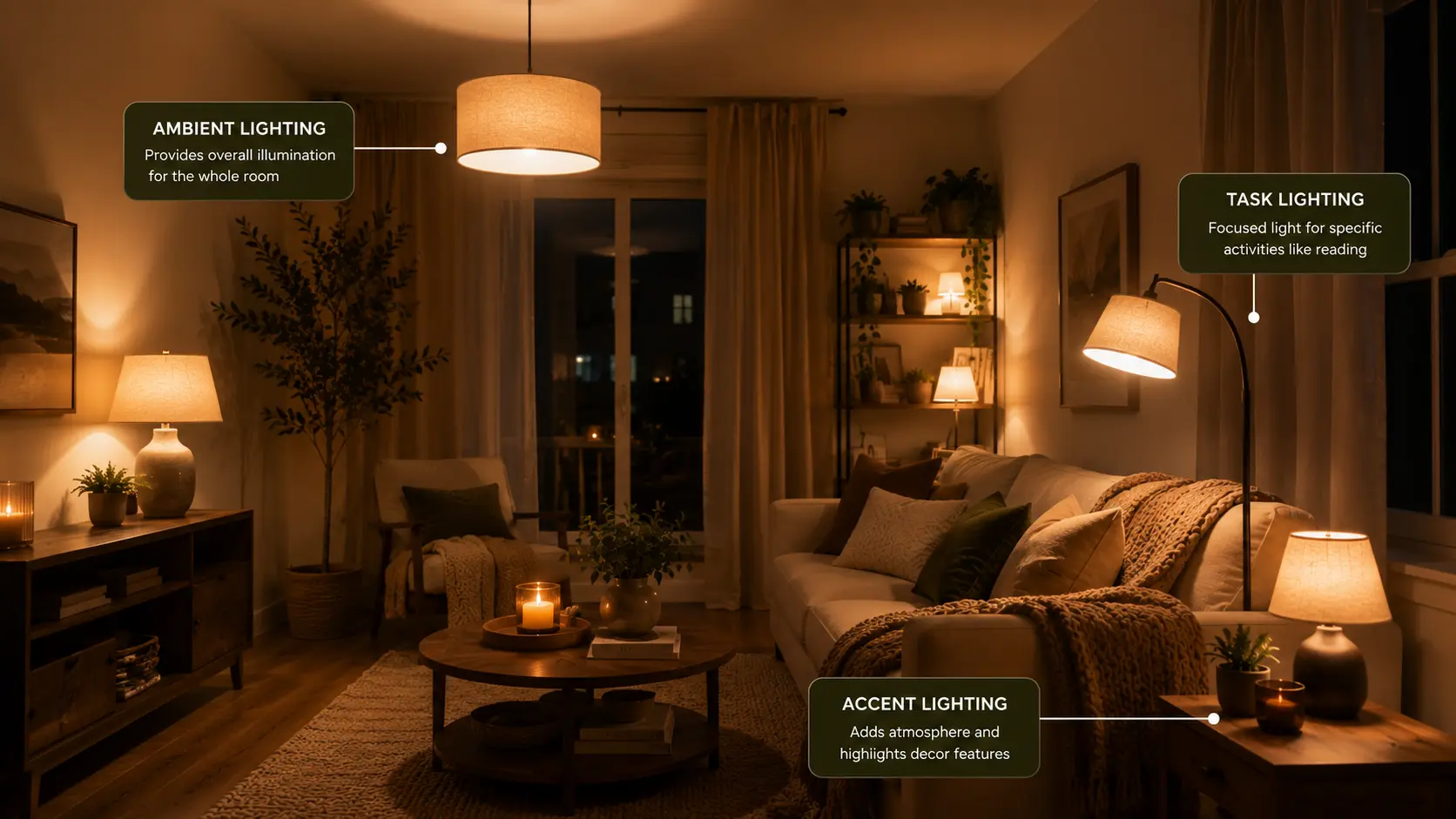
If there’s one change that instantly transforms an apartment, it’s replacing harsh overhead lighting with multiple softer light sources.
Professional interior designers rarely rely on a single ceiling fixture because it creates flat shadows and makes every surface equally bright. While that may be practical, it doesn’t feel inviting.
Instead, think of lighting as layers.
Start With Ambient Lighting
Ambient lighting provides the overall illumination for the room. This can come from ceiling fixtures, recessed lights, or wall-mounted lamps. The goal isn’t maximum brightness but comfortable visibility.
Choose warm white bulbs between 2700K and 3000K. Cooler daylight bulbs often make apartments feel more like offices than homes.
Add Task Lighting
Task lighting helps you perform specific activities such as reading, cooking, or working.
Examples include:
- Floor lamps beside the sofa.
- Desk lamps in your workspace.
- Bedside lamps instead of relying on ceiling lights.
These smaller light sources create cozy pools of light that naturally make a room feel more intimate.
Finish With Accent Lighting
Accent lighting adds atmosphere rather than function.
Consider using:
- LED candles
- String lights
- Picture lights
- Small table lamps
- Shelf lighting
These subtle touches soften the room after sunset and make evenings feel significantly more relaxing.
Designer Tip
Instead of placing every lamp around the edges of the room, position one light source in the darkest corner. This simple trick visually expands the space while making it feel warmer at the same time.
2. Build a Warm Color Palette Instead of Chasing Trends
One of the biggest misconceptions about creating a cozy apartment aesthetic is believing that everything has to be white or beige. While neutral colors certainly help, coziness comes from how colors work together, not from limiting yourself to one shade.
A thoughtfully chosen palette creates visual harmony, allowing every piece of furniture and decor to feel connected. When every item competes for attention with different colors, the room often feels busy instead of relaxing.
Start with a warm neutral base for your largest surfaces, such as walls, rugs, and sofas. Shades like cream, oatmeal, warm beige, soft taupe, and light greige create a calming backdrop that works in almost every apartment.
Once your foundation is in place, introduce earthy accent colors that add depth without overpowering the room. Olive green, terracotta, muted rust, caramel, dusty brown, and deep charcoal all complement neutral interiors while keeping the atmosphere warm.
A Simple Color Formula
If you’re unsure where to begin, follow this balance:
- 60% Base Color: cream, beige, or warm white.
- 30% Secondary Color: natural wood, tan leather, or warm gray.
- 10% Accent Color: olive green, burnt orange, forest green, or black details.
This approach prevents the apartment from feeling either bland or overwhelming.
Why It Works
The human eye naturally finds comfort in balanced color relationships. Warm neutrals reflect light softly, making rooms feel brighter without becoming harsh, while darker accents add contrast and visual interest.
Common Mistake
Many people decorate everything in the exact same beige tone. Ironically, this often makes a room feel flat and lifeless.
Instead, layer several warm shades within the same color family. Cream curtains, a beige sofa, a camel throw blanket, and walnut furniture create much more depth than identical colors everywhere.
Budget Alternative
Painting isn’t always possible in rental apartments. Instead, introduce color through removable elements such as:
- Throw pillows
- Blankets
- Curtains
- Artwork
- Lampshades
- Decorative ceramics
These small changes can completely shift the mood of a room without making permanent alterations.
3. Layer Different Textures to Make Every Room Feel Richer
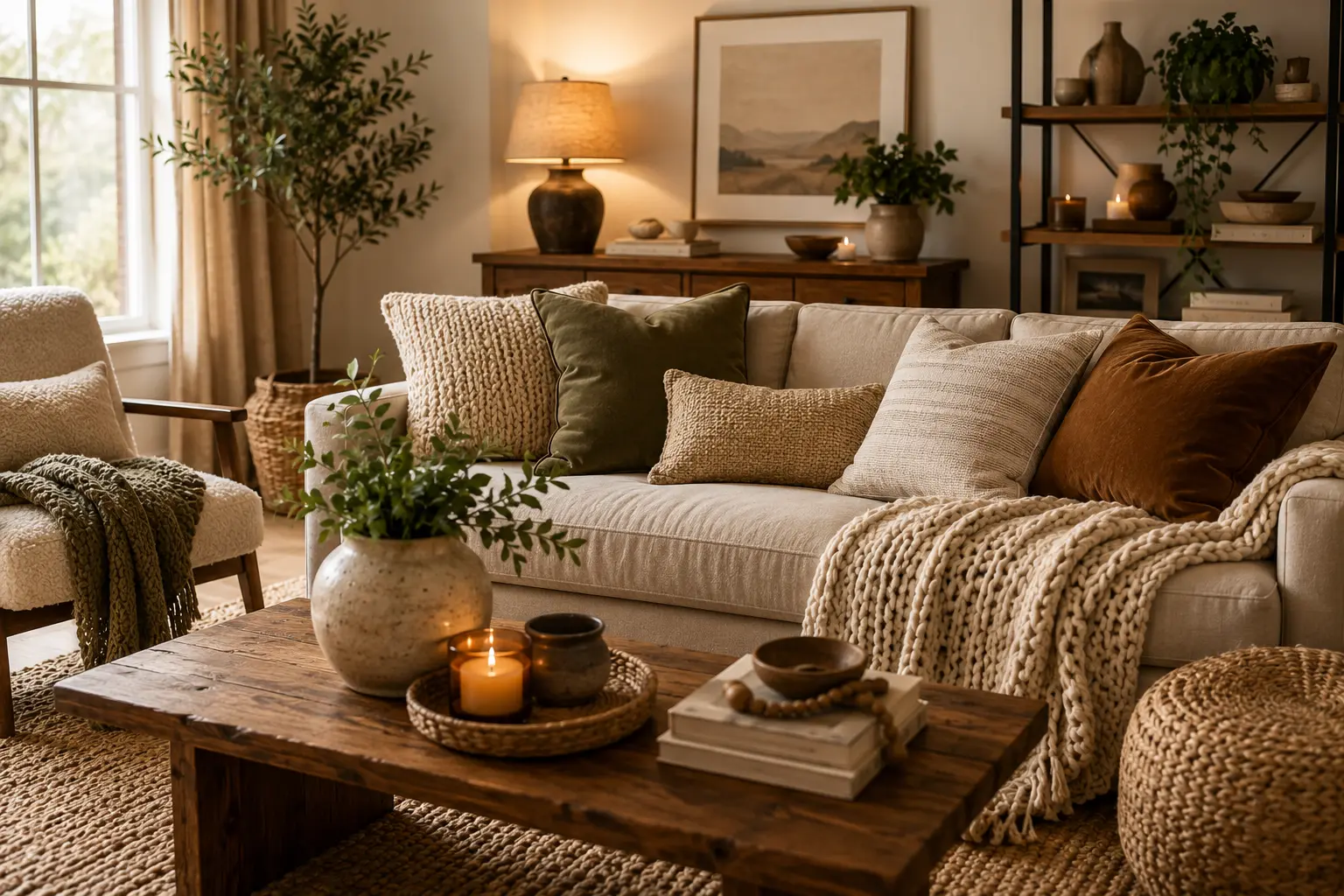
Texture is one of the most overlooked elements in interior design, yet it’s often the difference between an apartment that looks nice and one that feels inviting.
Imagine a room with white walls, a gray sofa, and a wooden coffee table. It looks clean—but perhaps a little flat.
Now imagine adding:
- A chunky knit throw.
- Linen curtains.
- A woven basket.
- Velvet cushions.
- A soft wool rug.
- A ceramic vase with dried branches.
The colors may remain almost identical, but the room suddenly feels warmer, more interesting, and far more comfortable.
Why Texture Matters
Texture creates subtle shadows and visual depth that prevent neutral spaces from appearing empty.
It also makes a room feel more comfortable on a sensory level. Soft materials invite touch, while natural fibers create an atmosphere that feels relaxed rather than staged.
The Best Texture Combinations
Try combining smooth, soft, rough, and woven materials together.
For example:
| Material | Adds |
|---|---|
| Linen | Relaxed elegance |
| Wool | Warmth |
| Bouclé | Softness |
| Rattan | Natural character |
| Wood | Organic warmth |
| Ceramic | Handmade texture |
| Cotton | Everyday comfort |
Instead of repeating one material throughout the room, mix several together.
Designer Tip
Whenever everything feels too “perfect,” introduce one imperfect natural material.
A handmade ceramic vase, reclaimed wood tray, or woven basket immediately softens modern interiors.
Common Mistake
Buying matching furniture sets.
Rooms feel far more sophisticated when textures vary naturally instead of matching perfectly.
4. Use Natural Wood to Warm Up Modern Spaces
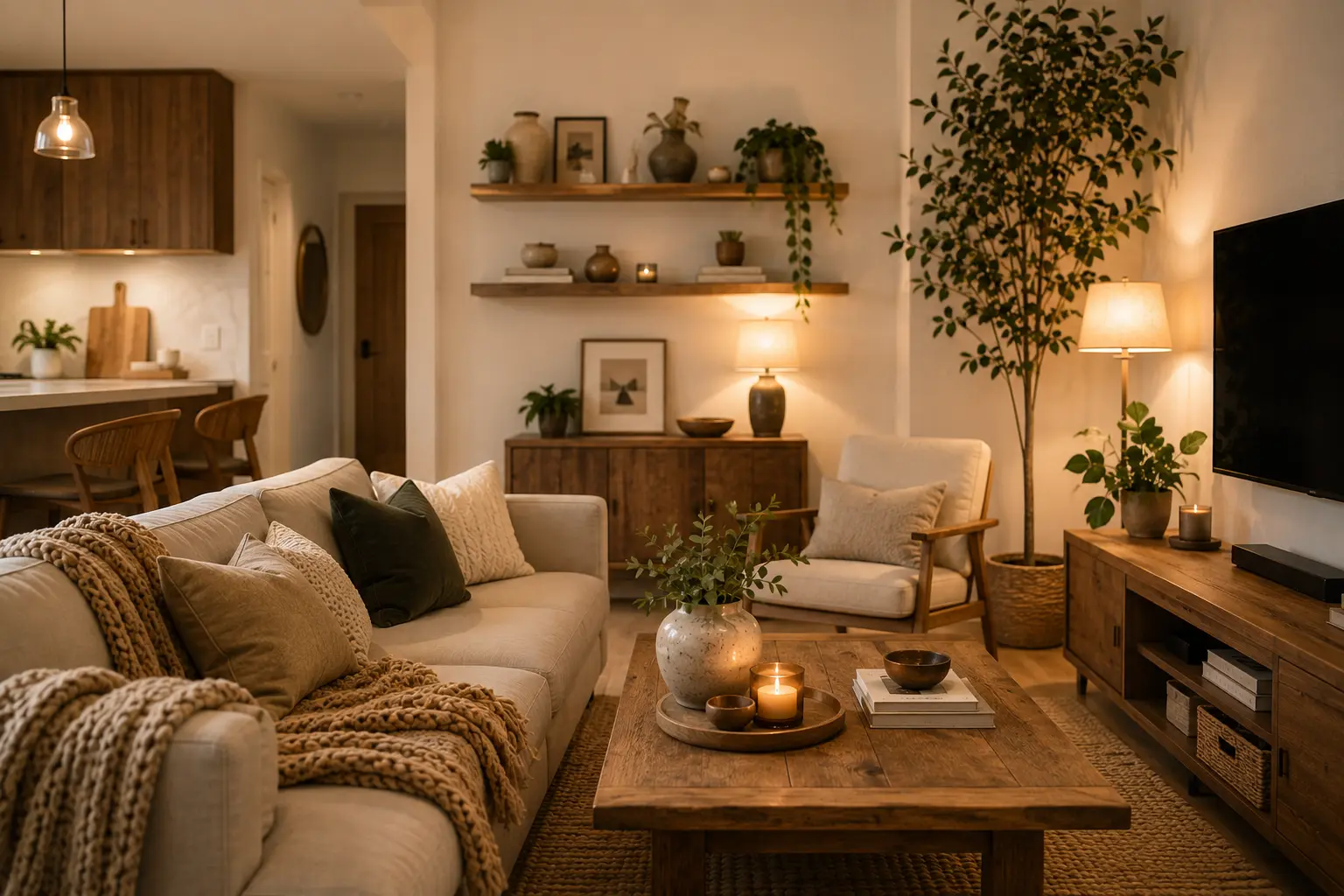
Modern apartments often include polished flooring, painted walls, glass surfaces, and metal fixtures. While these materials look clean, they can also feel cold if there isn’t enough natural texture to balance them.
Wood introduces warmth in a way that very few materials can.
Whether your style leans Scandinavian, Japandi, Rustic, or Contemporary, natural wood helps every room feel more welcoming.
Where to Add Wood
You don’t need to replace all your furniture.
Instead, incorporate wood gradually through:
- Coffee tables
- Floating shelves
- Picture frames
- Dining chairs
- Side tables
- Wooden trays
- Cutting boards displayed in the kitchen
- Wooden lamps
Even a few carefully placed wooden accessories can completely change the atmosphere.
Mix Different Wood Tones
Another common misconception is that every wooden piece has to match exactly.
In reality, professionally designed interiors often combine several tones.
For example:
- Light oak shelving.
- Walnut coffee table.
- Medium oak dining chairs.
- Dark wood picture frames.
As long as the undertones feel similar, slight variations create a much more natural look.
Why It Works
Wood reflects light differently than painted furniture. Its natural grain introduces subtle variation that keeps interiors from feeling overly polished.
This organic quality helps apartments feel lived in rather than staged.
Budget Alternative
Solid wood furniture can be expensive.
Instead, consider:
- Bamboo accessories.
- Wooden trays.
- Rattan baskets.
- Oak picture frames.
- Wooden stools.
- Floating wood shelves.
These smaller additions still create warmth without requiring a large investment.
5. Create One Corner That Makes You Want to Stay There
Not every area of your apartment needs to impress guests.
Sometimes the most memorable part of a home is a single corner designed entirely for comfort.
Think about where you naturally spend quiet moments.
Reading.
Drinking coffee.
Listening to music.
Watching the rain.
That space deserves intentional attention.
The Perfect Cozy Corner Includes
- A comfortable chair.
- A soft throw blanket.
- One warm lamp.
- A small side table.
- A candle or diffuser.
- Books or magazines.
- A nearby plant.
Notice what’s missing.
There’s no excessive decoration.
No clutter.
No unnecessary furniture.
Everything serves a purpose.
Why It Works
Creating a dedicated relaxation zone changes how you experience your apartment.
Instead of viewing your home as simply a place to sleep, it becomes somewhere you genuinely enjoy spending time.
Even small apartments benefit from having one destination within the room.
Common Mistake
Trying to decorate every corner equally.
Instead, choose one area to become the visual and emotional focal point of the room.
This creates balance while making the apartment feel thoughtfully designed.
Designer Tip
Position your cozy corner near natural light whenever possible.
During the day, sunlight enhances the atmosphere.
At night, replace daylight with a warm floor lamp to maintain the same inviting feeling.
Continue Reading
If you’re decorating a compact home, you’ll also love 13 Studio Apartment Layout Ideas That Maximize Every Square Foot, where you’ll find practical layout solutions that pair perfectly with a cozy aesthetic.
6. Decorate With Plants to Bring Life Into Every Room
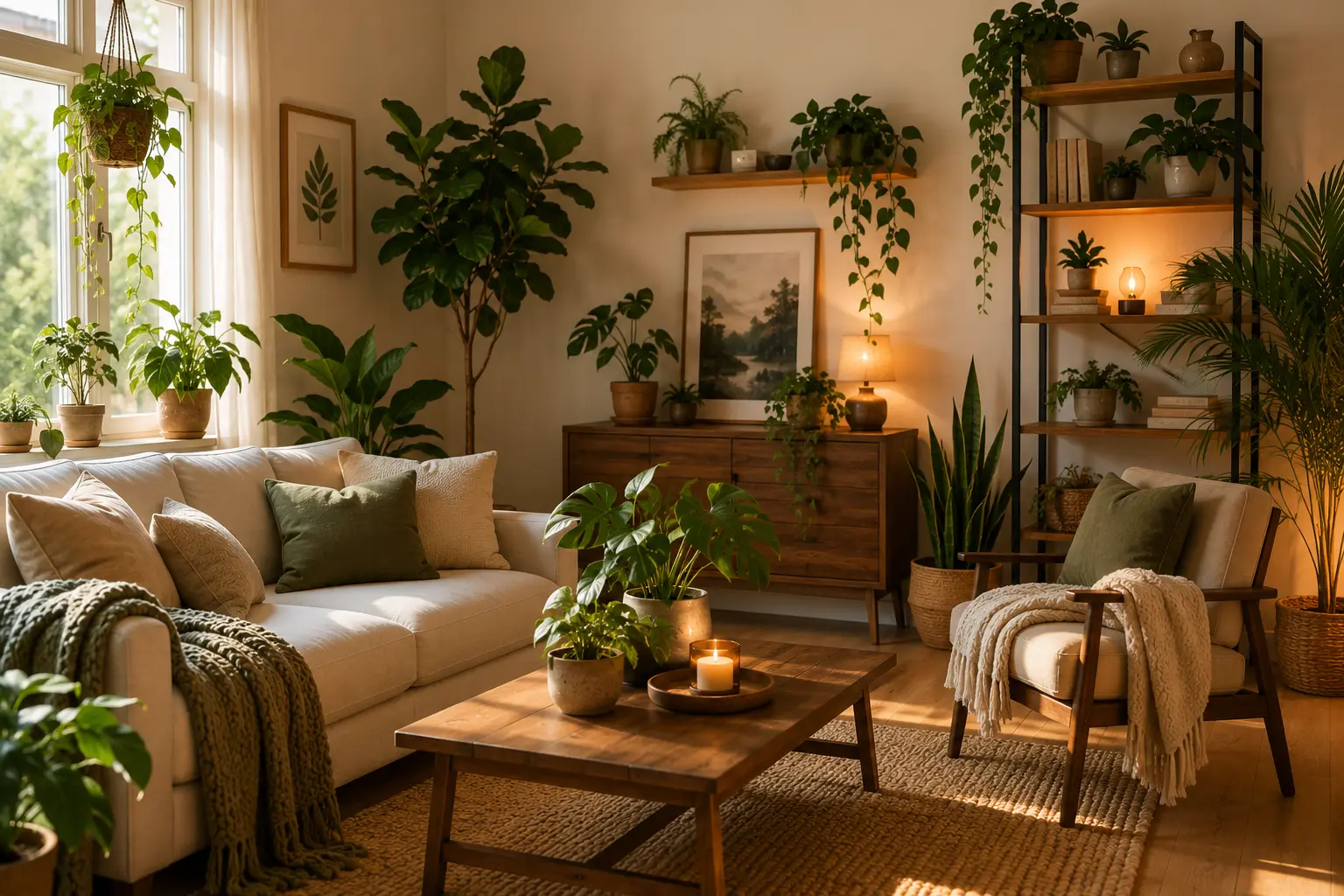
Walk into almost any professionally designed apartment, and you’ll notice one thing they all have in common: greenery.
Plants do much more than fill empty corners. They soften sharp lines, introduce natural color, and make even the newest apartment feel established rather than recently furnished.
The best part is that you don’t need dozens of plants to create this effect. A few well-placed pieces often have more impact than an entire collection scattered around the room.
Choose Plants That Match Your Lifestyle
If you’re new to caring for houseplants, start with varieties that are difficult to kill.
Great beginner-friendly options include:
- Snake Plant
- ZZ Plant
- Pothos
- Rubber Plant
- Peace Lily
If you receive plenty of sunlight, larger plants like a Fiddle Leaf Fig or Bird of Paradise can become stunning focal points in a living room.
Vary Heights Instead of Sizes
Many people place several plants of similar height next to each other, making the arrangement look flat.
Instead, combine:
- One tall floor plant.
- A medium plant on a stand.
- Small plants on shelves or side tables.
- Hanging plants near windows.
The variation naturally guides the eye around the room and creates a more balanced composition.
Choose the Right Planters
The pot matters almost as much as the plant.
Neutral ceramic pots, woven baskets, terracotta containers, and textured concrete planters blend beautifully into cozy interiors.
Bright plastic pots often distract from the calm atmosphere you’re trying to create.
Designer Tip
Don’t place every plant in the corners of the room.
Instead, spread greenery throughout the apartment so your eye encounters small moments of nature wherever you look.
Common Mistake
Buying plants without considering light conditions.
A struggling plant quickly loses its beauty, so always choose varieties that suit your apartment’s natural light.
7. Choose the Right Rug Size—Not Just a Beautiful One
Few decorating mistakes are as common as buying a rug that’s too small.
A tiny rug floating in the middle of the room breaks the connection between furniture pieces, making the space feel unfinished.
The right rug acts like a foundation. It visually anchors the seating area and helps every piece of furniture feel connected.
Living Room Rug Guidelines
For most apartments:
- The front legs of your sofa should sit on the rug.
- Accent chairs should touch the rug whenever possible.
- Leave about 12–18 inches of visible flooring around the edges in larger rooms.
If you’re deciding between two sizes, the larger option is usually the better choice.
Bedroom Rug Placement
A large rug extending beyond both sides of the bed makes mornings much more comfortable while adding softness to the room.
For smaller bedrooms, runners placed beside the bed can create a similar effect.
Material Matters
Different materials create different moods.
- Wool feels luxurious and lasts for years.
- Cotton is lightweight and easy to clean.
- Jute introduces natural texture.
- High-pile rugs feel exceptionally cozy in living rooms and bedrooms.
Why It Works
A well-sized rug visually defines the room, reducing the feeling that furniture has been randomly placed.
It’s one of the simplest ways to make even an inexpensive apartment look intentionally designed.
Budget Alternative
Layer a smaller decorative rug over an affordable neutral base rug.
This trick creates depth while making a modest rug feel much larger.
8. Style Shelves Like Someone Who Actually Lives There
Open shelves are often either completely empty or packed with random decorations.
Neither feels cozy.
Beautiful shelves tell a story.
Instead of displaying everything you own, curate a collection that reflects your personality while leaving enough space for each object to breathe.
A Simple Styling Formula
Combine five different elements:
- Books.
- Plants.
- Ceramics.
- Framed artwork.
- Decorative objects with personal meaning.
Vary the height and shape of each item rather than lining everything up in perfect rows.
Create Visual Balance
Place heavier objects toward the bottom shelves and lighter accessories higher up.
Mix horizontal book stacks with vertical ones.
Lean artwork against the wall instead of hanging every frame.
Small changes like these create a more relaxed, collected look.
Leave Empty Space
Perhaps the hardest lesson in decorating is learning when to stop.
Empty space isn’t wasted space.
It allows your favorite pieces to stand out while keeping shelves from feeling cluttered.
Common Mistake
Buying decorative objects simply because they’re trendy.
If every accessory comes from the same store at the same time, the apartment often feels staged rather than personal.
Mix old pieces with new ones to create character.
9. Make Your Bedroom Feel Like a Boutique Hotel
Your bedroom should be the coziest room in the apartment, yet it’s often the last one people decorate.
Fortunately, creating a luxurious atmosphere doesn’t require expensive furniture.
It starts with the bed.
Layer Your Bedding
Hotels rarely rely on a single blanket.
Instead, they build layers.
Try combining:
- Crisp cotton sheets.
- A linen duvet cover.
- A textured quilt.
- A chunky knit throw.
- Several pillows in different sizes.
These layers instantly make the room feel more inviting while adding depth.
Keep Nightstands Simple
A bedside table doesn’t need ten decorative objects.
A lamp, one book, a candle, and a small ceramic tray are usually enough.
Resisting the urge to overdecorate helps maintain a peaceful atmosphere.
Soften the Lighting
Replace bright ceiling lights with bedside lamps.
Warm lighting creates a relaxing environment that encourages better rest while making the room feel more intimate.
Add One Statement Piece
Instead of filling every wall, choose one focal point.
This could be:
- Oversized artwork.
- A fabric headboard.
- A large mirror.
- A beautiful pendant light.
One strong visual anchor often has more impact than several smaller decorations competing for attention.
10. Finish With Small Details That Feel Personal
A cozy apartment isn’t memorable because of expensive furniture.
It’s memorable because it feels lived in.
The finishing touches are what transform a well-decorated apartment into a real home.
Consider adding:
- A favorite coffee table book.
- Handmade pottery.
- A scented candle you actually enjoy.
- A woven tray for everyday essentials.
- Family photos in simple frames.
- Fresh flowers from the local market.
- Vintage finds collected over time.
These details don’t need to match perfectly.
In fact, a little variety often makes the apartment feel more authentic.
Create Small Moments of Comfort
Think beyond decoration.
A blanket draped over the sofa.
A mug waiting on the coffee station.
Slippers beside the bed.
A reading light next to your favorite chair.
These subtle details suggest that the apartment is meant to be enjoyed—not simply admired.
Designer Tip
Whenever you’re about to buy another decorative object, ask yourself one question:
“Will this make my apartment feel more comfortable, or is it simply filling empty space?”
The answer will often save you money while leading to better design decisions.
Related Reading
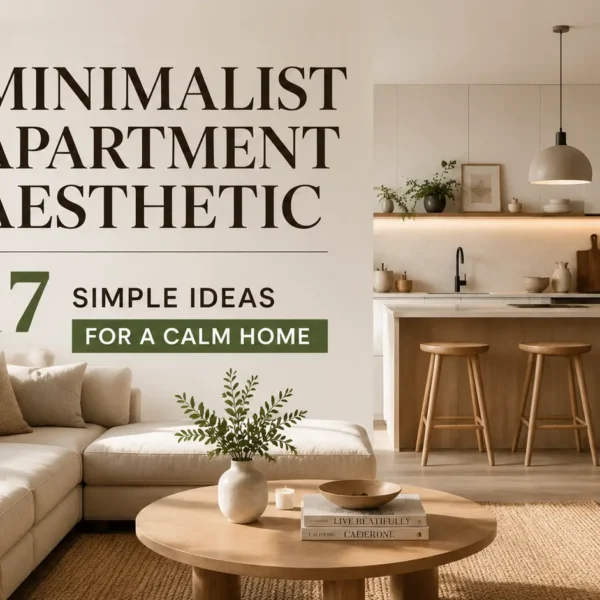
If you love calm, uncluttered interiors, you’ll also enjoy Minimalist Apartment Aesthetic: 17 Simple Ideas for a Calm Home.Minimalist Apartment Aesthetic: 17 Simple Ideas for a Calm Home
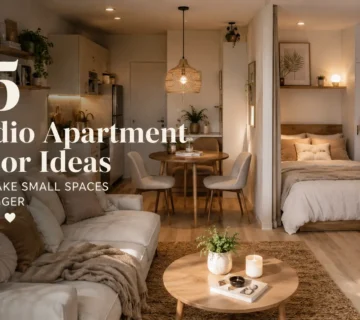
Or, if you’re decorating on a tighter footprint, explore 25 Studio Apartment Decor Ideas That Make Small Spaces Feel Bigger for even more space-saving inspiration.
Common Cozy Apartment Decorating Mistakes to Avoid
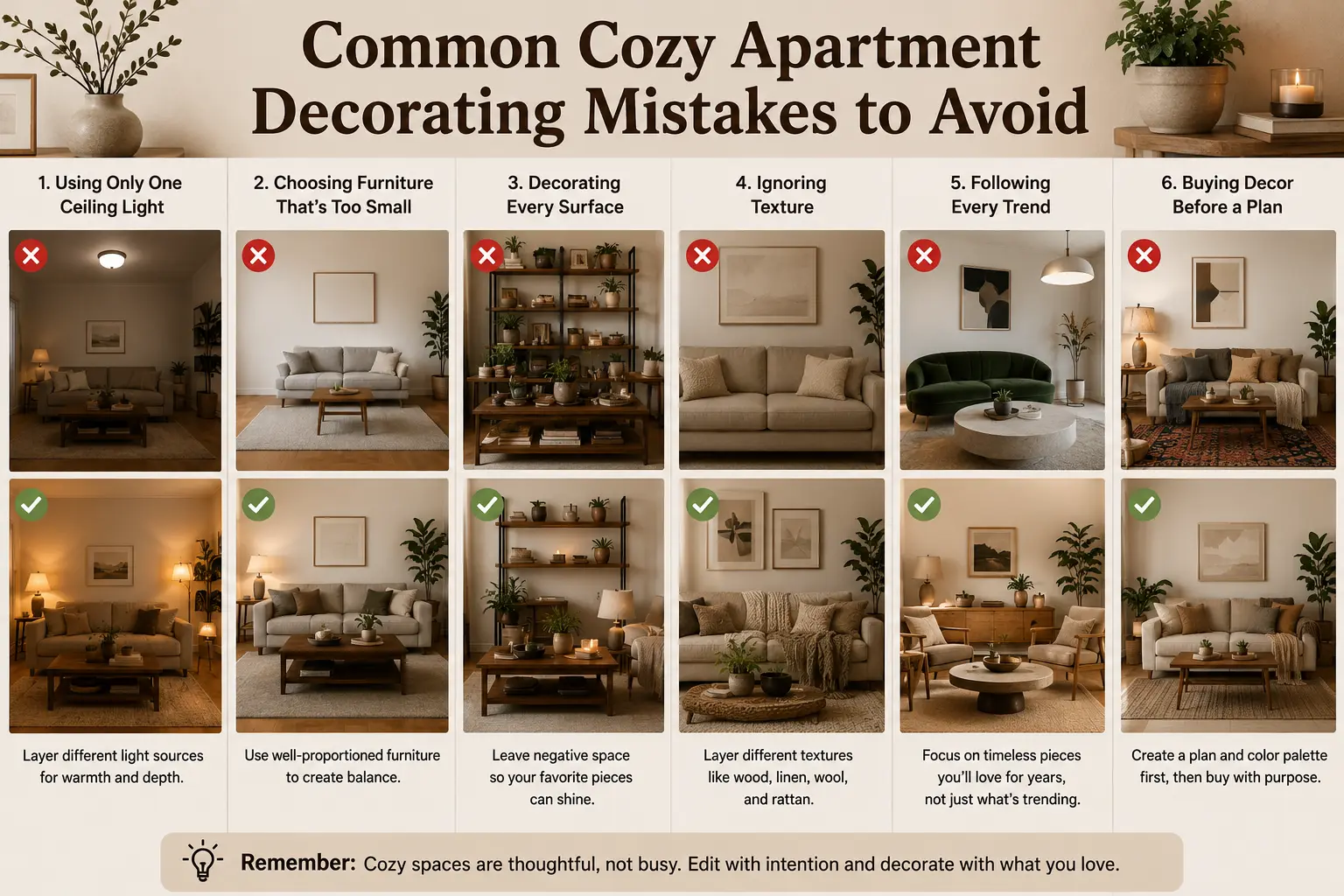
Creating a cozy apartment isn’t about buying more decor. In many cases, it’s about avoiding the small mistakes that make a space feel cluttered, cold, or unfinished.
Here are some of the most common decorating mistakes and how to fix them.
Using Only One Ceiling Light
Overhead lighting is practical, but it rarely creates a warm atmosphere.
When every corner of a room is lit equally, the space feels flat and lacks depth.
Instead, layer different light sources throughout the room. A floor lamp beside the sofa, a table lamp on a console, and a small reading light instantly create a softer, more inviting environment.
Quick Fix: Aim for at least three light sources in your living room instead of relying on a single ceiling fixture.
Choosing Furniture That’s Too Small
Many people assume smaller furniture makes a small apartment feel bigger.
In reality, undersized furniture often makes a room look unfinished because every piece appears to float independently.
A well-proportioned sofa, a properly sized rug, and a substantial coffee table create a stronger visual foundation.
When shopping, always measure your room first rather than guessing what might fit.
Decorating Every Surface
Coffee tables.
Shelves.
Nightstands.
Kitchen counters.
When every available surface is covered with decorations, nothing stands out.
Professional designers intentionally leave empty space because it allows the eye to rest.
Instead of displaying everything you own, choose a few meaningful pieces and let them become the focus.
Ignoring Texture
A room filled with smooth materials often feels cold, even when the colors are warm.
If your apartment doesn’t feel cozy, the problem may not be your furniture—it may be the lack of texture.
Layer soft fabrics, natural fibers, and handcrafted materials until the room feels balanced.
Texture adds warmth without adding clutter.
Following Every Trend
Interior design trends change constantly.
A home built entirely around trends can quickly feel outdated.
Instead of asking what’s popular this year, ask what you’ll still enjoy five years from now.
Timeless furniture paired with a few seasonal accessories creates a home that evolves naturally without requiring constant updates.
Buying Decor Before Creating a Plan
Impulse purchases often lead to mismatched rooms.
Before buying anything, decide on:
- Your color palette.
- The overall style.
- The mood you want to create.
- The function of each room.
Having a clear vision makes every decorating decision easier.
Cozy Apartment Checklist
Before you consider your apartment finished, go through this simple checklist.
Lighting
☐ Warm white bulbs (2700K–3000K)
☐ Floor lamp
☐ Table lamp
☐ Accent lighting
Comfort
☐ Soft throw blanket
☐ Decorative pillows
☐ Comfortable seating
☐ Cozy reading corner
Texture
☐ Large rug
☐ Linen or cotton curtains
☐ Woven baskets
☐ Natural wood furniture
Personality
☐ Books you actually read
☐ Artwork you love
☐ Family photos or travel memories
☐ Plants
Organization
☐ Hidden storage
☐ Decluttered surfaces
☐ Functional furniture
☐ Decorative storage baskets
If you can check most of these boxes, you’re well on your way to creating a cozy apartment that feels both stylish and comfortable.
Frequently Asked Questions
What is a cozy apartment aesthetic?
A cozy apartment aesthetic is a decorating style that combines warm lighting, soft textures, natural materials, and thoughtfully chosen furniture to create a home that feels welcoming, comfortable, and lived in.
How can I make my apartment feel cozy on a budget?
Focus on changes that create the biggest visual impact.
Add warm lighting, a textured throw blanket, decorative pillows, an area rug, indoor plants, and simple artwork before investing in expensive furniture.
Small upgrades often make a dramatic difference.
Which colors make an apartment feel cozy?
Warm neutrals work best.
Cream, beige, taupe, warm gray, soft brown, olive green, terracotta, and muted earth tones all contribute to a relaxing atmosphere.
The goal is to create harmony rather than high contrast.
How do I make a small apartment look cozy instead of cramped?
Prioritize quality over quantity.
Use multifunctional furniture, large rugs, layered lighting, vertical storage, mirrors, and a consistent color palette to make the space feel open while maintaining warmth.
Can minimalist and cozy styles work together?
Absolutely.
Minimalism focuses on simplicity, while coziness emphasizes comfort.
When combined thoughtfully, they create calm interiors that feel both functional and inviting.
If you enjoy this style, explore our Minimalist Apartment Aesthetic: 17 Simple Ideas for a Calm Home for more inspiration.
What’s the biggest decorating mistake people make?
Buying decorations before creating a plan.
Choosing a color palette, identifying your style, and deciding how you want each room to function will always produce better results than shopping without direction.
Final Thoughts
A cozy apartment isn’t created overnight, and it doesn’t depend on expensive furniture or perfectly curated shelves.
The most inviting homes are built gradually through thoughtful choices that reflect the people who live there. Warm lighting, layered textures, natural materials, comfortable furniture, and meaningful decor all work together to create a space that feels welcoming every single day.
Rather than trying to copy every trend you see online, focus on building a home that supports your lifestyle. Add pieces that make everyday routines more enjoyable, leave enough room for your favorite items to shine, and don’t be afraid to evolve your space over time.
The beauty of a cozy apartment aesthetic is that it’s never truly finished. As your tastes change and your collection grows, your home becomes more personal, more comfortable, and more uniquely yours.
Keep Exploring Apartment Decorating Ideas
If you’re planning to transform your apartment one room at a time, these guides can help you create a space that feels stylish, functional, and completely your own.
- 25 Apartment Aesthetic Ideas That Make Any Space Feel Expensive — Discover timeless decorating ideas that instantly elevate any apartment without overspending.
- 10 Apartment Decorating Ideas That Look Designer-Approved — Learn simple styling techniques professional designers use to create polished interiors.
- Minimalist Apartment Aesthetic: 17 Simple Ideas for a Calm Home — Create a clutter-free home that feels peaceful, bright, and effortlessly elegant.
- 13 Studio Apartment Layout Ideas That Maximize Every Square Foot — Make the most of a compact floor plan with smart layout solutions.
- 25 Studio Apartment Decor Ideas That Make Small Spaces Feel Bigger — Explore decorating tricks that help small apartments feel brighter, more spacious, and more comfortable.




No comment